

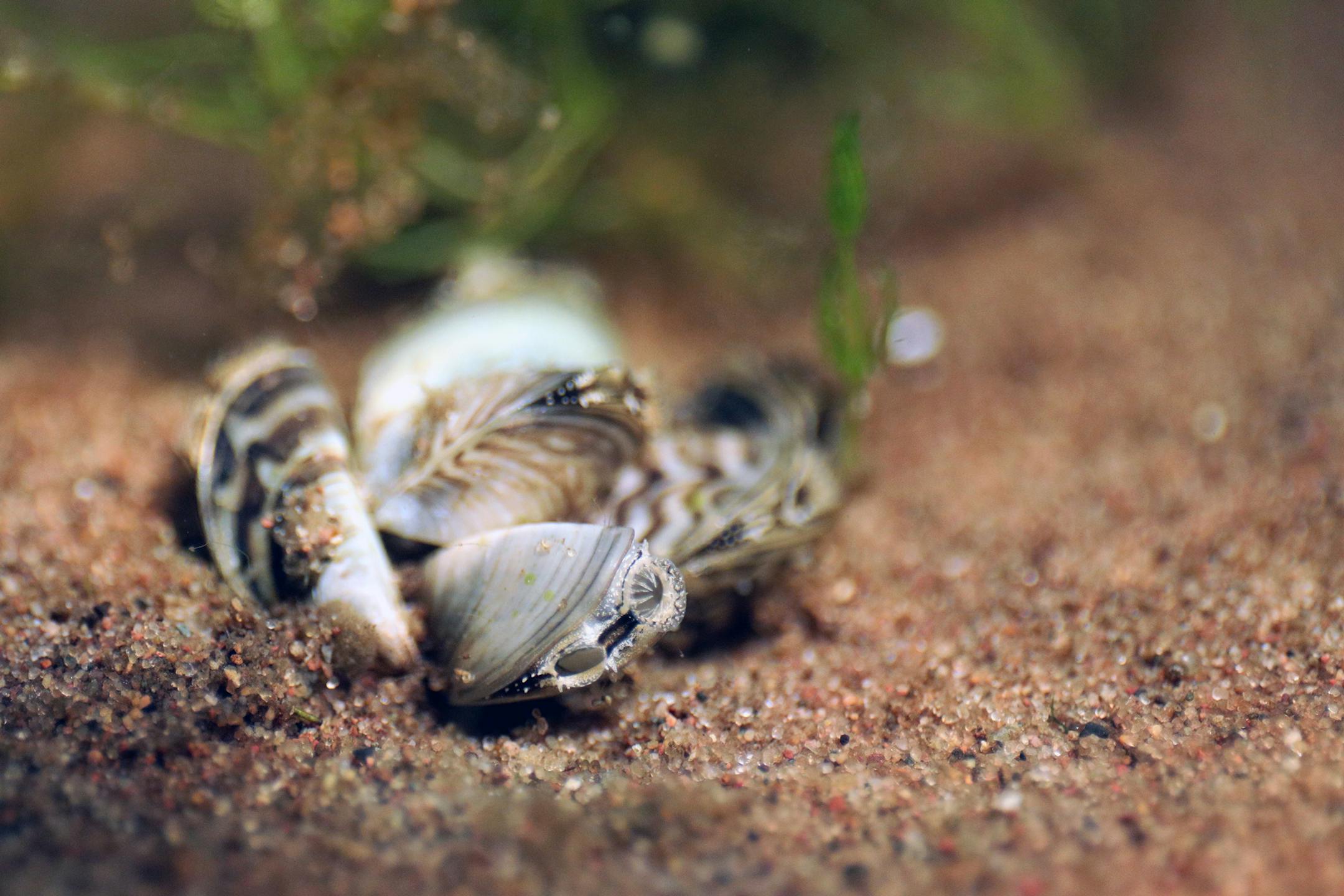
A single zebra mussel was found recently in Minneapolis' Lake Harriet and five were found in Lake Marion in Lakeville, adding the two lakes to the list of infested waters.
The mussel in Lake Harriet was found on a boat cover recovered from the bottom of the lake. No others were found after an extensive 67-hour search of the lake, which eventually could be removed from the Infested Waters List if no other mussels are found during future surveys.
"We're grateful that no zebra mussels were found during the extensive dive, snorkel and wading search of Lake Harriet," said Heidi Wolf, invasive species unit supervisor with the Minnesota Department of Natural Resources (DNR).
Lake Harriet will be carefully monitored the rest of the season and next year, but no treatment is necessary at this time, said DNR invasive species specialist Keegan Lund. Individual zebra mussels sometimes die after they are brought into a new lake and before they become established, he said.
As part of Lakeville's early detection program, the city hired a lake consulting business, which found five adult zebra mussels at the public access landing. Lakeville may apply for a pilot project treatment after a more thorough search of the lake is completed.
It's a common misconception that "zebra mussels are everywhere and that their spread is inevitable," Lund said. "The reality is, of Minnesota's 11,842 lakes, fewer than 250, about 1.8 percent, are listed as infested with zebra mussels."
More Minnesotans than ever before are following our state's invasive species laws, which can prevent them from spreading to new lakes, Lund said.
Boats and equipment being taken out of the water for the season should be checked for aquatic invasive species. Contact the DNR if suspected infestations are found.
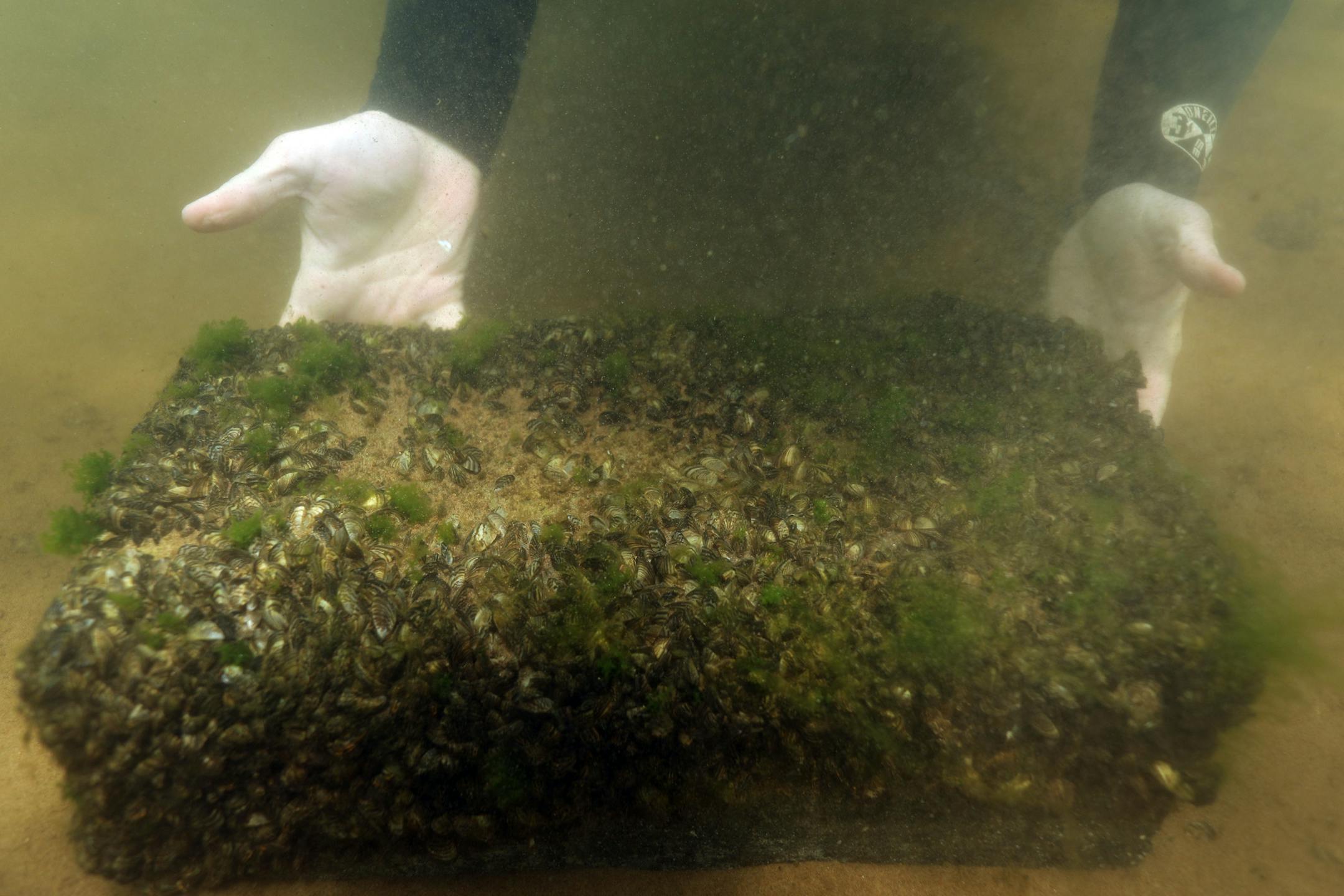
![A cluster of zebra mussels cover a native mussel at White Bear Lake. ] ANTHONY SOUFFLE ï anthony.souffle@startribune.com NOTE: Do not use for daily stories. Hold all for Kennedy Zebra Mussels Project. Zebra mussels, an invasive species from eastern Europe, have come to Minnesota. The Star Tribune takes an in-depth look at the zebra mussel issue, its impact, and the people working to do something about it.](https://arc.stimg.co/startribunemedia/VCWPZ4LB3COMJ2WCJXW4Q3CA2I.jpg?&w=1080)


