

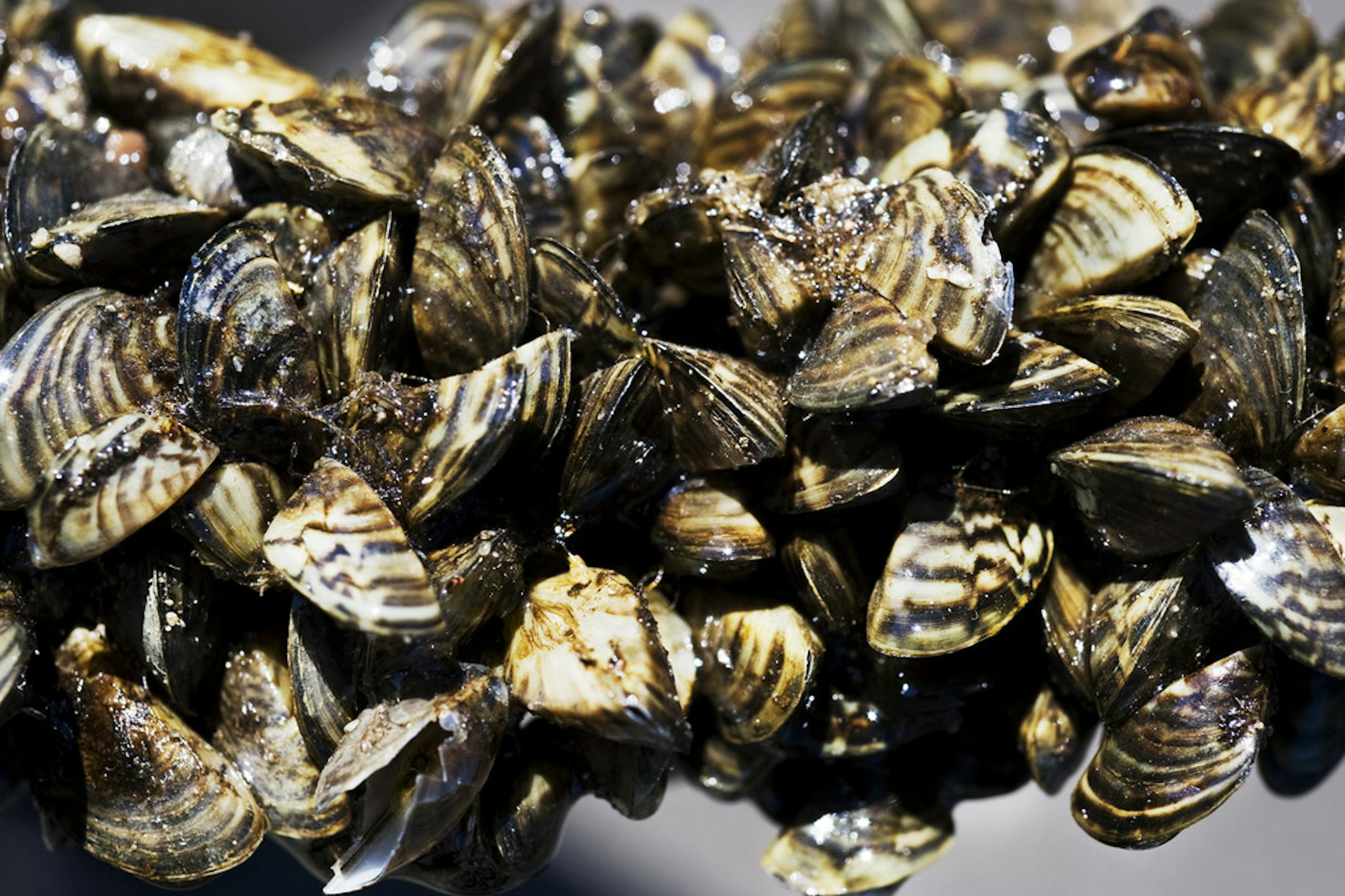
Red Lake, by far Minnesota's largest inland lake, was declared infested Monday after zebra mussel larvae were located in troubling numbers during monitoring.
The discovery in Upper Red Lake prompted a state Department of Natural Resources (DNR) expert to concede that adult reproduction there is a near certainty.
Until this confirmation, the combined Upper and Lower Red lakes had been the last of the state's major walleye lakes to avoid infestation by a significant invasive species, the DNR said.
The sobering discovery in northern Minnesota was confirmed by the DNR after the study of samples gathered last summer by biologists from the Red Lake Nation. While adult zebra mussels have yet to be identified in Red Lake, larvae typically indicate the presence of a reproducing population.
"Unfortunately, the most reasonable conclusion is that they came from adult reproduction within the lake itself," said DNR research scientist Gary Montz.
Because Red Lake is "a unique lake system — very large and shallow," Montz said, "it is not possible to estimate the abundance or distribution of zebra mussels in Upper Red Lake from this sample."
The DNR has been working with the Red Lake Nation for more than 10 years to monitor zebra mussel larvae in the lake and will coordinate with the tribe on how to respond to this latest development.
Zebra mussels are a concern because they can compete with native species for food and habitat, cut the feet of swimmers, reduce the performance of boat motors and cause expensive damage to water intake pipes.


