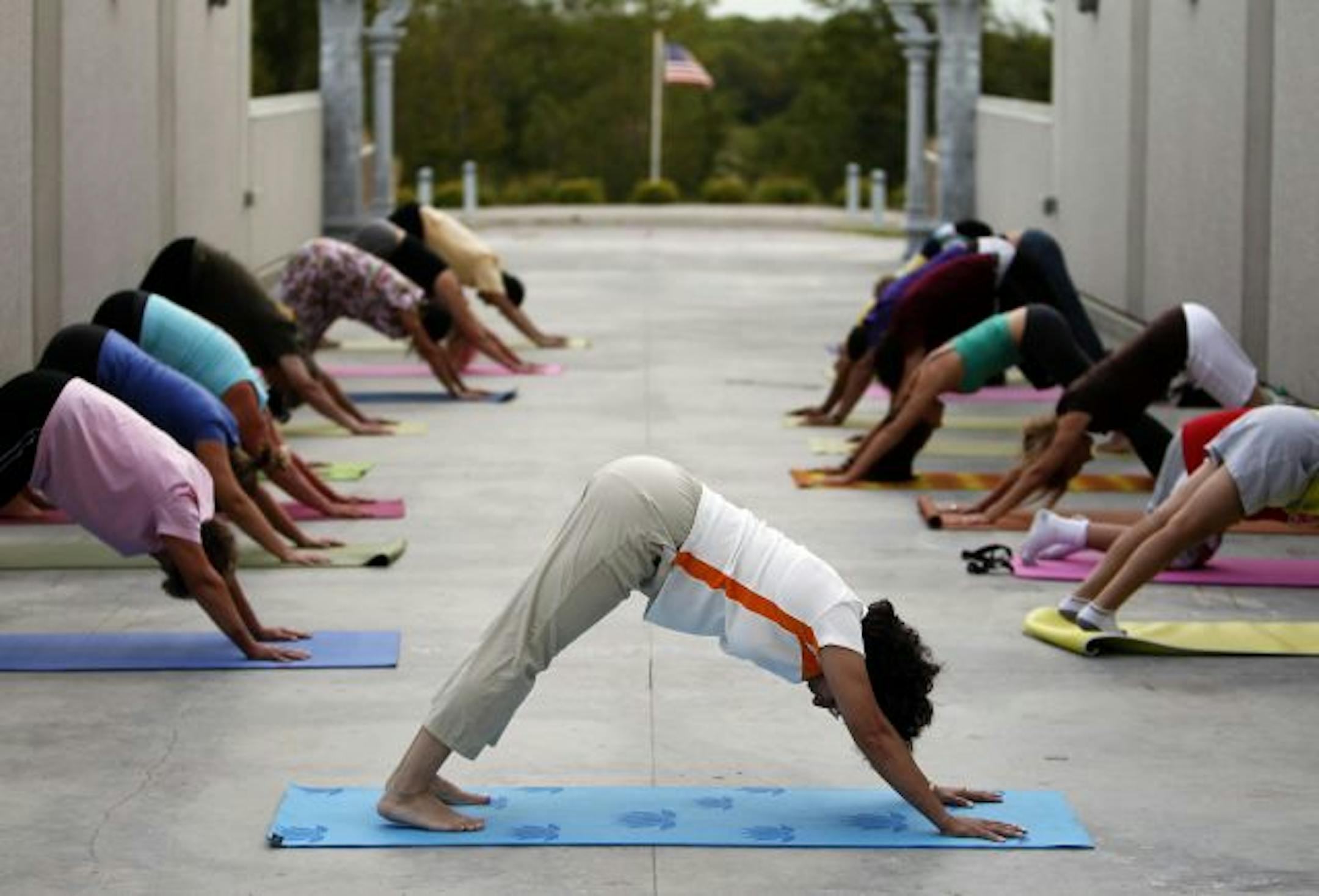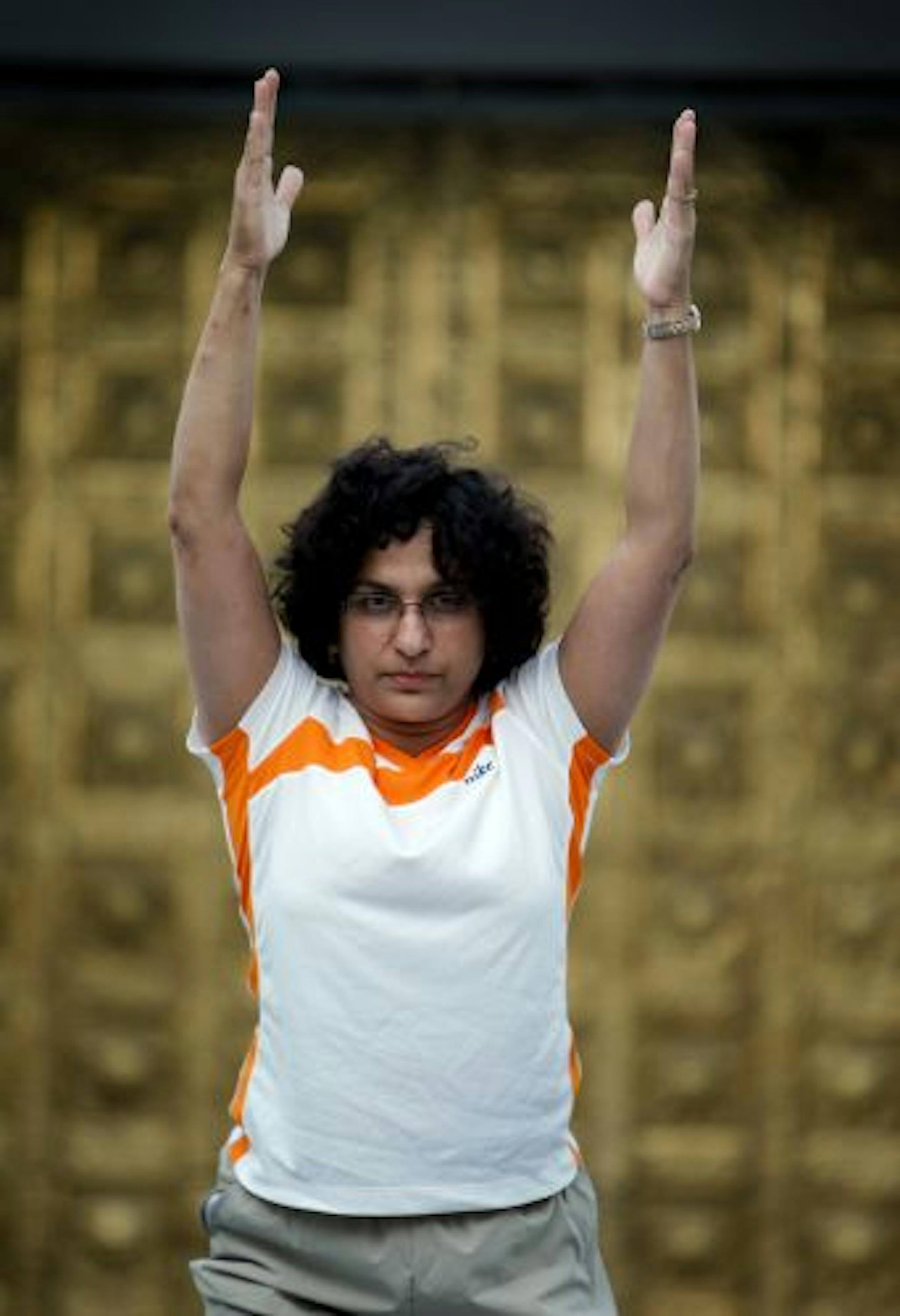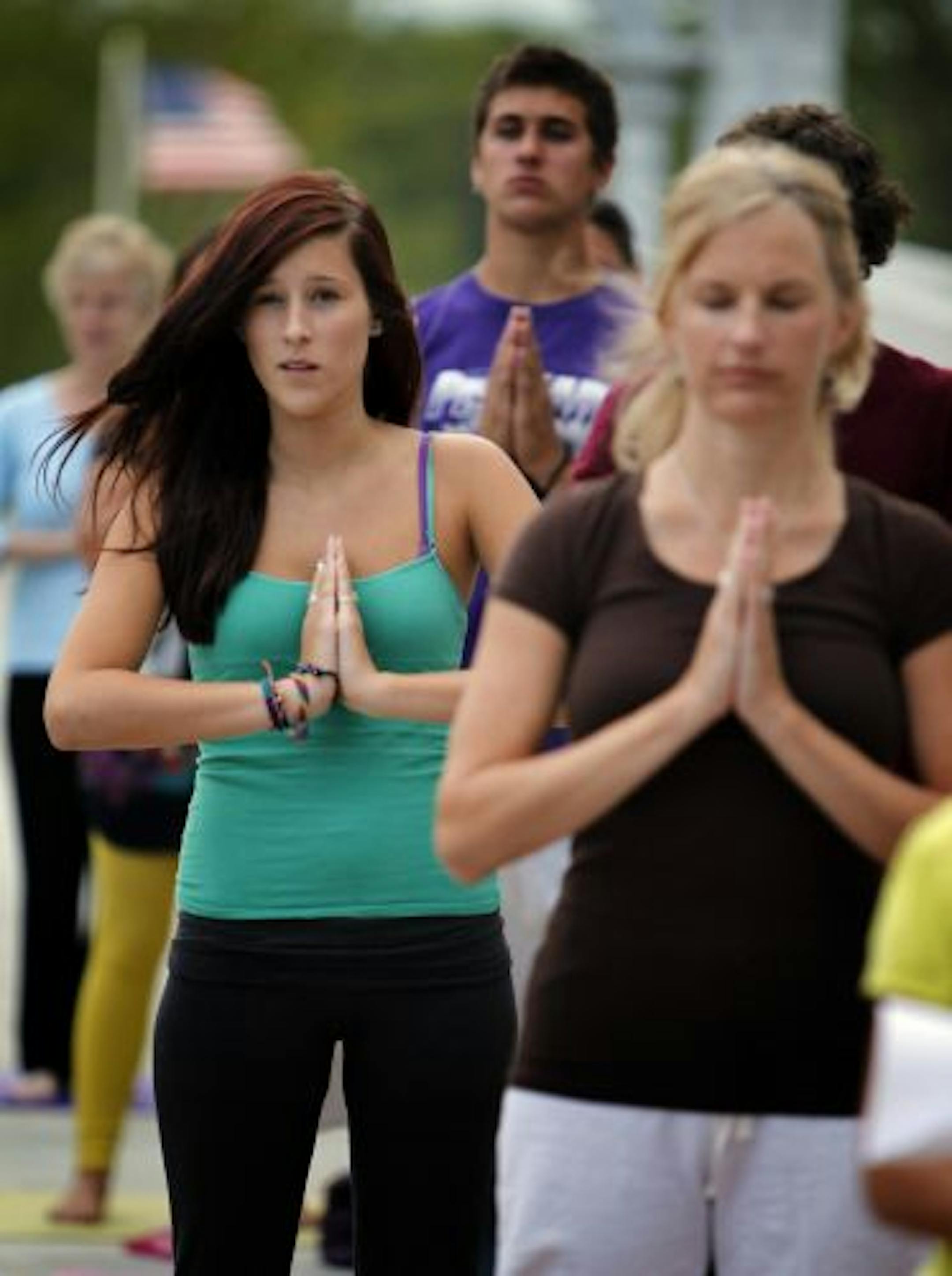
On the last night of outdoor yoga at the Hindu Temple of Minnesota in Maple Grove, mats formed a zigzag along the cold, concrete balcony.
Some of the pupils came in jeans, baggy dresses and T-shirts. The only sound was the purr of the wind curling through the cornfields that surrounded the holy place.
One of the students shivered, a reminder that there was no expectation that anyone was there to work up a sweat.
The inspiration came from within. And on this night about a dozen kids, middle-aged adults and teenagers came to try to tap that inner jackpot.
The temple's setting, where inside a white-robed priest performed chants and blessings for various young couples, was a far cry from what one might find at a typical American yoga studio, where soothing music is often played on a stereo and the outfits are pricey spandex.
But with the temple's traditional Indian approach staged more like a spiritual workshop than a cardio routine, the trendy practice became what it was originally intended to be: a spiritual guide to finding oneself.
"It was ... a little different," said Veronica Tews, a stay-at-home mom and first-time student at the temple, which offers yoga and meditation classes inside the community center the rest of the year. "It was neat to sort of get more into the spiritual side of it; I'm not used to that."
That's probably because as yoga has exploded with popularity and studios have popped up seemingly on every street corner, the emphasis is almost always the same: music, flow, sweat. The instructor might use a few Indian terms, and bow and say "Namaste" at the end, but otherwise, hard-core yogis say, the practice has become completely "Americanized" at most institutions.