

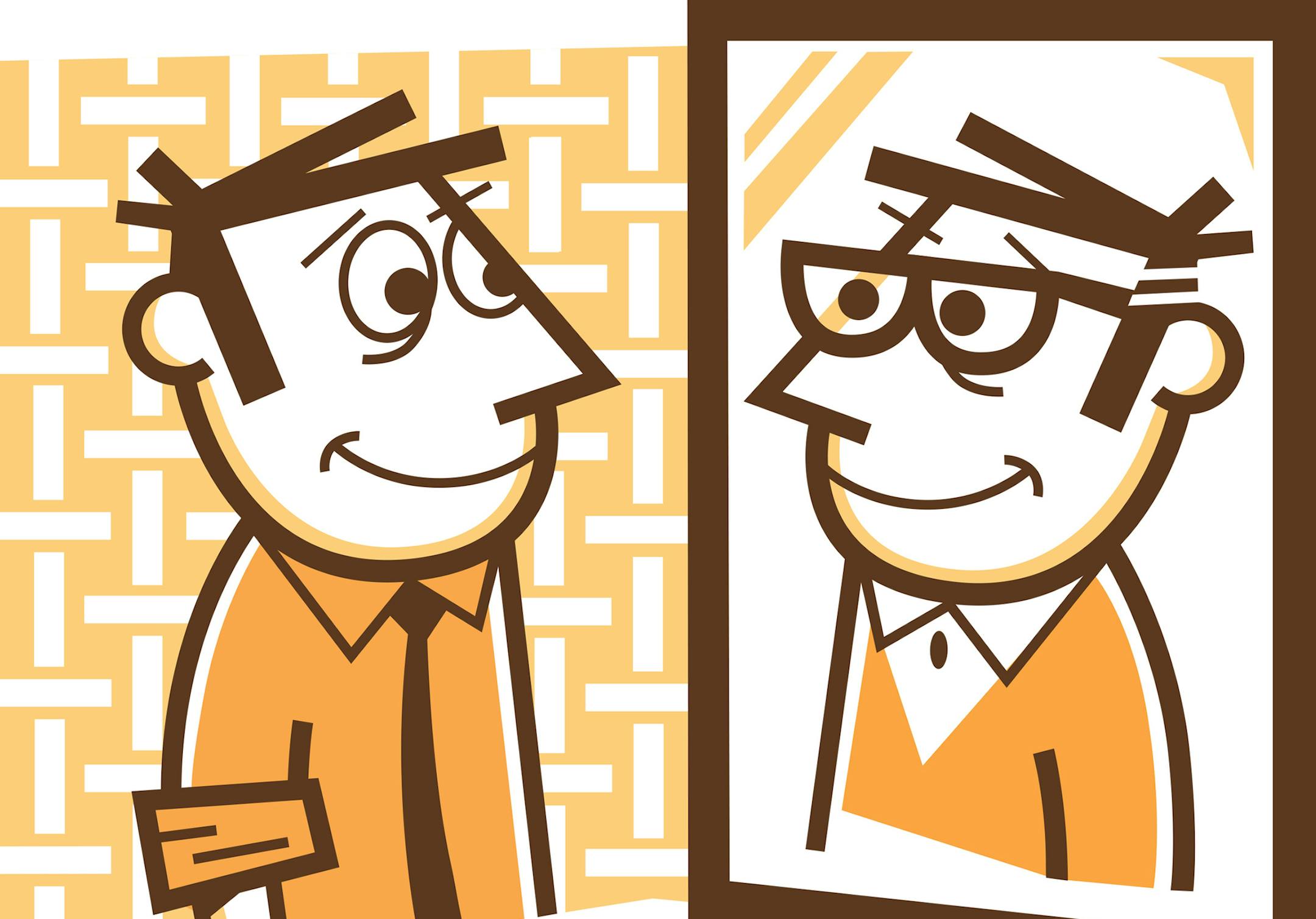
With so many family gatherings this time of year, many of us notice that our siblings are turning into our parents — and that some of our partners' and friends' kids are turning into their parents.
It's no illusion. As scientists have learned from "nature vs. nurture" studies on twins and adoptees, we humans become more like our biological parents and other family members as we get older.
This is a little scary. It's not that we don't love the anxious relative who can't enjoy a holiday dinner because her stuffing wasn't perfect, or the impulsive one who can't stop at three glasses of eggnog even though he will regret it. It's just unnerving to realize they are reflections of the selves we might become.
I learned about escalating family resemblances from talking with Robert Plomin, a behavioral geneticist at the King's College London. He describes the phenomenon in his recent book, "Blueprint: How DNA Makes Us Who We Are."
At first, I thought the interview might be contentious, considering that I'd recently written a column titled "You Are Not Your DNA."
It turned out we disagreed very little. He and I shared a fascination with families. His pioneering studies used families — following adopted kids as well as their birth mothers. He found that kids take after their birth mothers, but not their adoptive parents, in cognitive skills, interests and personality traits. And as they get older, the resemblance only got stronger.
He attributes this to the fact that people with literary, musical, mathematical or scientific inclinations will construct environments that amplify these predispositions; they are not necessarily or primarily products of those environments. He even found that adoptees resembled their birth mothers in such seemingly nongenetic traits as television watching and likelihood of getting divorced.
But then, these behaviors and outcomes are influenced by personality traits. Not that the traits associated with divorce are necessarily bad. As my dad used to say, better a vacancy than a bad tenant.


