WORTHINGTON, Minn. – As students grab their bags and stream out of the science classroom at Worthington High School, Ellen Baker-Merrigan packs up, too.
She gathers notes, student papers, pens and markers, and loads them onto a two-shelf cart. Then she trundles down the hall to her desk in the old storage room she shares with two other teachers. Boxes of books line the wall under a metal staircase slicing through the room, and fluorescent lights flicker amid exposed pipes and ductwork.
Baker-Merrigan, a teacher for more than 25 years, doesn't have a classroom of her own anymore.
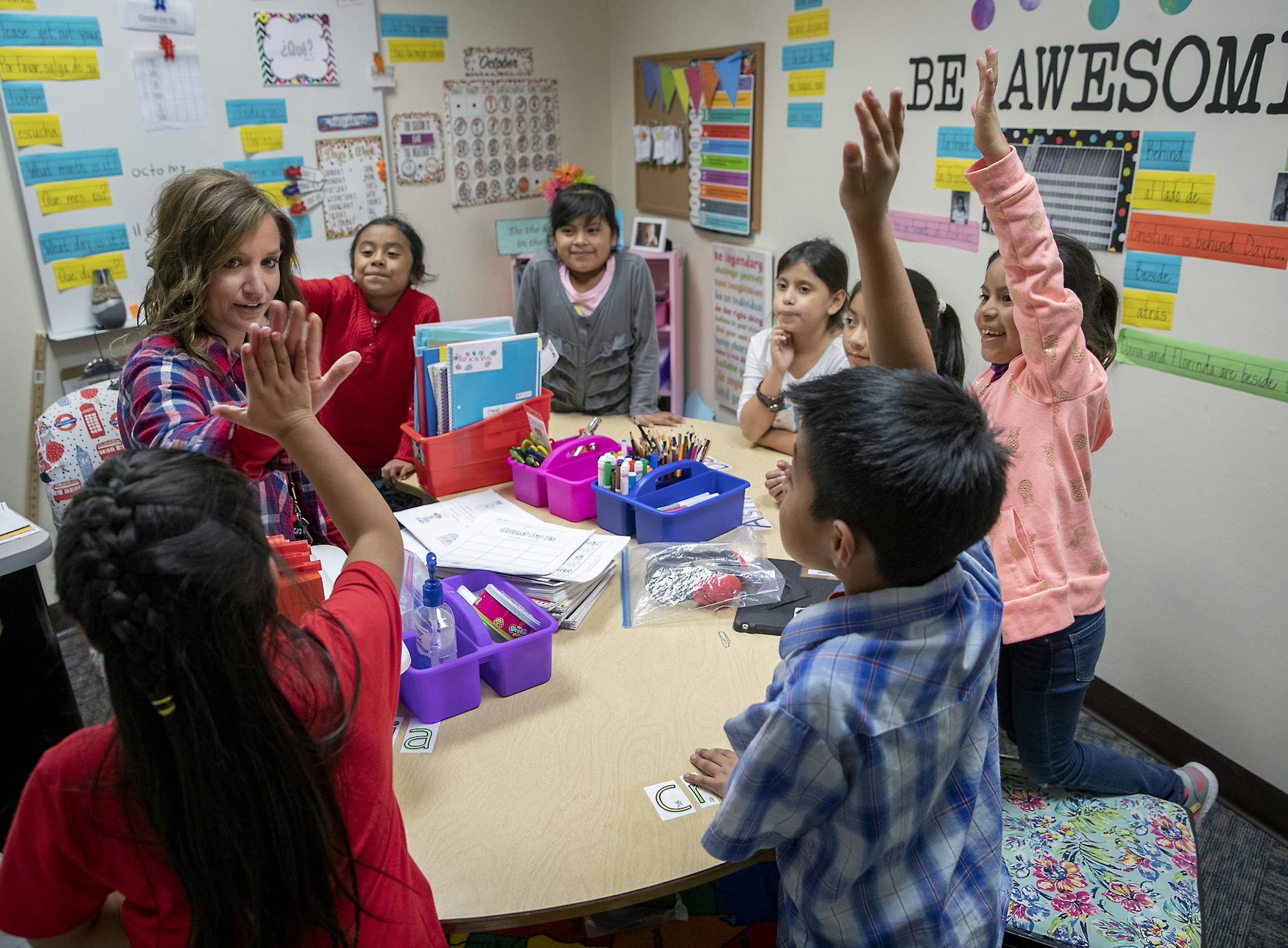
Across town, at Prairie Elementary School, Molly Scheidt leads her seven-pupil English language class in another converted storage room smaller than the walk-in closets of many modern homes. Three other nearby classes are meeting at tables set up in the hall.
"There is literally not one room in this building that is unoccupied," said John Landgaard, Worthington's school superintendent.
A bitter fight over school funding here has become a flash point in a larger debate about immigration and its impact on this southwestern Minnesota prairie town, where an influx of immigrants from across the globe — and more recently, an unprecedented surge of unaccompanied minors from Central America — has dramatically changed the racial makeup of the city and its schools.
Five times since 2013 the district has asked voters to approve spending millions to build more classroom space to house all the students. Each time, voters said no — the last time, in February, by just 17 votes.
Now, as the district makes its sixth request on Tuesday for more money, this city of 13,000 residents remains divided, torn between a longing for the Worthington of the past and addressing the needs of a rapidly growing and diverse population. Similar new struggles are evident around the state.