

U.S. global engagement and the military is this month's Global Minnesota "Great Decisions" dialogue. It's also among the essential questions regarding the Jamal Khashoggi case, which has spiraled into a foreign-policy crisis for the United States and Saudi Arabia.
Khashoggi, a dissident Saudi who wrote critical columns about the monarchy for the Washington Post, was killed in his country's consulate in Istanbul. The kingdom initially denied complicity, but on Friday said he died after a fistfight. Sources close to the Turkish government, however, allege that he was kidnapped, interrogated, tortured, slain and dismembered by a Saudi security detail of 15 men, including one who brought his own bone saw.
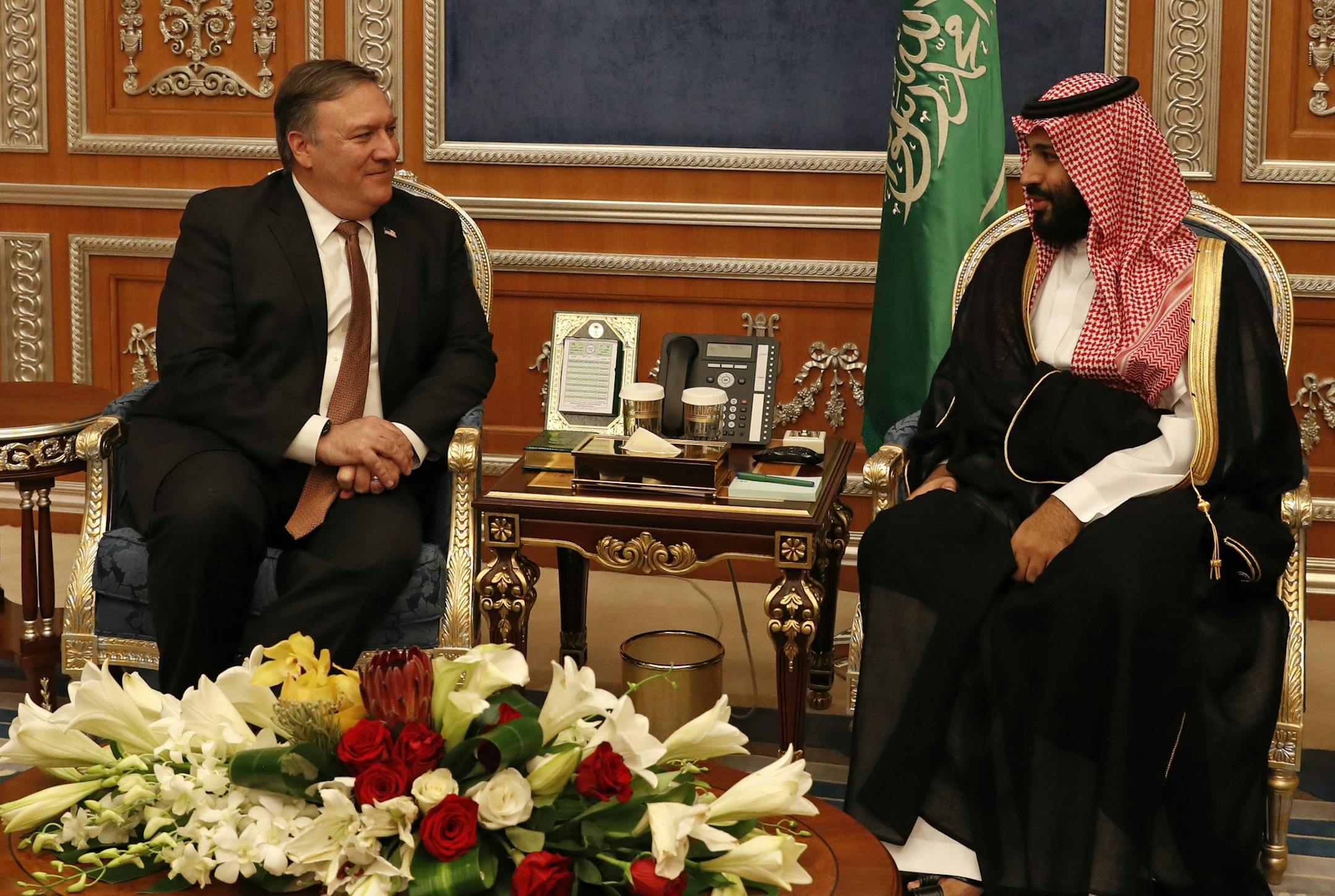
On Sunday, Turkey's president said that on Tuesday the truth "will be revealed in full nakedness." The fig leaf Saudi Arabia already offered Secretary of State Mike Pompeo when he went to Riyadh last week was insulting. But so too was Pompeo's performance, especially when he said, "I don't want to talk about any of the facts" after his grip-and-grin meeting with Mohammed bin Salman, the Saudi crown prince who is the kingdom's day-to-day ruler.
Lawmakers, livid over the lies and the act itself, have already set the congressional clock ticking by triggering the Global Magnitsky Human Rights Accountability Act, which gives Trump 120 days to decide on sanctions. Many in Congress want to go even further and delay or block weapons sales to Saudi Arabia. But Trump's transactional nature is resisting what would be a rare display of the U.S. putting values above interests. "I would not be in favor of stopping a country from spending $110 billion — which is an all-time record — and letting Russia have that money and letting China have that money," Trump said on Oct. 11.
On a technical point, it's highly unlikely that the Saudi military would switch weapons systems, particularly because its forces are so closely intertwined with the U.S., its ally.
On a more fundamental point, Trump is incorrectly reading the leverage and, more profoundly, the values equation.
"The U.S. has tremendous leverage over Saudi Arabia, and I think that sometimes it's portrayed as if the Saudis have more leverage and we're the ones who have to be very careful about straining the relationship; this gets things completely backward," Shadi Hamid, a senior fellow at the Brookings Institution's Project on U.S. Relations with the Islamic World, said even before the kingdom's cover story emerged last Friday.
But while the U.S. may in fact have the leverage, it doesn't necessarily have the high ground.


