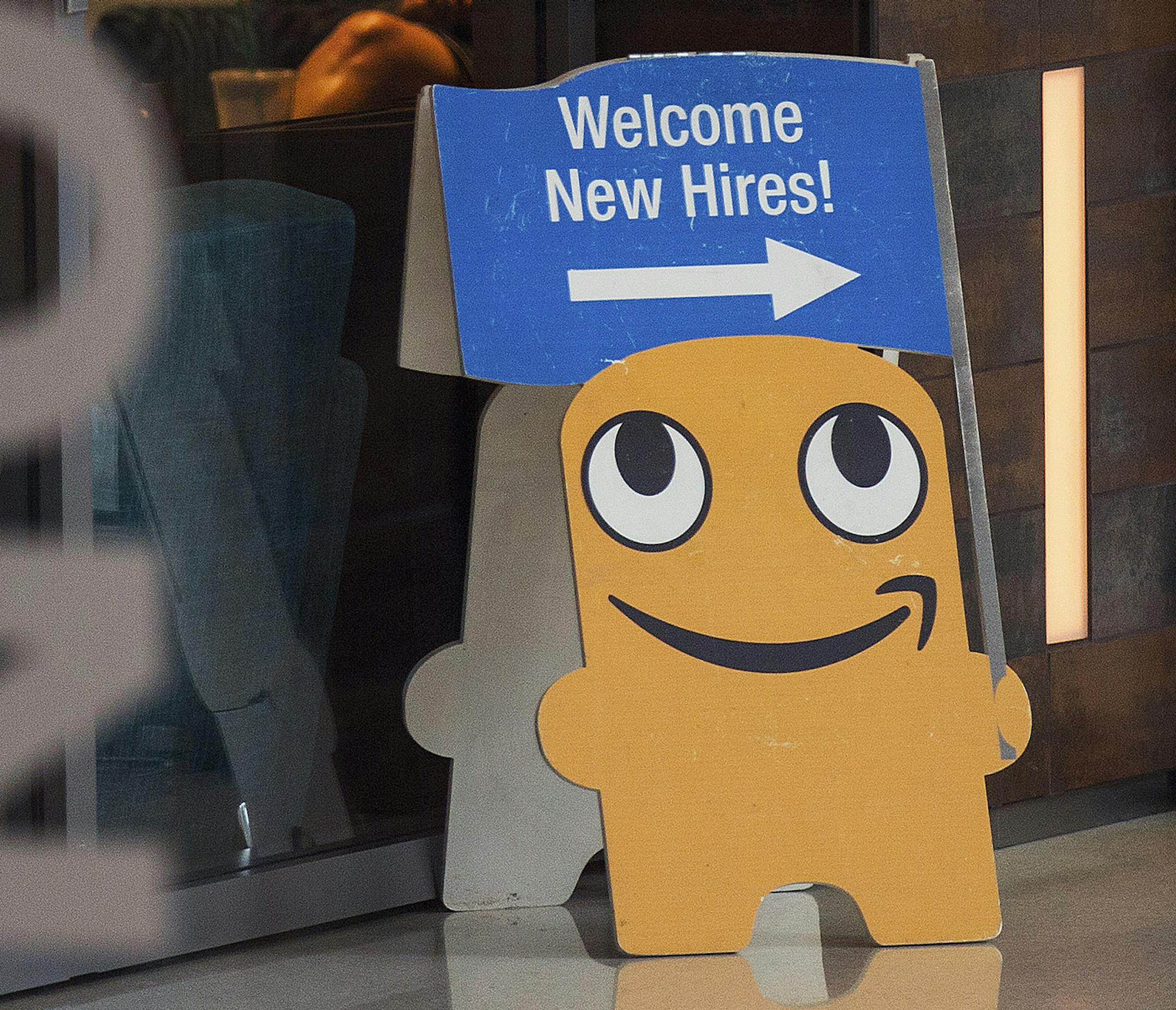
Amazon's workplace environment was the subject of a pair of recent New York Times articles: "Inside Amazon: Wrestling Big Ideas in a Bruising Workplace" and "Depiction of Amazon Stirs a Debate About Work Culture." The first detailed a disquieting workplace ethos, what one former Amazon human resources director described as "purposeful Darwinism." The second opened a wider debate about the further erasing by Amazon of home-work boundaries.
According to the articles, Amazon is nothing less than a corporate "Lord of the Flies" where "workers are encouraged to tear apart one another's ideas in meetings, toil long and late, … held to standards that the company boasts are 'unreasonably high.' The internal phone directory instructs colleagues on how to send secret feedback to one another's bosses." Workers are required to sign confidentiality agreements. Amazon employs highly sophisticated data gathering and analysis on its employees' performance, and regularly employs performance improvement plans.
Jeff Bezos, Amazon's CEO, took great exception to the first Times article but he did not dispute its particulars. The Amazon workplace, assuming the description is accurate, is the latest in a disturbing trend of companies that are not satisfied with employees putting in long hours — they almost seem cultish in the demands of fealty from their employees.
Here in Minnesota, Amazon will soon open an 820,000-square-foot, $220 million "fulfillment center" in Shakopee, employing approximately 1,000 people. Businesses with headquarters outside of Minnesota that conduct business here are required to follow Minnesota employment law. While it remains to be seen how Amazon will behave as a Minnesota employer, what can Amazon expect in terms of Minnesota's legal employment requirements?
Much of what the recent Amazon workplace articles depict are examples of workplace bullying. Currently, there is no federal or Minnesota law prohibiting workplace bullying. In the last Minnesota legislative session, a Healthy Workplace Bill was introduced but failed to move forward. Minnesota is the 21st state to attempt to pass such legislation.
The bill's future is uncertain, but should these Amazon workplace practices become commonplace here, it may provide further impetus for the legislation's passage. It defines workplace bullying (or "abusive conduct") as "repeated infliction of verbal abuse, such as the use of derogatory remarks, insults, or epithets; verbal or physical conduct of a threatening, intimidating, or humiliating nature; the sabotage or undermining of an employee's work performance; or attempts to exploit an employee's known psychological or physical vulnerability."
Meanwhile, Minnesota employees have a variety of state (and federal) laws already on the books that can afford some protection and a measure of redress. Minnesota began enacting anti-discrimination laws in 1955, and the Human Rights Act was passed in 1973. The most recent version of this law prohibits discrimination in employment (among other things) on protected class factors such as "race, color, creed, religion, national origin, sex, marital status, status with regard to public assistance, familial status, membership or activity in a local commission, disability, sexual orientation, or age."
Minnesota also has its own state version of the federal Fair Labor Standards Act, a law which determines which employees are entitled to overtime pay. It requires employers to pay overtime for all hours worked in excess of 48 per work week (federal law is in excess of 40), unless the employee is specifically exempt.