

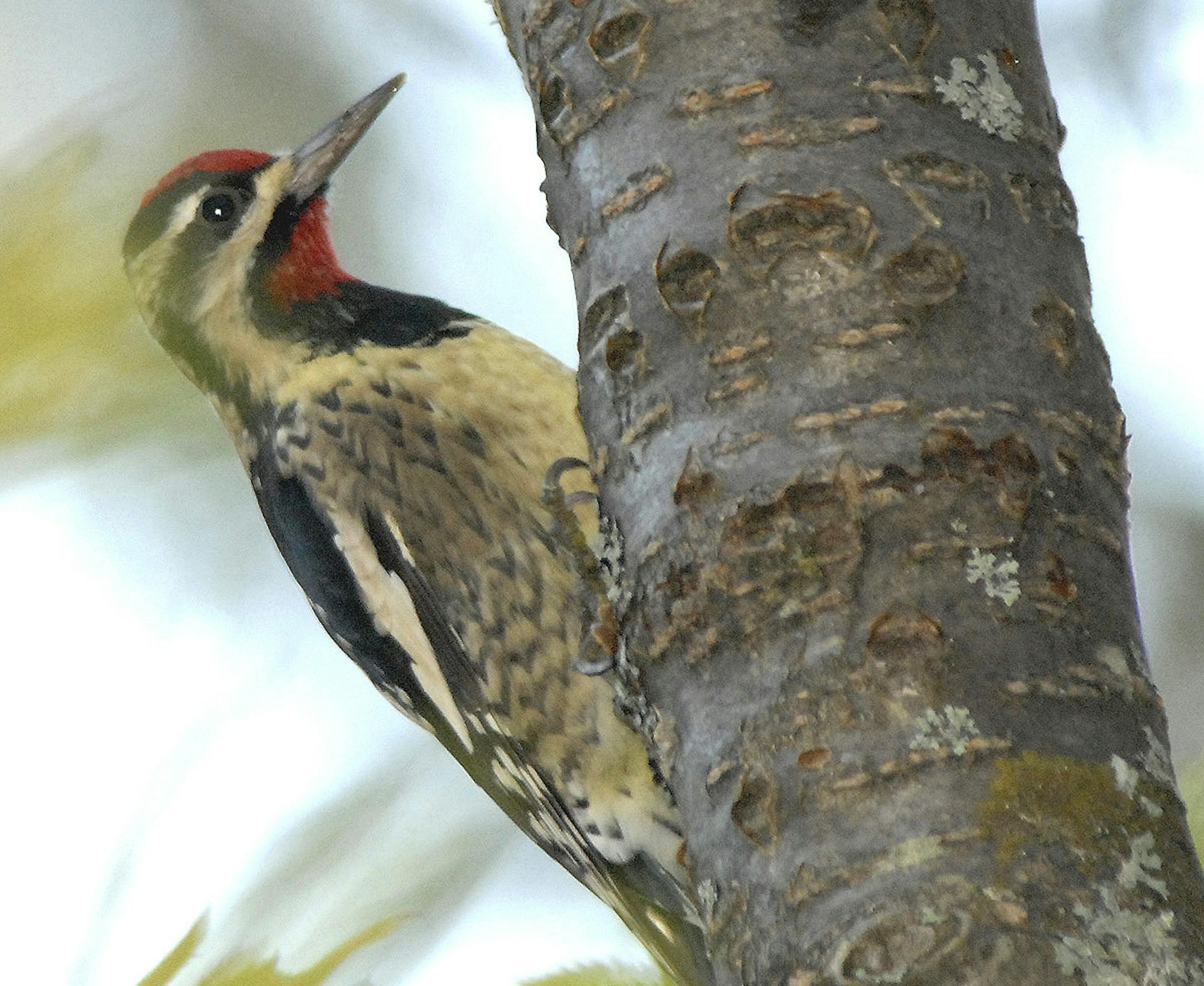
Here's a quick quiz: What bird is the only species mentioned on "The Honeymooners," a popular TV sitcom from the mid-1950s? And which bird is mentioned (but not in the way most of us remember) in an insult by nutty cartoon character Yosemite Sam?
Give yourself points if you answered "Yellow-bellied sapsucker" to both questions. "The Honeymooners" ' Art Carney and Jackie Gleason discussed this woodpecker while sitting on a park bench. And not to split hairs, but even though most of us seem to remember Yosemite Sam snarling, "You yellow-bellied sapsucker!" his exact insult referred to a "lily-livered" sapsucker. But close enough.
People love to say this bird's name for the way it trips off the tongue, and little kids dissolve into helpless giggles when they hear it.
Truth to tell, this is an aptly named bird due to its lemon-colored breast and the fact that much of its diet is made up of tree sap.
Well driller
Unlike most other woodpeckers, it doesn't chisel into tree bark in search of insect larvae or ants. No, the sapsucker might be called the hummingbird of the woodpecker world since it's after a sweeter treat, the tree sap flowing under the bark. Sapsuckers don't really suck tree sap, but instead they lap it up or, really, sip the tree nectar with their brushlike tongue. (A reader has suggested we call this bird the yellow-bellied sapsipper for this reason.)
They're migratory birds and appear early in the spring, right at the time that sap is surging within trees.
These woodpeckers excavate groups of shallow holes, called sap wells, in a tree's outer layer, then wait for sap to drip into the hole. Always on the lookout for the sweetest sap around, sapsuckers drill a few small holes horizontally on a trunk or branch to sample the sap. If it's good and sweet, they begin chipping out vertical rows, and visit these often during the day to slurp up the sweet stuff. (About half of their diet is made up of sap and the rest is insects, berries and fruit.) Sapsuckers make a favorite treat by collecting a mouthful of ants, dipping them into sap, then swallowing the sweet and squirmy ball.
Most of this activity occurs in spring and early summer, when tree sap pressure is at its highest, which brings up a potential negative impact of the yellow-bellied sapsucker's tree drilling.


