

Now this is what World Cup qualifying is supposed to be like. The United States women's national team did what the men's team failed to do and qualified for the World Cup — without any drama. Looking to next summer and the United States' attempt to defend its world title in France, women's soccer is better than ever, and yet still not what it could be.
While the men's World Cup is considering expanding to 48 teams, the women's version of the tournament still is stuck at 24. Given the wide disparities between the top teams and the rest, even 24 teams might be a stretch.
Nowhere is this disparity on display better than in CONCACAF, where the USA just breezed through its World Cup qualification tournament with statistically improbable ease. The United States outscored its opponents 25-0 in five games. It held opponents to a grand total of 13 shots. Not shots on goal, but shots. Striker Alex Morgan had more goals (seven) than the USA's opponents had shots on goal (five).
In its 7-0 victory against Trinidad and Tobago, the USA outshot the visitors 52-0 and actually had more shots at goal than T&T had completed passes (45).
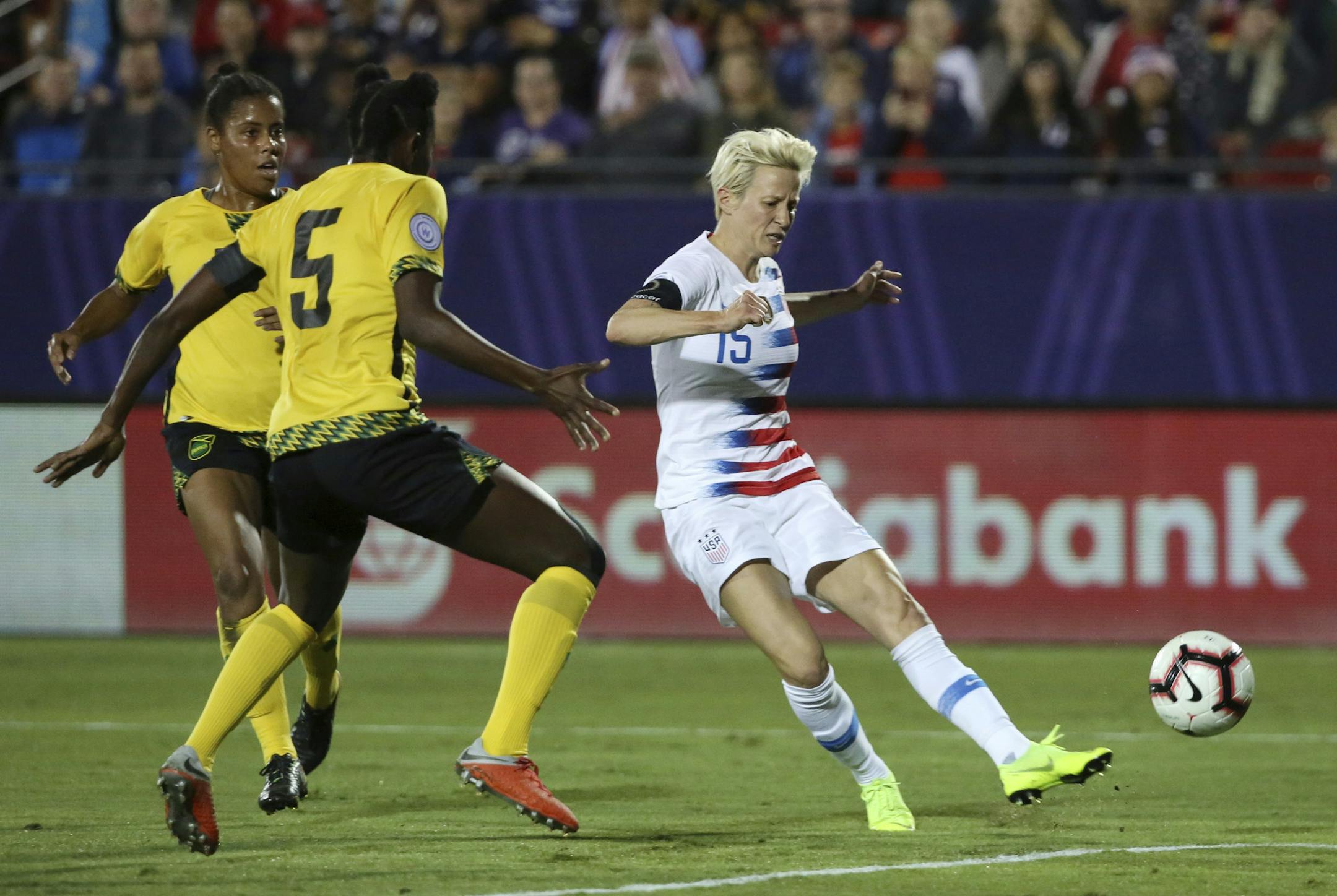
Those amazing numbers also are depressing. Outside of Canada, which the USA defeated 2-0 in the championship game, the region has zero decent teams. The Canadians had just as easy a time in this tournament as the United States did, winning their other four games by a combined score of 24-1. Mexico and Costa Rica, which boast exceptional men's teams, couldn't manage to even make the semifinals on the women's side. Jamaica, the only other team from this side of the globe that qualified for the World Cup, managed just one shot — off target— in a 6-0 loss to the USA.
It's also clear that, at least on an international level, help isn't coming. FIFA announced last week that next summer's World Cup will carry $30 million in total prize money. That's a record for a women's tournament but pales in comparison to the men's tournament, which awards $400 million. FIFA also scheduled the women's World Cup final to be the same day as both the final of the men's Copa América and men's Gold Cup, thus ensuring divided attention across North and South America.
It's a vicious cycle. FIFA's position is that there simply isn't enough interest in global women's soccer to fund a prize pool worth hundreds of millions.
National soccer federations, which thus have little financial incentive to fund top-tier women's teams, concentrate their resources elsewhere. That means less global interest in women's soccer, and the cycle continues.


