1:11
1:11For one moment Sunday night in Brooklyn, Timberwolves forward Chase Budinger's body turned back the clock to the way he used to leap and, if all goes well this summer, previewed how he will be once again.
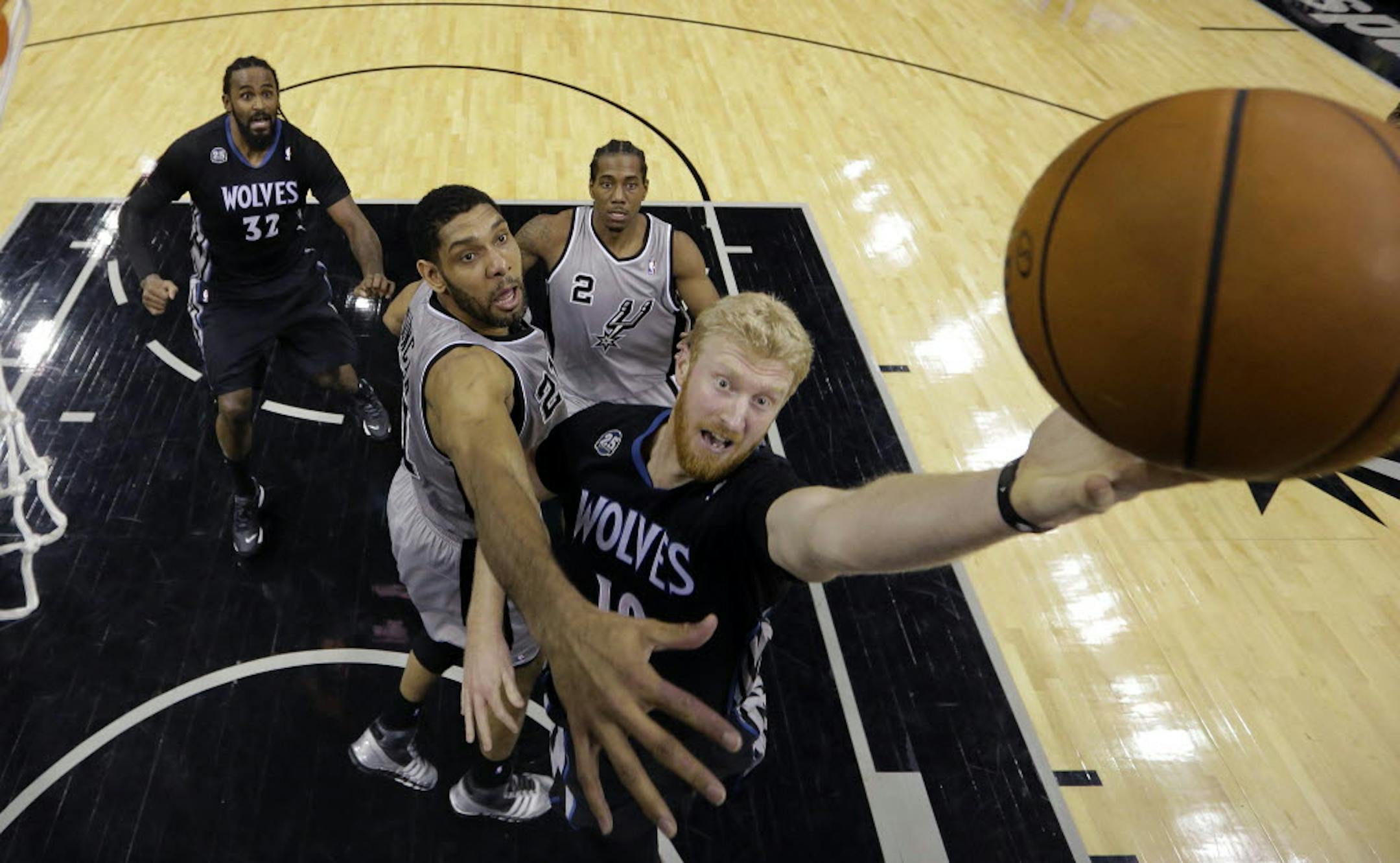
In a flash, Budinger rose between two converging defenders at the rim and threw down the kind of dunk he delivered routinely before he underwent not one but two surgeries within 11 months of each other, intended to repair torn meniscus cartilage in his left knee.
Budinger returned late last season and played 23 games four months after he originally injured his left knee during a game at Chicago in November 2012. He spent last summer rehabilitating the knee but needed another surgery in October, this time to remove a portion of the meniscus after he experienced pain and swelling during workouts just before training camp.
This time, he missed the season's first 34 games and returned in a Jan.8 game against Phoenix.
In many respects, he's still waiting for his body to completely come back.
"One of the toughest things I've ever experienced," he said. "It's a grind coming off an injury, a double injury. And trying to come back midseason, it's very challenging, very grueling on my body. You're just working through all the aches in your body and you get in the games, and mentally, offensively, I'm getting the shots I like, all the shots I've made throughout my career, and I'm missing 'em. It's just frustrating."
Wolves coach Rick Adelman has tried to remain patient with a player he has coached both in Houston and Minnesota, steadily giving him playing time mostly off the bench even when Budinger's body hasn't always responded to the opportunity. Even that has had its limits, though: Budinger didn't play at all in a home game against Phoenix last week, then the next night played nearly 25 minutes in a game at Memphis.
Budinger, in his fifth NBA season, is shooting 38.5 percent from the field and 32.7 percent from three-point range and is averaging 6.4 points in 38 games. His scoring average and field-goal percentage are career lows.