It's 8 a.m. in rural east Germany, and Gunter, a hulking tree trunk of a man, is swinging a hammer over his head, pounding together the steel frame of a 90-foot-tall lookout tower that resembles a Bible.
"This is a big year for us!" he exclaims over a chorus of jackhammers. "The world is coming, and we want to build something special so people remember who we are."
He speaks of his hometown: Wittenberg, a tiny town with a big heart and an even bigger Bible.
It was here, on Oct. 31, 1517, that an obscure monk walked down the street from his cloister, may have nailed a piece of parchment to the door of a church and sparked a religious revolution. The rebel was Martin Luther, and his 95 theses railing against church corruption not only ripped Christianity in two but propelled Europe from Middle Ages darkness to Renaissance humanism, inspired the Enlightenment and arguably gave birth to the modern Western world.
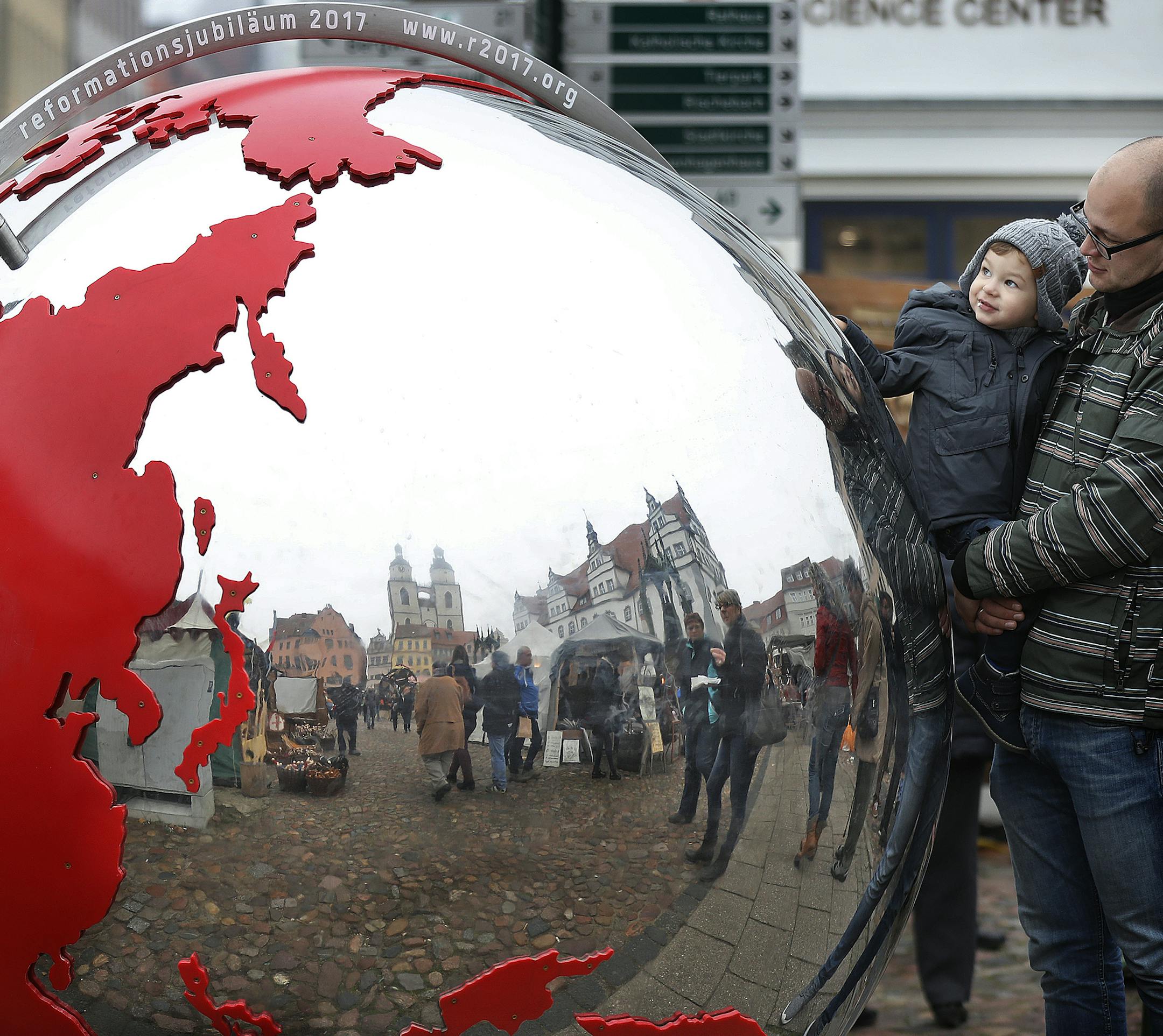
This year marks the 500th anniversary of Luther's public plea that triggered the Protestant Reformation. From May to November, millions of visitors are expected to attend more than 2,000 events throughout Germany honoring Luther's legacy as part of Reformation Summer. But the center of the global jubilee is in Wittenberg, a charming two-street town on the Elbe River that is best measured in steps — exactly 1,517 of them, if you believe the welcome sign at the train station.
By official estimates, upward of 2 million tourists will descend on Wittenberg this year — and that could pose a problem. But for the past 10 years (dubbed the "Luther Decade" in Germany), the 2,135 residents who live inside Wittenberg's historical heart have been busy transforming this sleepy hamlet halfway between Berlin and Leipzig into something of a spiritual and cultural "Rome" for the world's 814 million Protestants and nearly 80 million Lutherans. This year's jubilee is easily the biggest thing to happen in Wittenberg in the past 499 years, and the town's determined to nail it.
My interest in Wittenberg is more structural than spiritual: How does a place with only 2,000 hotel beds in the surrounding area prepare to host so many visitors?
I traveled there in April to find out and quickly realized that Wittenberg is Luther — literally. The town officially changed its name to Lutherstadt Wittenberg ("Luther's Town") in 1938, and today it exists as a sort of open-air shrine to the jowly reformer who lived and preached here for most of his life. After passing by the towering Luther Bible at the train station, walking down Luther Street and dropping my bag at the Luther-Hotel, I set out to retrace Luther's famous march from his Augustinian monastery (now the Lutherhaus museum) to the Castle Church.