

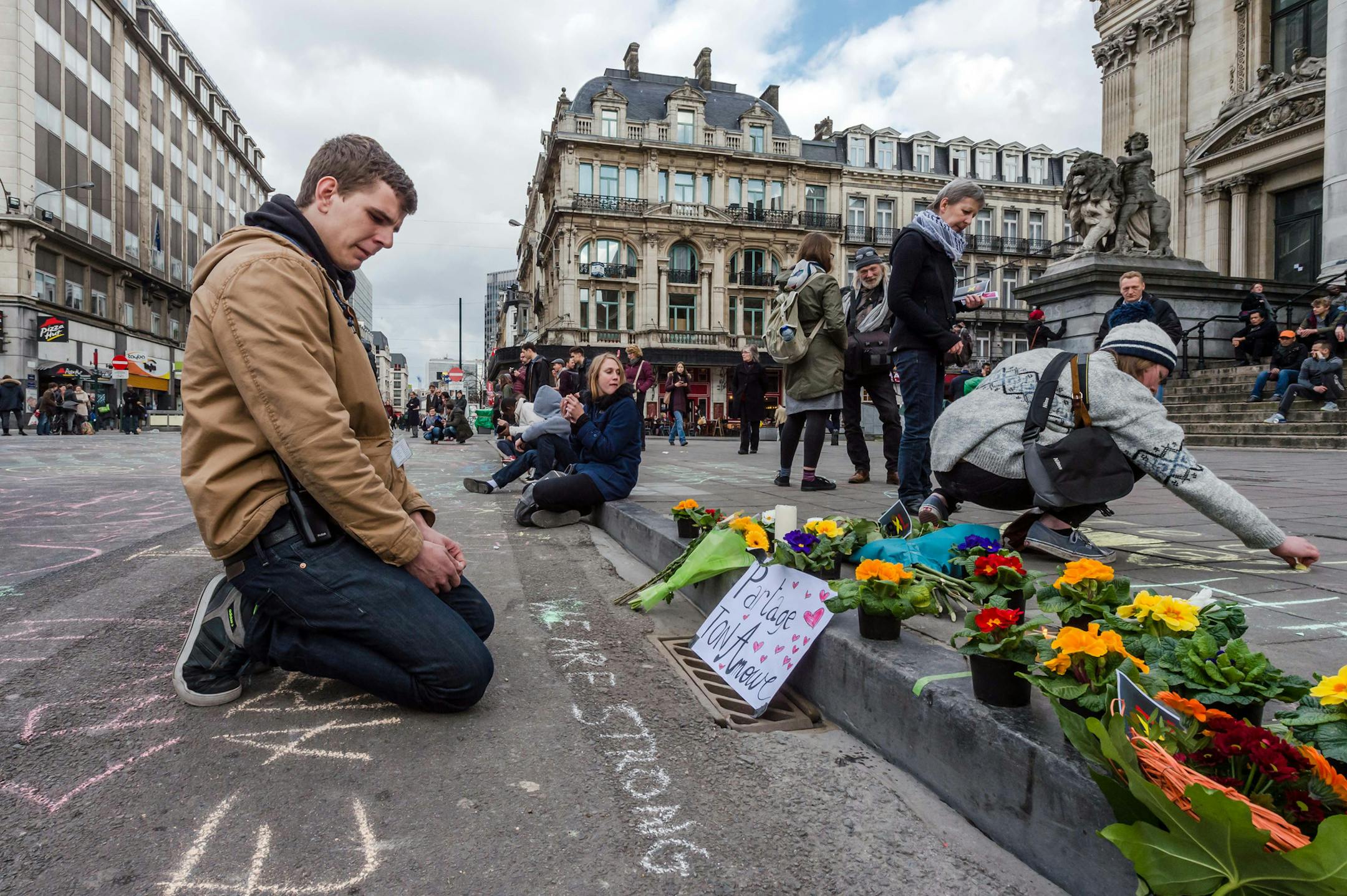
Only days ago in Brussels, as Western leaders celebrated the arrest of a key terrorist suspect, Belgian officials warned that there were dozens more jihadists at large in the city and that more attacks were being planned. They couldn't have known how right they were.
I traveled to Brussels on March 16, to attend the German Marshall Fund's Brussels Forum, a meeting of U.S. and European officials, foreign policy experts and journalists, where the fight against terrorism was at the top of the agenda. Two senators and several Obama administration officials who attended had just passed through the main terminal of the Brussels airport. On Tuesday morning, it was hit by what Belgian authorities described as a suicide attack. At least 26 were killed and many more wounded at the airport, and in a parallel attack on the city's subway system.
When I passed through the terminal less than 24 hours before the attack, an increased security presence was visible. But as with most Western airports, there were no individual checks of passengers entering the main building, which was crowded with arriving and departing passengers on a busy weekday morning. Tensions were already high. On my flight from Dulles, there had been two security-related delays. One man was arrested for assaulting a flight attendant, after he refused to follow instructions from the flight crew.
Belgian Foreign Minister Didier Reynders spoke to the Brussels Forum on Sunday morning and detailed the successful efforts to arrest Salah Abdeslam, believed to be one of the main plotters of the Paris attacks in November. He was captured in the Brussels neighborhood of Molenbeek.
Abdeslam told Belgian authorities while in custody that "he was ready to restart something from Brussels," Reynders said. Belgian intelligence determined that Abdeslam had built a new network of support in Brussels in the four months since the Paris attacks, expanding to include criminal networks that worked with the terrorists to share apartments and leverage connections to procure weapons.
"There are many networks, not only members of his family," Reynders said, adding that there more than 30 people had been involved in the terrorist attacks in Paris and "we are sure there are others."
The problem of foreign fighters leaving Europe for Syria and then returning to Europe to level attacks on civilians is not new. In May 2014, a French national returned from Syria to Europe, where he attacked the Jewish museum in Brussels. Intelligence sharing between the United States, European countries, and countries in the region — especially Turkey — is key to combating this threat, Reynders said. He added that cooperation was improving.
Gen. Gratien Maire, France's Vice Chief of Defense, said the threat posed to Europe by terrorists connected to the Islamic State, such as Abdeslam, is more dangerous than in the past, because the terrorist organization has territory, weaponry and support that provides important advantages to returning foreign fighters.


