

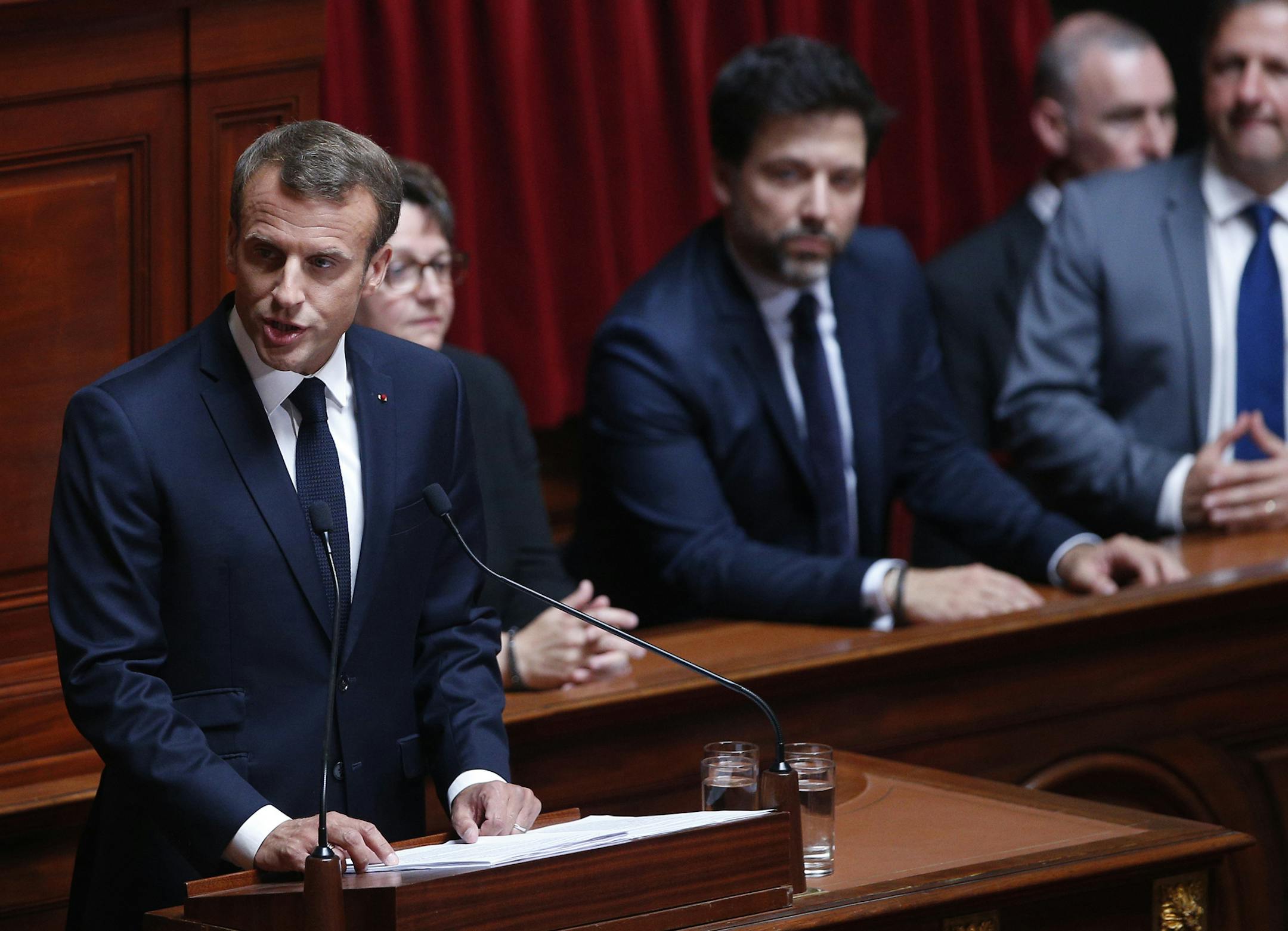
A year ago, as a young freshly elected president eager to look the part, Emmanuel Macron summoned a joint sitting of both houses of parliament in the former royal palace at Versailles, and spoke loftily of grandeur and destiny. On July 9, for his second speech to Congress, it was a more humble head of state who stepped into the chamber.
"I know that I can't do everything," he declared, "I know that I won't succeed in everything."
The setting was unchanged, but the tone was markedly different. A chastened president, it seems, is trying to recover his touch.
In a stiflingly hot chamber, as parliamentarians fanned their moist faces, Macron sent two broad messages. First, that the president, so often accused of arrogance, is in fact listening.
He spoke of voters' anger and fear, of those who feel they are "ignored, held in contempt," and struggle to make ends meet. Results, he warned, could take time to come through. But he would keep trying. Jupiter, in other words, may still be sitting on the republican throne, but he is not deaf to his critics, nor the concerns of ordinary folk.
His second message had less to do with style than philosophy. Macron's detractors accuse him of lacking ideology, or political clarity. He campaigned as neither on the left nor right, and invented a centrist party, which dominates the National Assembly, from nothing. Some one-time supporters on the left consider that the decisions taken in his first year — cuts to corporate and wealth taxes, a focus on curbing the budget deficit to below 3 percent, an increase in social charges on pensions — prove that the former Socialist minister has turned into a right-winger and "president of the rich."
Measured by investment
In response, and with an unspoken nod to Amartya Sen, John Rawls and Nordic welfare models, Macron repeated his core beliefs.
First, that social policy should be measured not — as traditionally in France — by the level of benefits paid, but by investment in individuals, in education and training, to help "emancipate" them from poverty. Second, that he is not out to help the rich, but those who create wealth.


