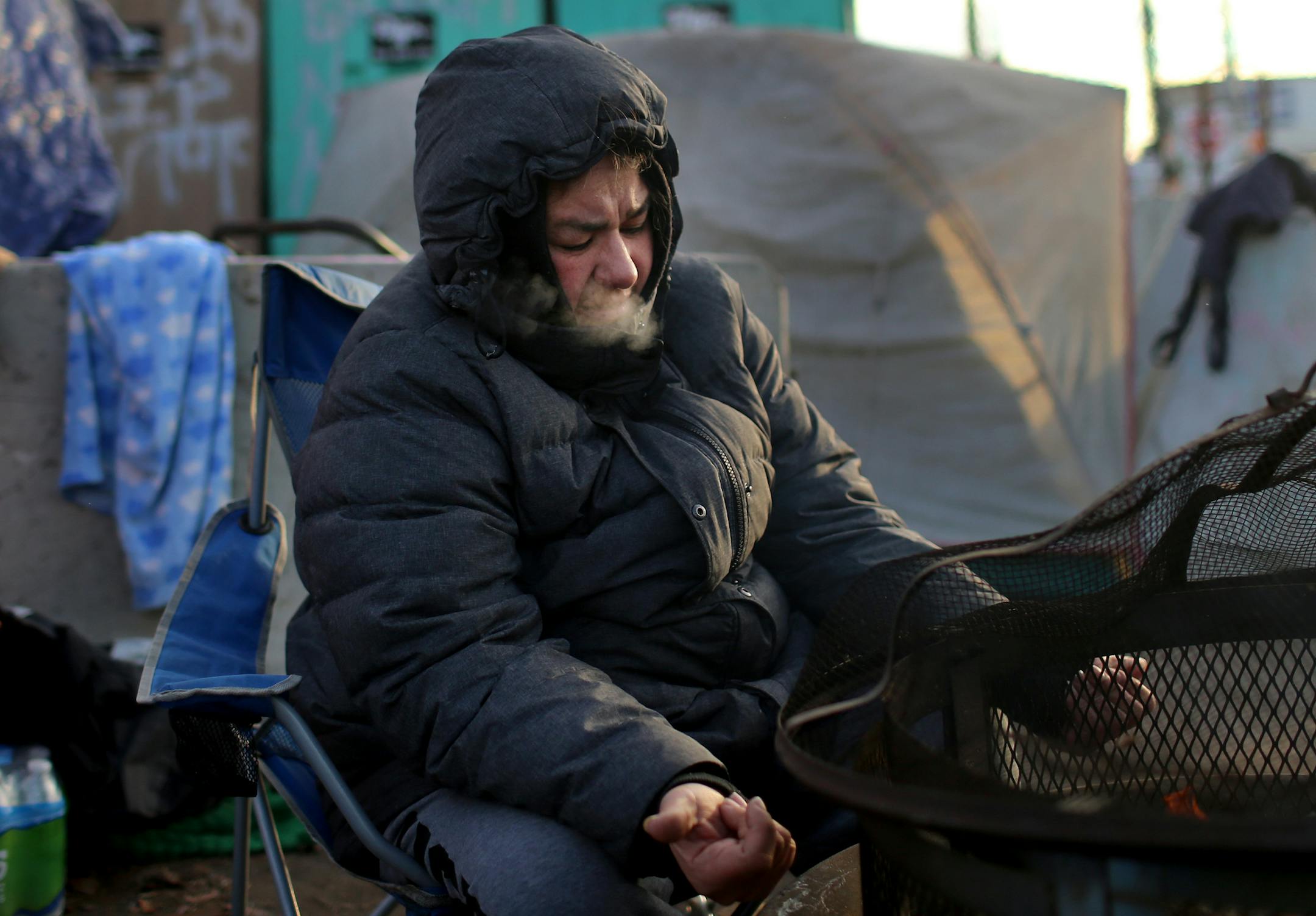
Early on a frigid morning this week, Sharon Lee Lovejoy and her two school-age grandchildren cuddled under a pile of blankets and sleeping bags in the back seat of her 1999 Jeep Cherokee, parked across from the large homeless encampment along Hiawatha Avenue in south Minneapolis.
The Lovejoys have come to this same corner on 22nd Street every night since they became homeless in early September. And despite multiple visits from outreach workers, Lovejoy insists that living in the shadows of a homeless camp — near many of her friends and relatives — is safer than living in an emergency homeless shelter.
"We're not going to any shelter," said Lovejoy, 49, who works part-time as a dishwasher, as she prepared her grandchildren for school. "We're safe here and we have people who watch over us."
The Lovejoys reflect the challenges ahead for Minneapolis officials and nonprofit outreach agencies as they intensify efforts to persuade hundreds of homeless people to move from the sprawling homeless camp to a new emergency shelter by mid-December.
Despite the sudden onset of freezing temperatures, many people living in or near the homeless camp say they have no plans to move. Some said they prefer the independence of living on the streets, huddled in tents or cars, than in more organized shelters. Others fear that moving to a shelter will cut them off from the tight-knit relationships they have formed at the homeless camp, which is located near the Little Earth housing project and has a large number of American Indian residents.
"If there are too many rules, people won't go," warned Kendell Jackson, 29, who is living at the camp. "A lot of people out here have problems with authority and they'll risk frostbite or worse to preserve their freedom."
Local nonprofit agencies that serve the homeless have been working diligently to persuade people to relocate to the new shelter, which is on property nearby owned by Red Lake Nation. They point to deteriorating conditions at the camp, including a spate of fatal drug overdoses and a fire last week that destroyed multiple tents.
Since early this month, teams of outreach workers with Indian nonprofits have visited the camp, surveying inhabitants about their hopes for the new shelter and the kinds of services they need.