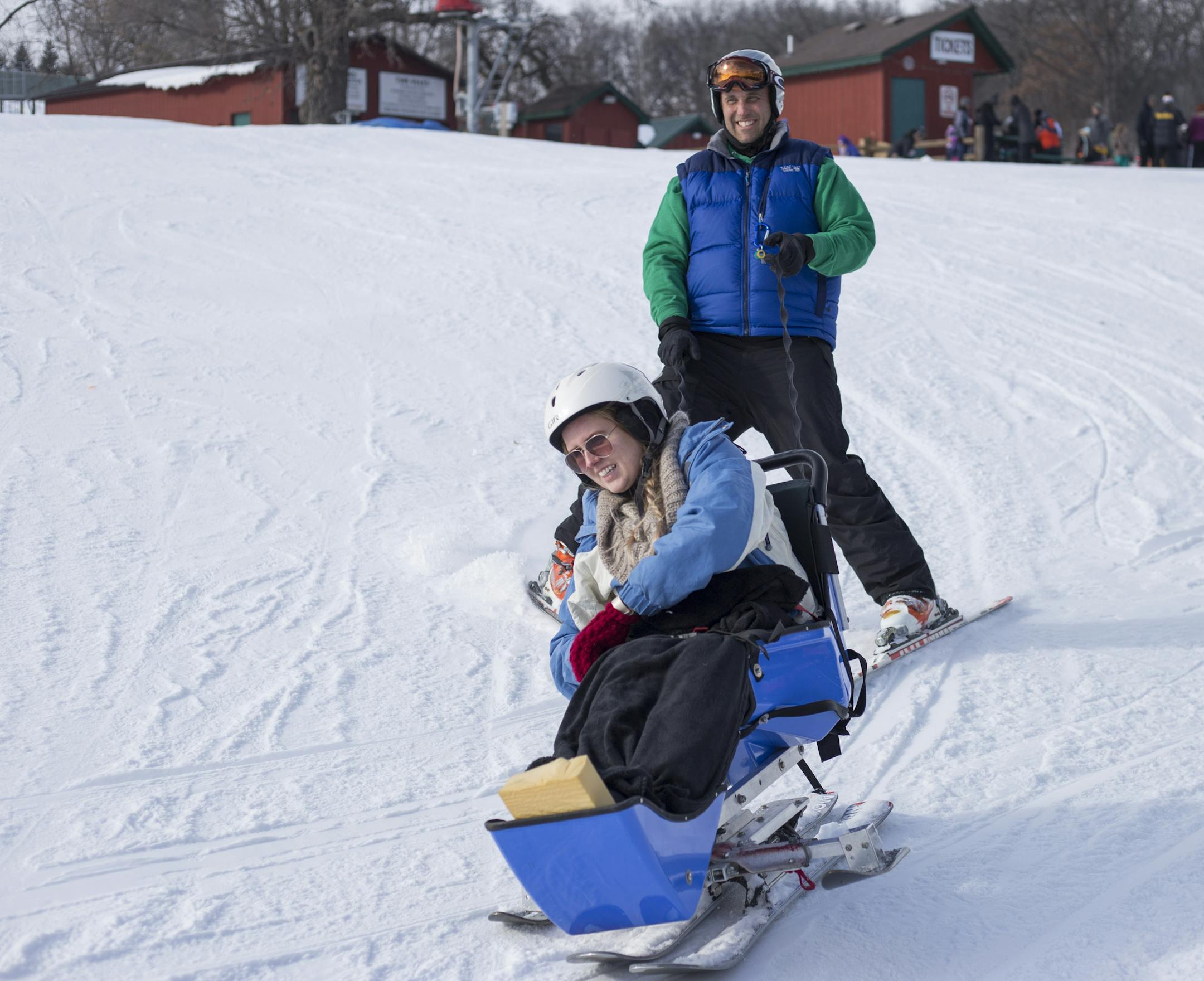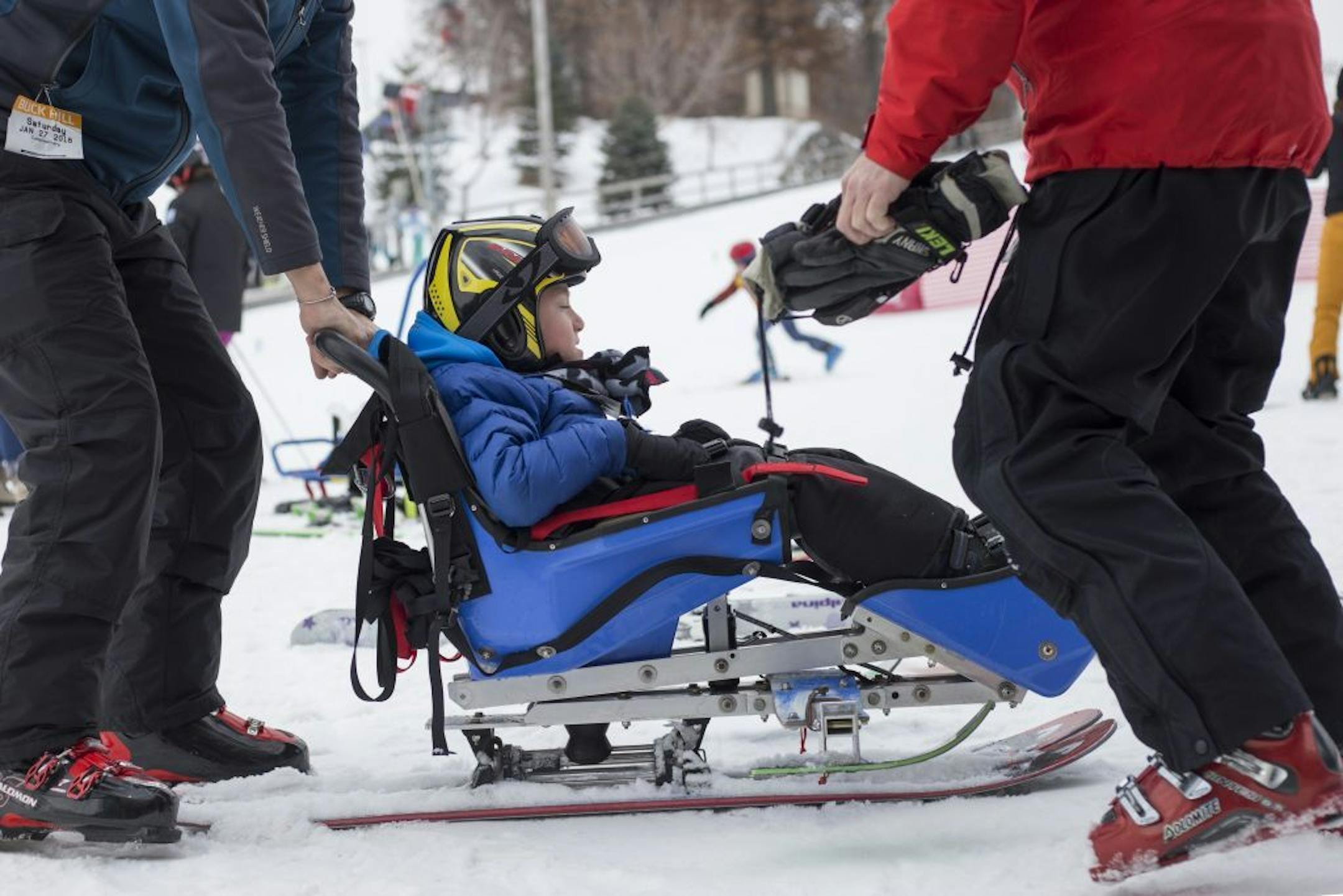
On the first run down Buck Hill, Anikah Schmidt was nervous. The 8-year-old had never tried downhill skiing, mostly because of balance problems following surgery to remove a brain tumor.
But by the time she reached the bottom — in a sit-down sled with volunteers skiing fore and aft — Schmidt gave her mom two thumbs up. And by the time her mother called her in for lunch, Schmidt was calling the sled her royal "carriage."
"She told us we're now supposed to call her Princess Anikah," said her mother, Vanessa Schmidt, of Prior Lake.
Adaptive sports have grown in visibility and popularity over the past two decades, part of a movement to end the segregation of people with disabilities. But the high cost of equipment can make it prohibitive for children to even experiment and see if they like them.
Gillette Children's Specialty Healthcare in St. Paul, a hospital that specializes in children with disabilities, has adopted a one-two punch to solve the problem. It created events such as the Buck Hill children's ski day on Jan. 27, where its patients can try sports, and then raises money to finance continued participation if they get hooked.
Since 2015 the hospital has maintained an adaptive technology and sports fund, which last year alone issued $114,000 in charitable grants that helped 50 families buy either specialized sports equipment for their kids, or iPads or other devices to help them communicate. The hospital also provides a bicycle expo so children can experiment with different kinds of bikes.
"We're talking about doing a water ski event," said Lynn Carpentier, a Gillette business development executive.
Many patients treated at Gillette have cerebral palsy, a brain disorder that causes rigid muscles and reduced mobility, but others are paralyzed or have disabling conditions such as scoliosis or spina bifida.