

Hollywood loves a sequel. Presold concepts cut through the cultural clutter and carve out big box-office receipts. The second serving of "The Hunger Games," for instance, was 2013's top-grossing film, followed by "Iron Man 3" and "Despicable Me 2."
So why not have an awards-season sequel?
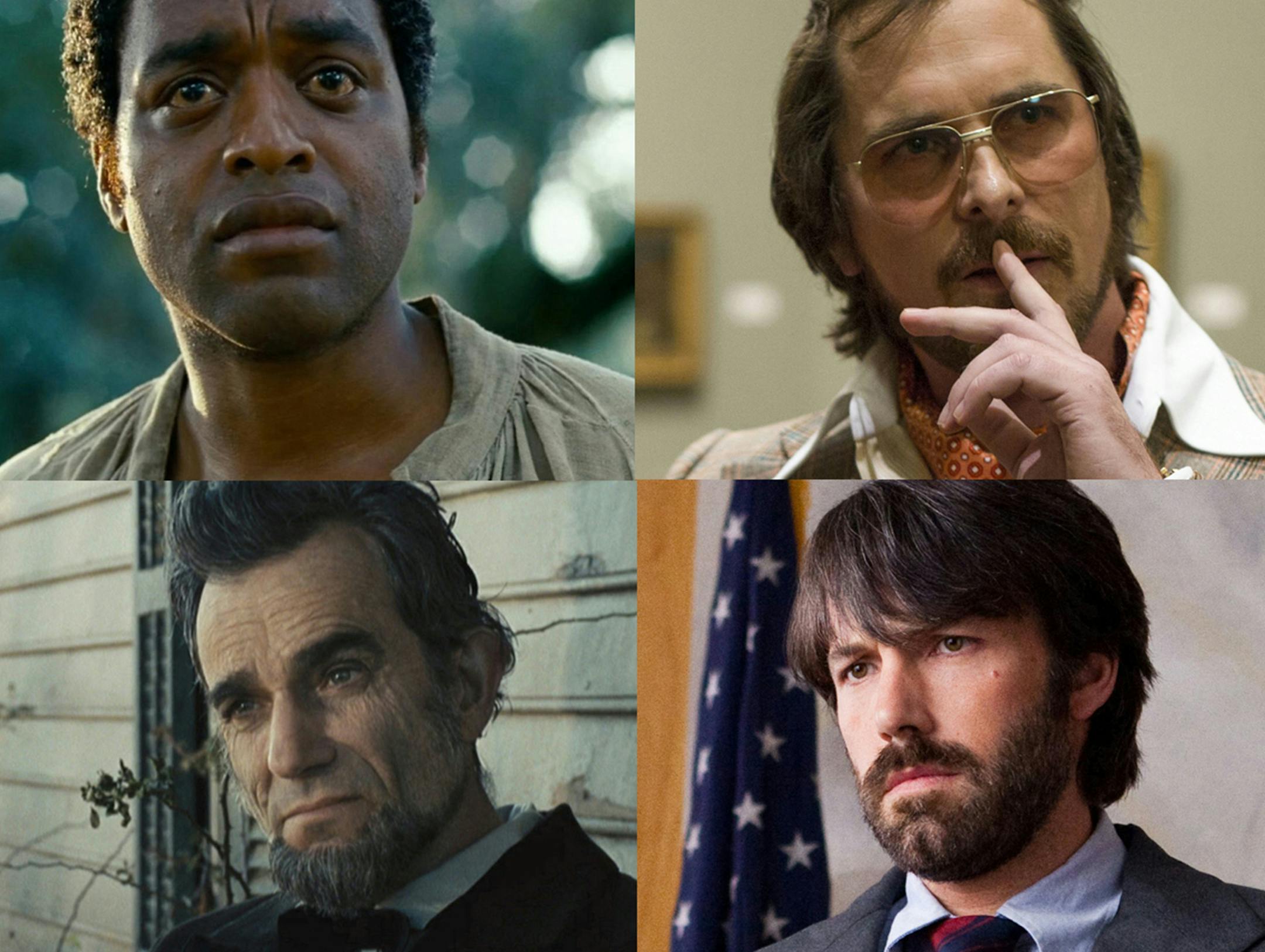
That seems to be the case after Sunday's Golden Globe Awards and Thursday's Academy Award nominations. Like last year, it appears that the top two Best Picture contenders are a heavy historical drama about slavery — "12 Years a Slave" now, "Lincoln" last year — and a film about a 1970s scam — "American Hustle" now, "Argo" in 2013.
The critical acclaim and audience acceptance of those films speaks to how movies can contextualize national, and personal, history.
"12 Years a Slave" won best drama at the Golden Globes and received nine Oscar nominations. It's a grim, gripping film about the sin of slavery, shown in an unvarnished (and at times unbearable) fashion.
While it may be the most frank film about slavery, it's hardly the first. In fact, the topic — and the very sense of America's identity — were the subjects of 1915's seminal "Birth of a Nation." Society, and cinema, are still trying to work out this defining era, according to Robert Silberman, associate professor of art history at the University of Minnesota.
Silberman, who will screen the still-controversial "Birth of a Nation" in a course next semester, calls it a "great challenge. It's a great film, but political poison because of the racism and the questionable view of history."
"Birth of a Nation" also was the first great blockbuster, and it influenced Margaret Mitchell to write another Civil War cultural touchstone in "Gone with the Wind," said Silberman. He added: "If we looked at 'Amistad,' 'Lincoln' and '12 Years a Slave,' we'd see the historical past being used as a mirror for the present and a way of addressing contemporary problems."


