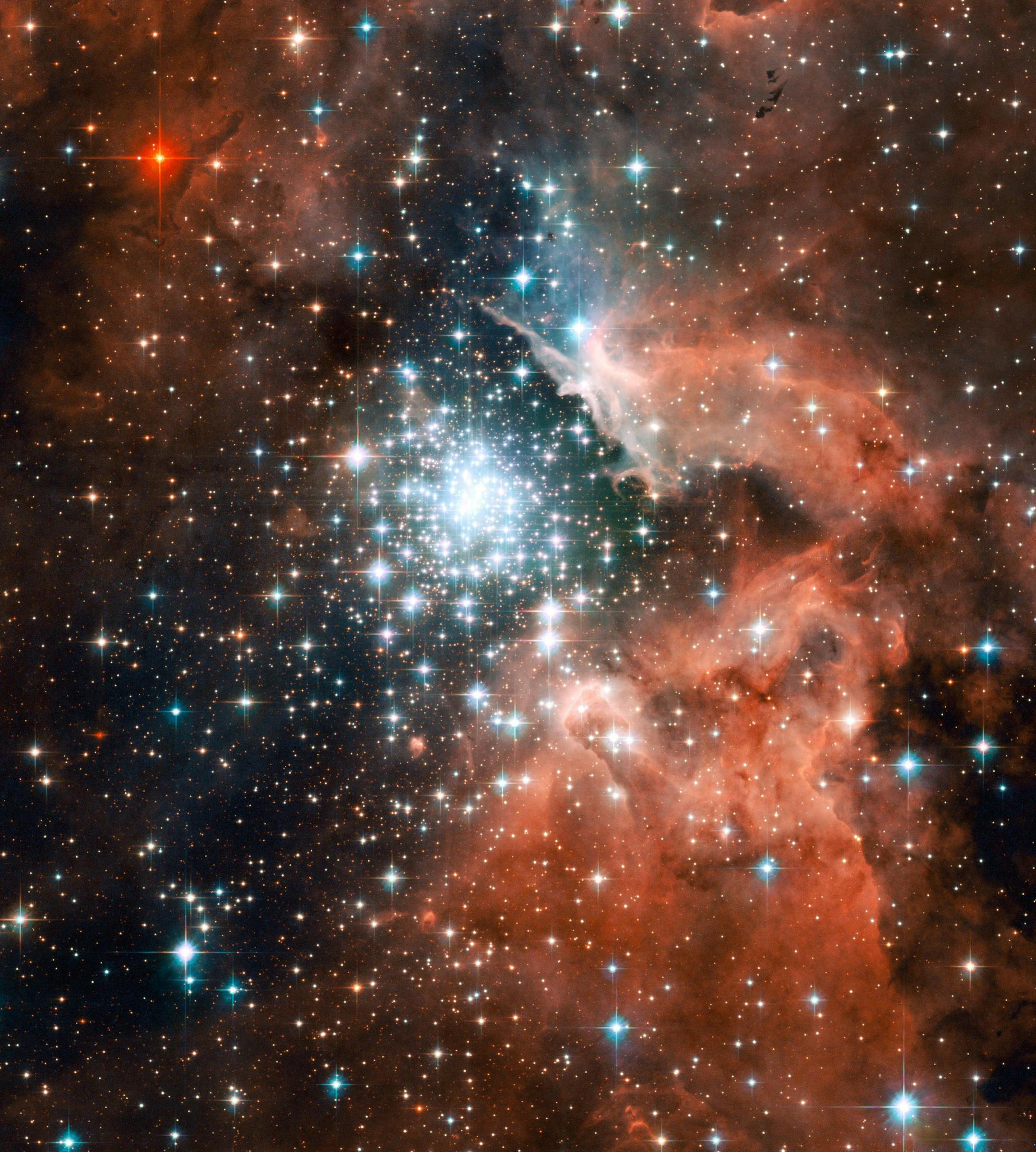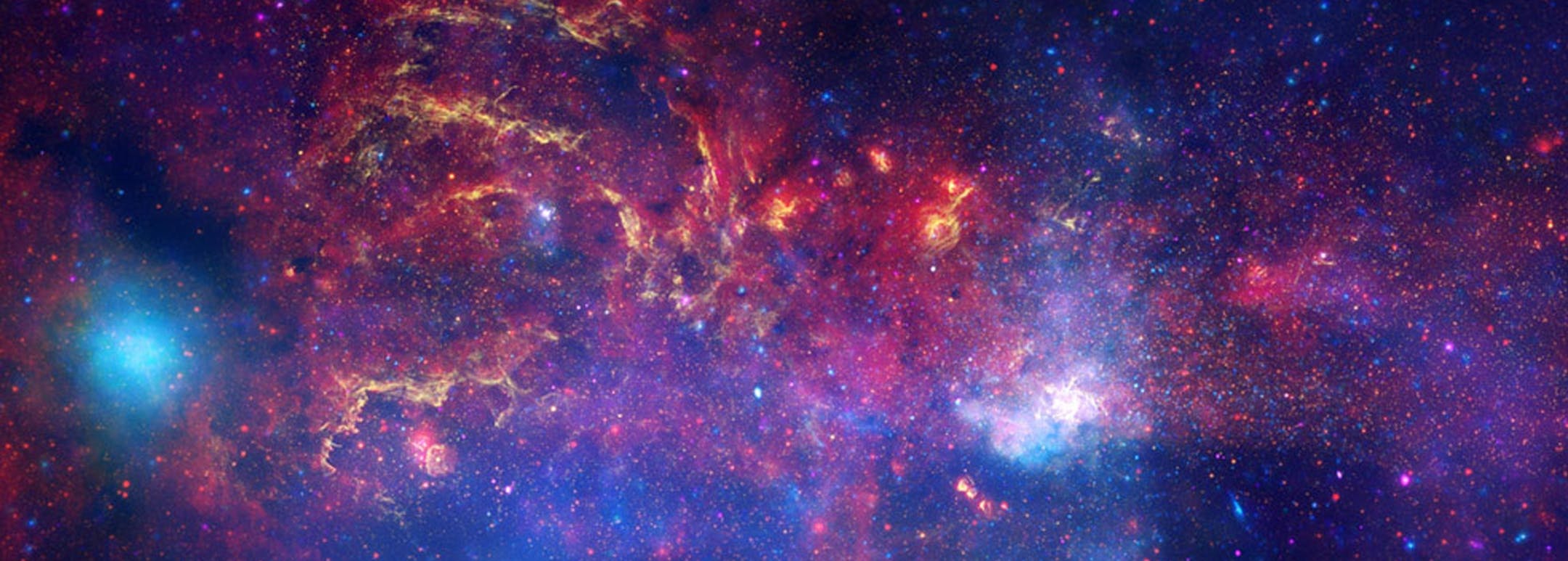
A team of Wisconsin scientists has stitched together a dramatic 360-degree portrait of the Milky Way that reveals never-seen-before details of our galaxy.
The new galactic portrait is made up of about 2.5 million infrared images collected by NASA's orbiting Spitzer Space Telescope over the last decade.
By looking at the sky in infrared light, astronomers can cut through clouds of obscuring interstellar dust, revealing stars, previously hidden stellar nurseries, proto stars, bubbles, jets, bow shocks, and nebulae that can't be seen in visible light.
The infrared images that make up the new portrait provide revelations about the Milky Way's content and structure. They add more than 200 million new stars to the catalog of the Milky Way — plenty of astrophysical data to occupy a new generation of astronomers, scientists said.
Known as GLIMPSE360, the interactive Milky Way portrait allows viewers to look through the plane of the galaxy and zero in on specific objects with a zoom feature. Scientists can now clearly examine the structure of the Milky Way — how many spiral arms it has, where they are and how far out they extend, said Edward Churchwell, a University of Wisconsin, Madison, professor emeritus of astronomy involved in compiling the new picture, which shows a 2-degree-wide band of the galactic plane.
The infrared images provide conclusive evidence that a large bar structure consisting of millions of stars runs like a straight line through the center of the Milky Way and extends out to about 12,000 to 13,000 light years from the galaxy's center. The bar is oriented about 45 degrees to the line joining the sun and the center of the Milky Way, Churchwell said.
For the first time, astronomers also can now measure the large-scale structure of the galaxy using stars rather than gas, Churchwell said.
"We can see stars being born. And if we can identify stars in the process of forming, we can start to learn about the physics of how stars are formed. We don't really understand the details of how stars are born."