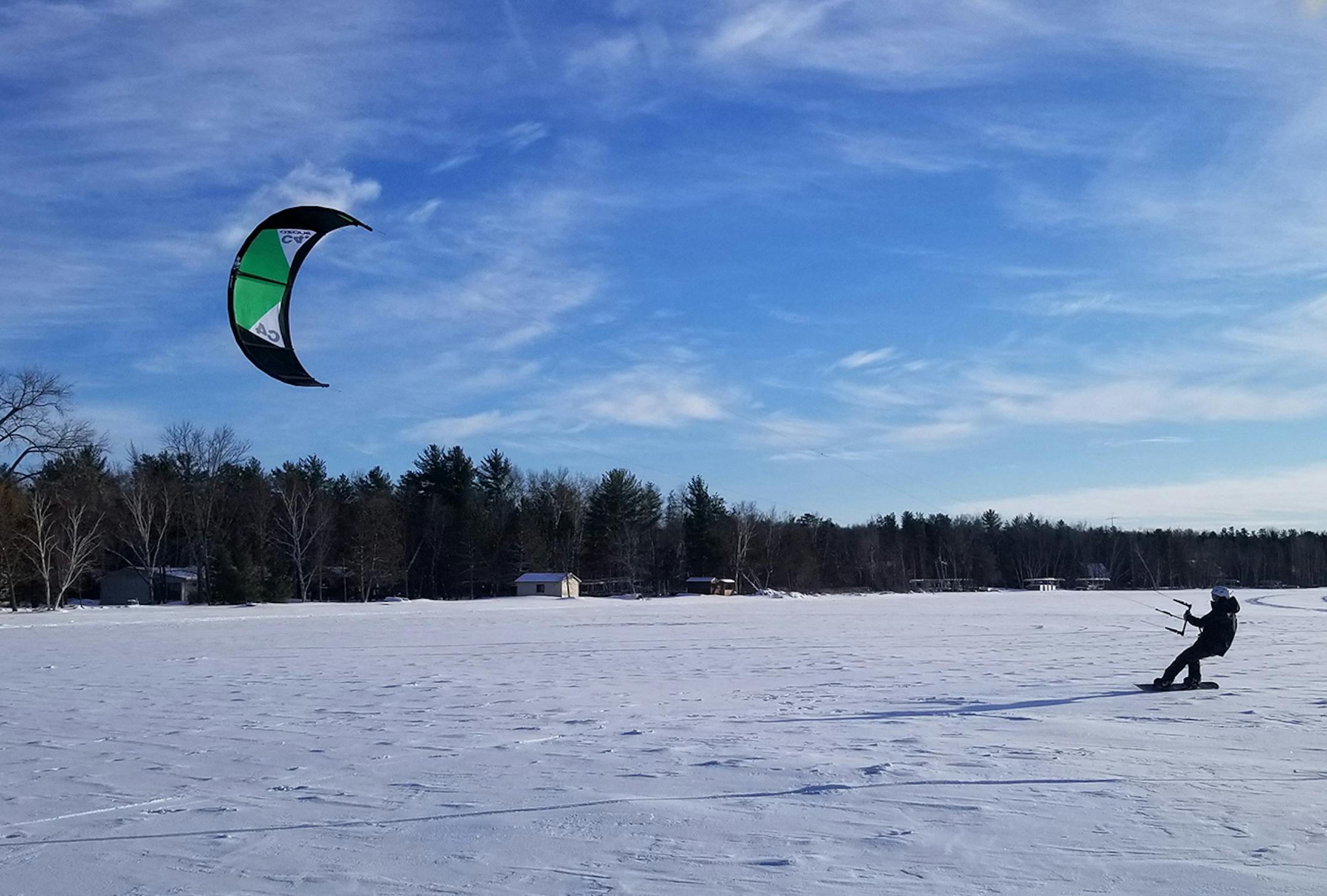
A fresh snowfall. A good, stiff breeze. A full moon or cloudy skies that reflect Twin Cities lights.
That is a magical trio of conditions for Tighe Belden, who unfurls rope, straps on skis and lets the wind take hold of a kite that propels him across the wide expanse of Bde Maka Ska (formerly Lake Calhoun) in Minneapolis or White Bear Lake — which he often has to himself as sunset disappears and gives way to deep, inky blues.
"Night rides are super special," said Belden of Minneapolis, but he counts any chance for kiting as time well-spent. "There's something about riding the wind. It's finding harmony in something that's alive. Some [kiters] like the jumps, spins and tricks. For me, it's the dance with Mother Nature and that peaceful moment."
Belden, 55, happily chased the wind as a devoted windsurfer for 25 years before getting hooked on snow-kiting and helping to orchestrate the Mille Lacs Kite Crossing, considered to be one of snow-kiting's biggest events March 3, in Garrison. (Belden finished ninth last year among racers on skis.) This is the Crossing's 14th year.
The sport, which draws from kitesurfing, evolved from the 1980s when a Hood River, Ore., surfer with a rigid kite met a surfer from France with a soft kite. They figured out better mechanics after a chance meeting in Hawaii, Belden said. Skiers, too, were experimenting and trying kites with handles to get more speed and bigger thrills.
Kitesurfing has evolved to become much easier. Kiters employ a harness and control their direction by how they lean. It doesn't require the upper body strength of windsurfing, and allows people of all weights and body types to master the sport, Belden said. The sport also doesn't require the heavy surfboards, one of the reasons kiting is overtaking windsurfing for thrills.
Jeremy Jones, 22, of Brainerd, grew up kiting. His family embraced it. He currently teaches kiteboarding in the summer along the Outer Banks of Hatteras, N.C. Absolute beginners can master the sport, he said, but it can help to already have skills such as assessing the wind from sail boating or windsurfing, or managing speed and balance from downhill or water skiing. Experience with snowboarding, skateboarding or wakeboarding helps with kiteboarding.
His advice? Invest in lessons. About three hours of instruction and practice can give a newcomer a good base of skills. Six hours can have a person ready to read the wind and kite. Those skills involve knowing which size kite to choose based on the strength of the wind and weight of the rider. Kites range from 3 meters to 19 meters. Twelve meters is a good midrange size for starters, Jones said. In general, smaller kites are best in higher wind speeds.