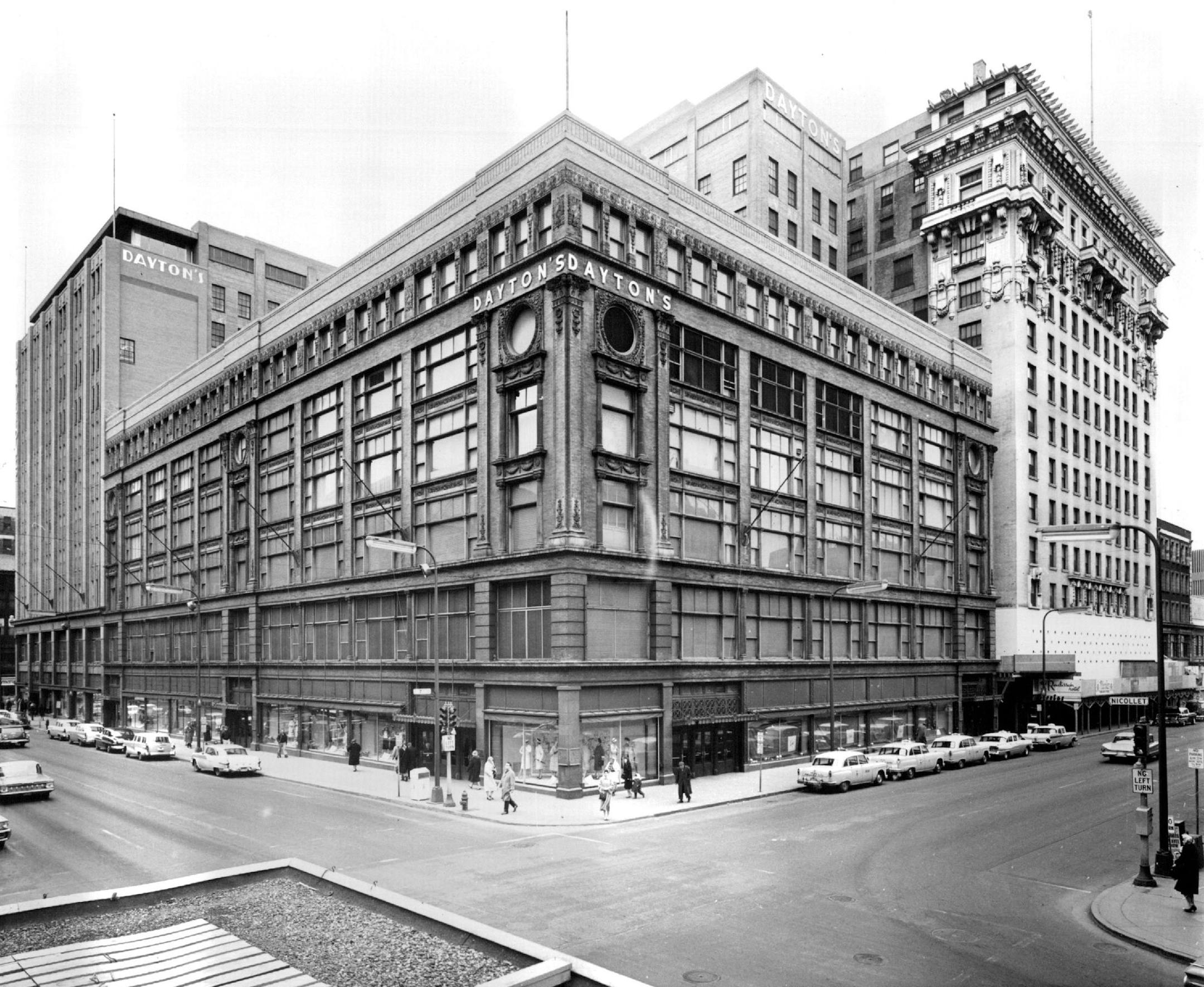
Downtown Macy's is closing. Perhaps it will be housing, perhaps a hotel. If there's one thing that's represents a boom market downtown these days, it's places to sleep.
Some eulogies will call it the end of an era, which it is. There's been big-league retail on that corner since the start of the 20th century. Some tributes will lament the closing of the last big department store, but it's a wonder it lasted as long as it did. You can blame demographics, changes in transportation preferences, the rise of online retail or any number of factors, but there's one basic reason Macy's closed:
Not enough people shopped there.
The city could have run light rail right through the store, and it would have closed. Parking could have been free, and it would have closed. For cities of our size, downtown department stores are dead elephants. It's a damned shame. But that's what we wanted. And that's what we got.
But how did we get here?
Macy's, at 7th Street and Nicollet Mall, seems in the center of things today, but the store was on the edge of the dry-goods district when George Draper Dayton opened the doors in 1902.
It was the home of Goodfellow at first, the fourth-largest department store in Minneapolis. Within a year, however, Goodfellow sold out to Dayton.
People probably lamented the change at the time. "Nothing stays the same, all the old familiar names are going away. What's with this 'Dayton's' place, anyway?"