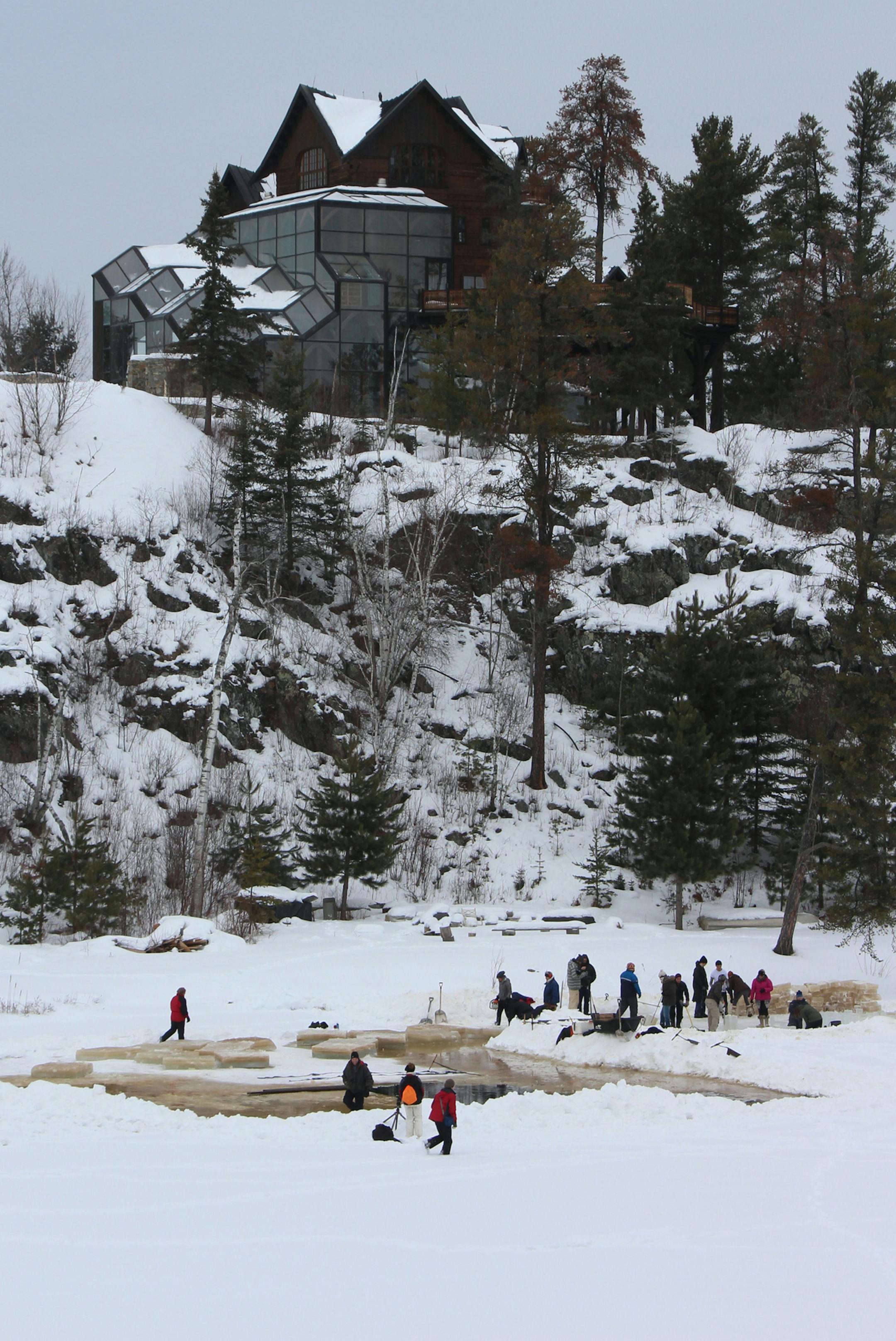
Near Ely, Minn. – Laughter tickles the North Woods night as a delicate snowfall graces those around the campfire. They stand in the heart of winter at the Steger Wilderness Center, north of Ely. After laboring all day, they reminisce about their work and weary muscles. Stories spring loose, new ones take shape and their micro community bonds. The same occurs for folks warming near the wood stove inside the main lodge. They're all participants in Will Steger's "Ice Ball."
As a polar explorer, Steger has directly participated in important expeditions and returned with firsthand accounts of accelerating climate change. He also has designed and constructed an off-grid conference retreat pulsing with renewable energy literally in the middle of nowhere. The wilderness center's power grid features a solar electrical system. However, one of the few elements that require no electricity or propane is refrigeration. He prefers the use of lake ice instead.
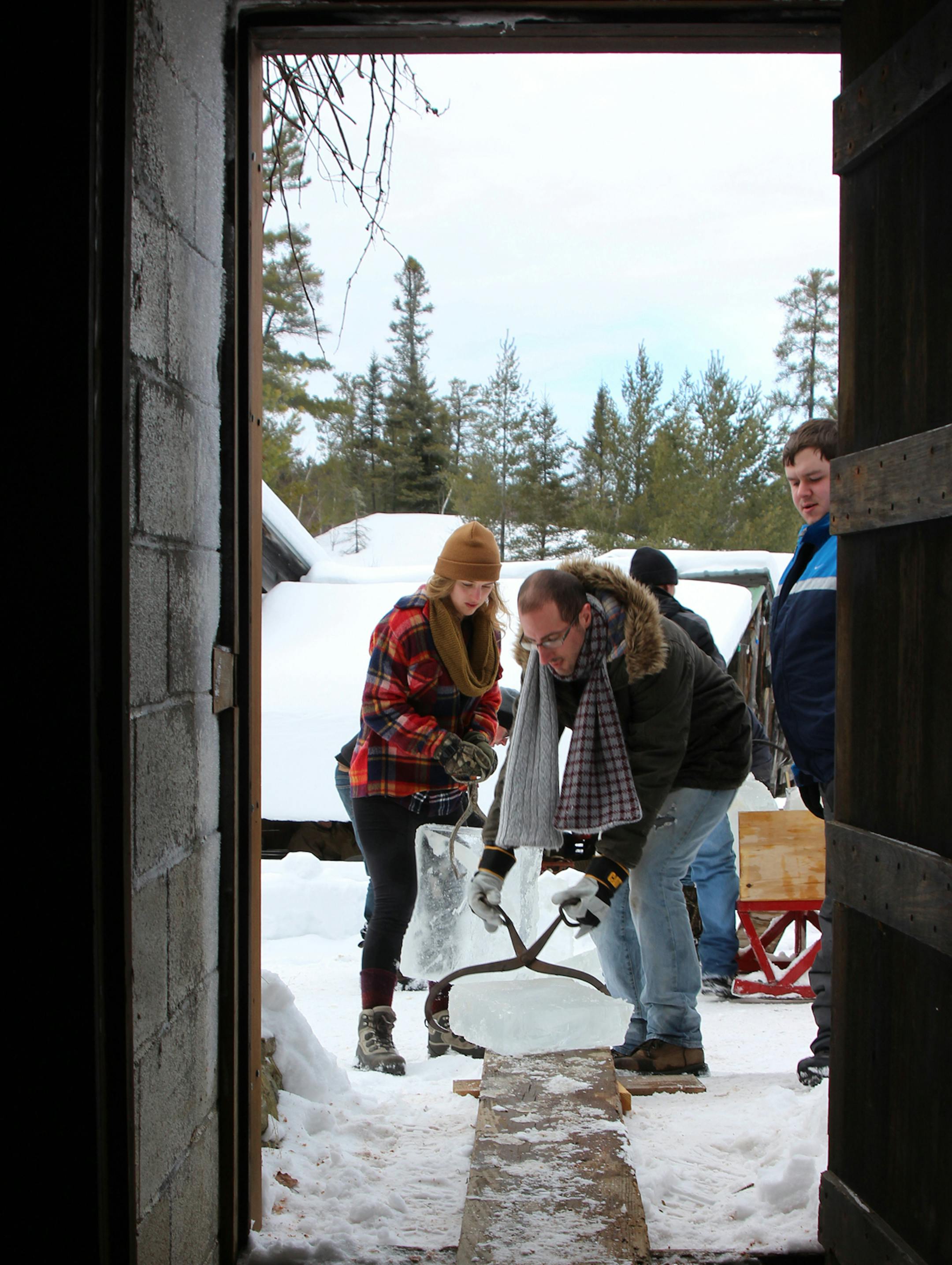
Since 1967, Steger has used a variety of methods for harvesting ice from the lake at the center. They've included hauling by hand, by truck and with a Bobcat. But a few years ago he employed horses to further reduce his carbon footprint. Next year, electric chain saws will eliminate more fossil fuels.
Along the way, Steger invited people up a few at a time until the harvest blossomed into a full-blown event. Now, it's the Ice Ball. This year's was Feb. 6. Steger's so-called "old guard" has worked with him for 15 years or more. But he also invites additional guests for what he calls an invigorating day of "good off-grid living." This year, they include friends, associates, donors, and members of the Anoka-Ramsey Community College Environmental Club who arrive early to prepare for the other guests.
The harvest
Peter Wahlstrom is an ethics instructor at ARCC and the environmental club's adviser. He's also the quasi-coordinator of the Ice Ball. Though a festive atmosphere awaits later in the day, he acknowledges there is labor to be done. For interested do-it-yourselfers, these are the basics:
Participants divide into teams. The one on the lake is the largest, with subgroups at separate stations. A 20-by-20-foot grid of lake ice is scored into 4-by-4 squares with a chain saw. About a dozen people then take turns hand sawing with long ice saws. Just a few sawyers work at a time, and trade with a teammate upon exhaustion.
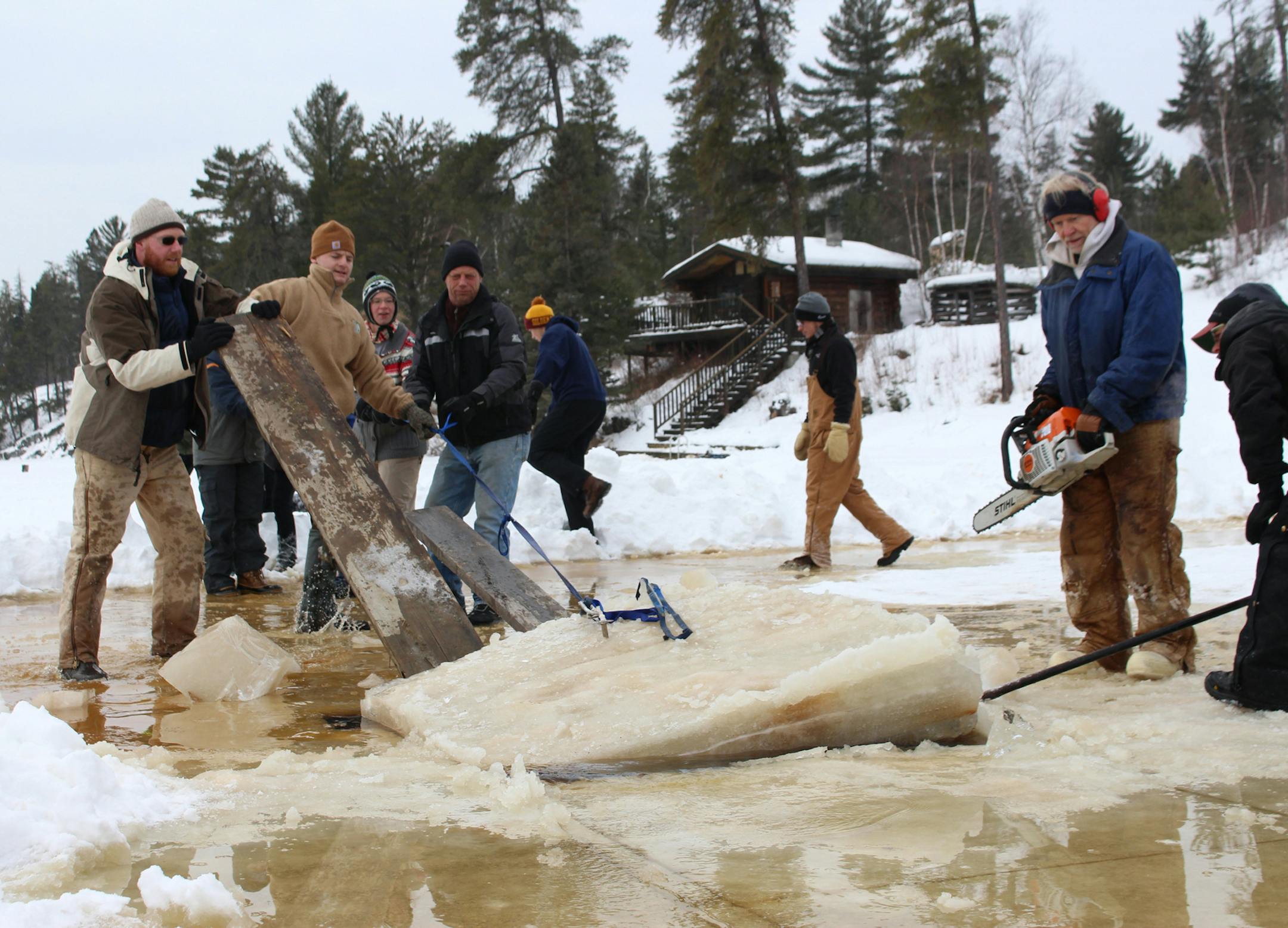
After a block has been cut, an ice screw is centered in the block and affixed with a long strap that has looped handgrips for team members. At this point, nearly the entire team is required to remove the block from the water.
The first block is the most difficult, Wahlstrom said, because it's trapped on all sides by other ice. A long plank is necessary to bob the block up and down in the water. Timing is all important in the heave-ho that finesses the block above additional planks so it can be lifted out and dragged to another station. But even upon success, the team has to be wary of the occasional runaway.