

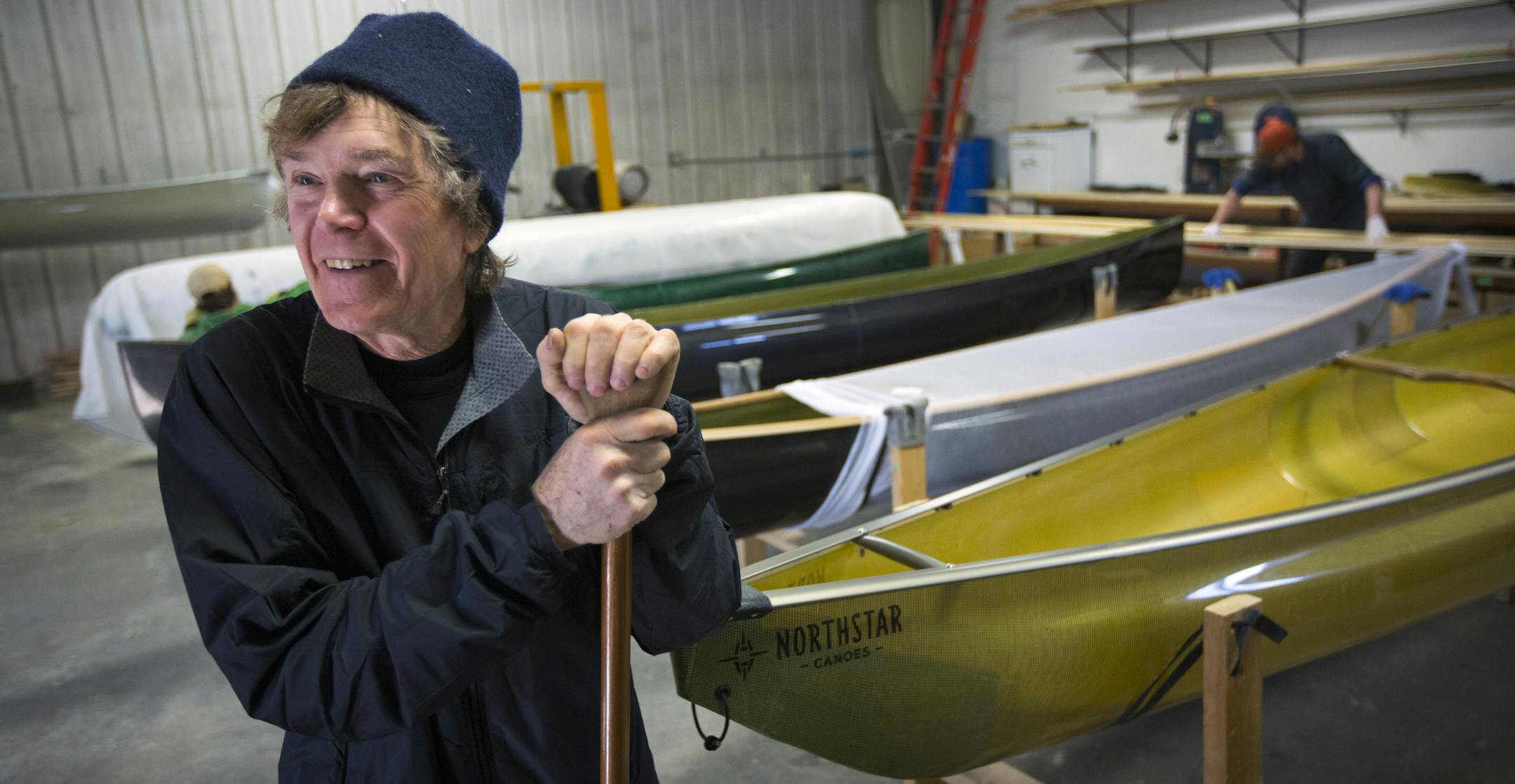
Thursday morning while trains, planes and automobiles toted Twin Cities residents to their stations of labor, Will Steger began a commute of his own, from Ely to Burchell Lake, Ontario.
But rather than carrying a briefcase or a lunch bucket, Steger loaded his vehicle with a 12-foot-long canoe-sled, two paddles, a single-burner stove and enough oatmeal, butter, cheese, rice and pork to sustain him for a few weeks, or 150 miles through the bush, whichever comes first.
"I'll be traveling alone in part because it's safer being alone this time of year," Steger said. "During spring breakup, when you travel on ice and water, or both, you often have to make decisions really fast, which is easier if you're alone."
Thirty-one years have passed since Steger led the world's first unsupported trek to the North Pole by dogsled. He's also crossed Greenland by dogsled, the longest such unsupported expedition in history at the time, in 1988, following which in 1995 at age 50, he spearheaded the first and only dogsled crossing of the Arctic Ocean, Russia to Canada's Ellesmere Island.
Now Steger is 72 and from his encampment outside Ely, he longs still to move on.
In ways he's done so since he was a kid growing up in Richfield, when in his early teens he stole down the Mississippi to New Orleans in a small boat. This would be about his last southbound trip. A renowned polar explorer whose ice cred rivals that of Perry or Amundsen, Steger knows for him from which direction the bell tolls:
North.
"I lived 25 years off the grid at my home outside Ely, and had to cross two lakes to get there from the nearest road," he said. "In spring and fall, I learned how to travel on thin lake ice with a canoe. I used the same skills six or seven times crossing the Arctic Ocean, including on our '95 traverse from Russia to Canada."


