

The United Nations — the topic of this month's Global Minnesota Great Decisions dialogue — began its annual General Assembly on Tuesday, and next week world leaders will take to the iconic U.N. dais to press their perspectives on the spiraling crises crossing countries and even continents.
Accordingly, a raft of resolutions on human rights, justice and international law, disarmament, the transnational challenges of drugs, crime and terrorism, and in particular "maintenance of international peace and security" are slated.
But not on the roster are surveillance issues. There are some procedural and especially diplomatic dynamics behind this dearth. But the U.N. has previously addressed the issue. Another factor might be that some societies reeling from extremism are increasingly prioritizing security over privacy.
That seems to be the case here at home, according to a new Pew Research Center poll coinciding with last Sunday's 15th anniversary of 9/11. A 14-year high of 40 percent believe that "the ability of terrorists to launch another major attack on the United States is greater than at the time of the 9/11 attacks." And half that say their biggest concern about anti-terrorism policies is "they have not gone far enough to protect the country" tops the third who say their bigger concern is that those policies have "gone too far in restricting civil liberties."
"Pew surveys since 9/11 show how fluid American attitudes are depending on the circumstances of the moment," said Lee Rainie, a research director at Pew. "Privacy is one of those issues where context is everything."
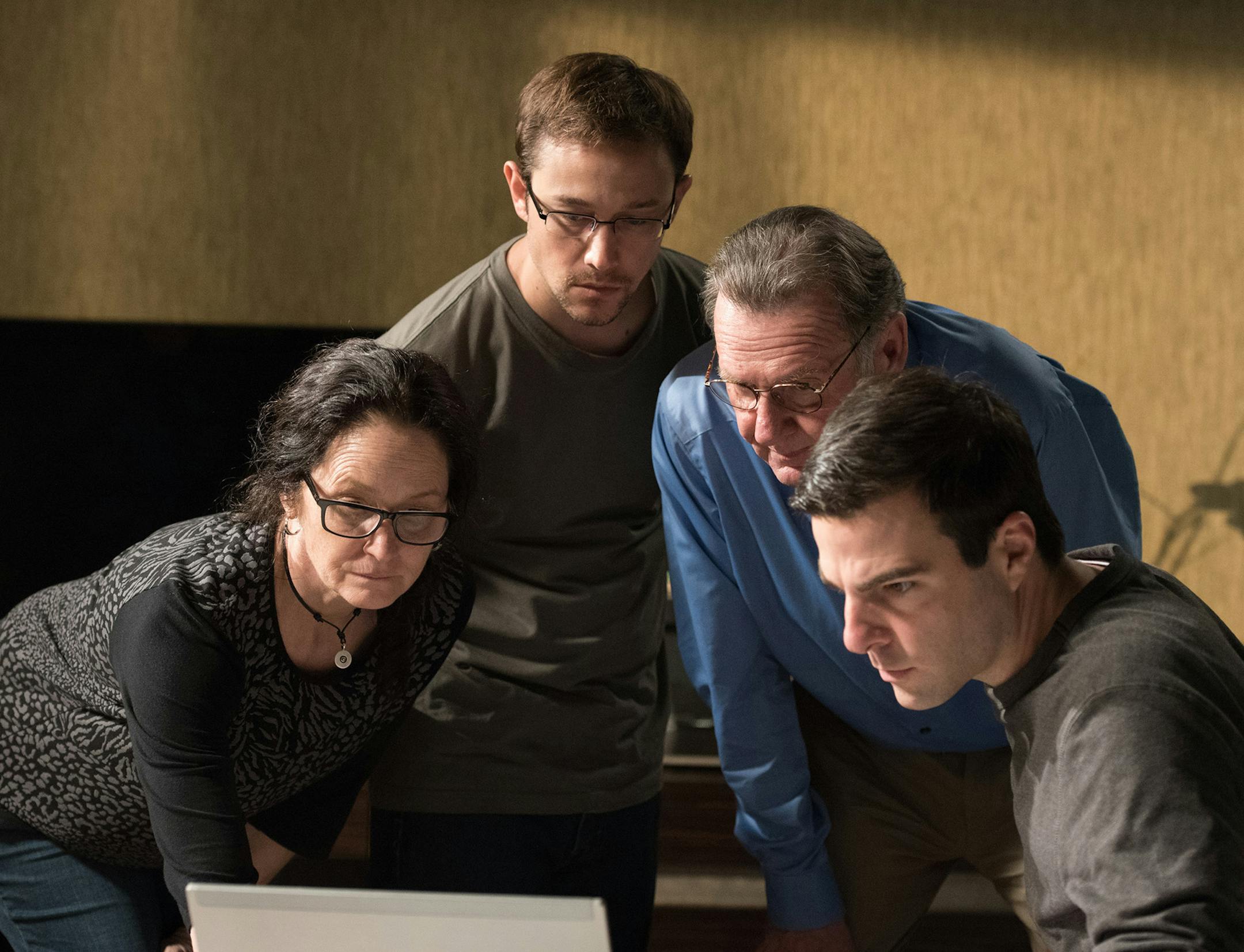
Context closely hews to news narratives of global extremism and the 2016 campaign. Whether it's also impacted by pop culture will be tested with Friday's premiere of "Snowden," Oliver Stone's take on the rogue NSA contractor who revealed how extensive surveillance practices were.
As cinema, "Snowden" is compelling, if polemical, with Joseph Gordon-Levitt effectively channeling Snowden's change from a gung-ho Army volunteer to a conscience-stricken contractor willing to risk all in order to expose opaque NSA surveillance practices.
Zachary Quinto, Tom Wilkinson and Melissa Leo are also effective in portraying journalists trusted with the explosive story. But the three — reporters Glenn Greenwald (played by Quinto) and Ewen MacAskill (Wilkinson), as well as filmmaker Laura Poitras (Leo), are best seen as themselves in "Citizenfour," Poitras' riveting 2014 Oscar-winning documentary that dramatically captured Snowden holed up in a Hong Kong hotel as he revealed the secret surveillance protocols.


