

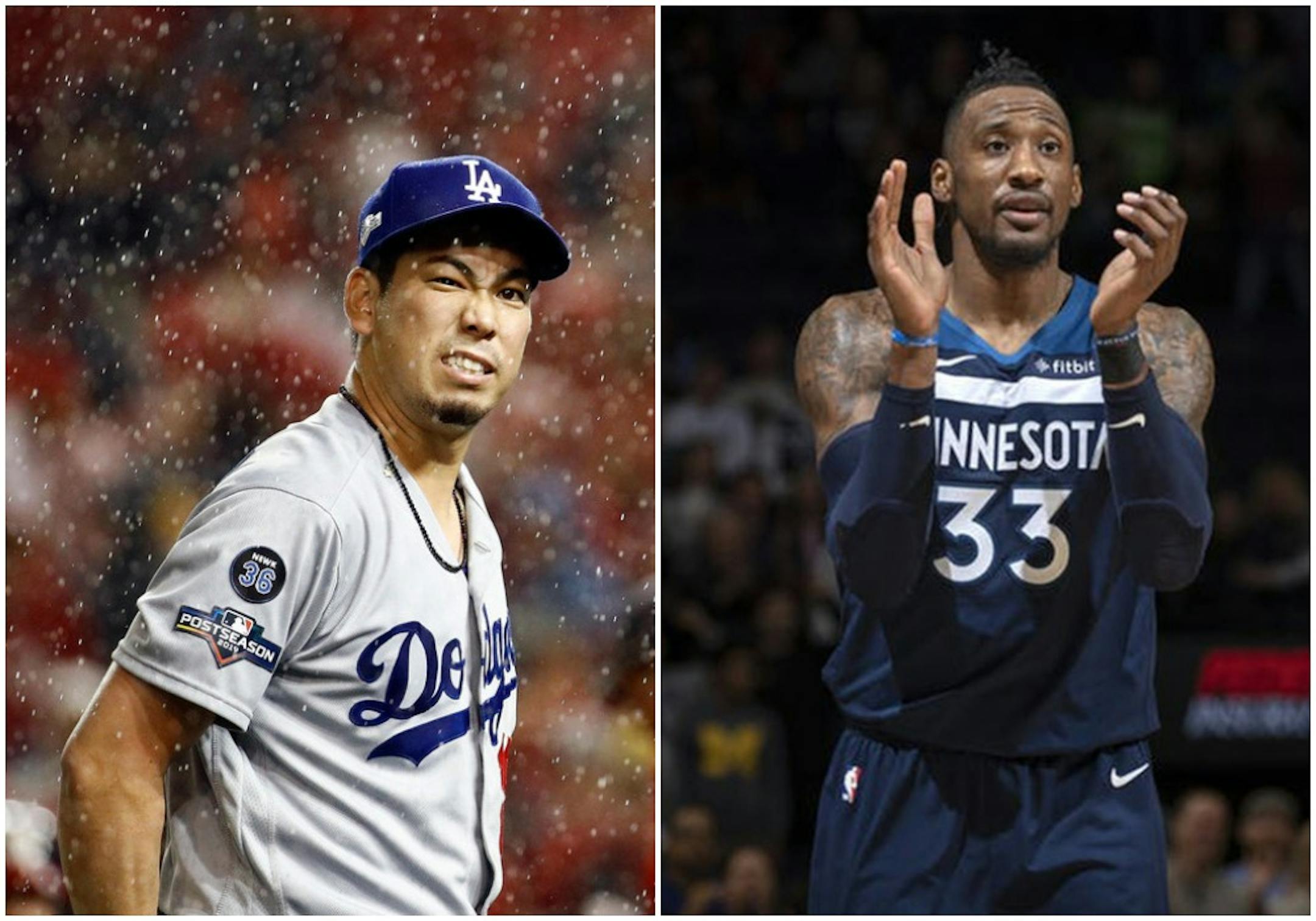
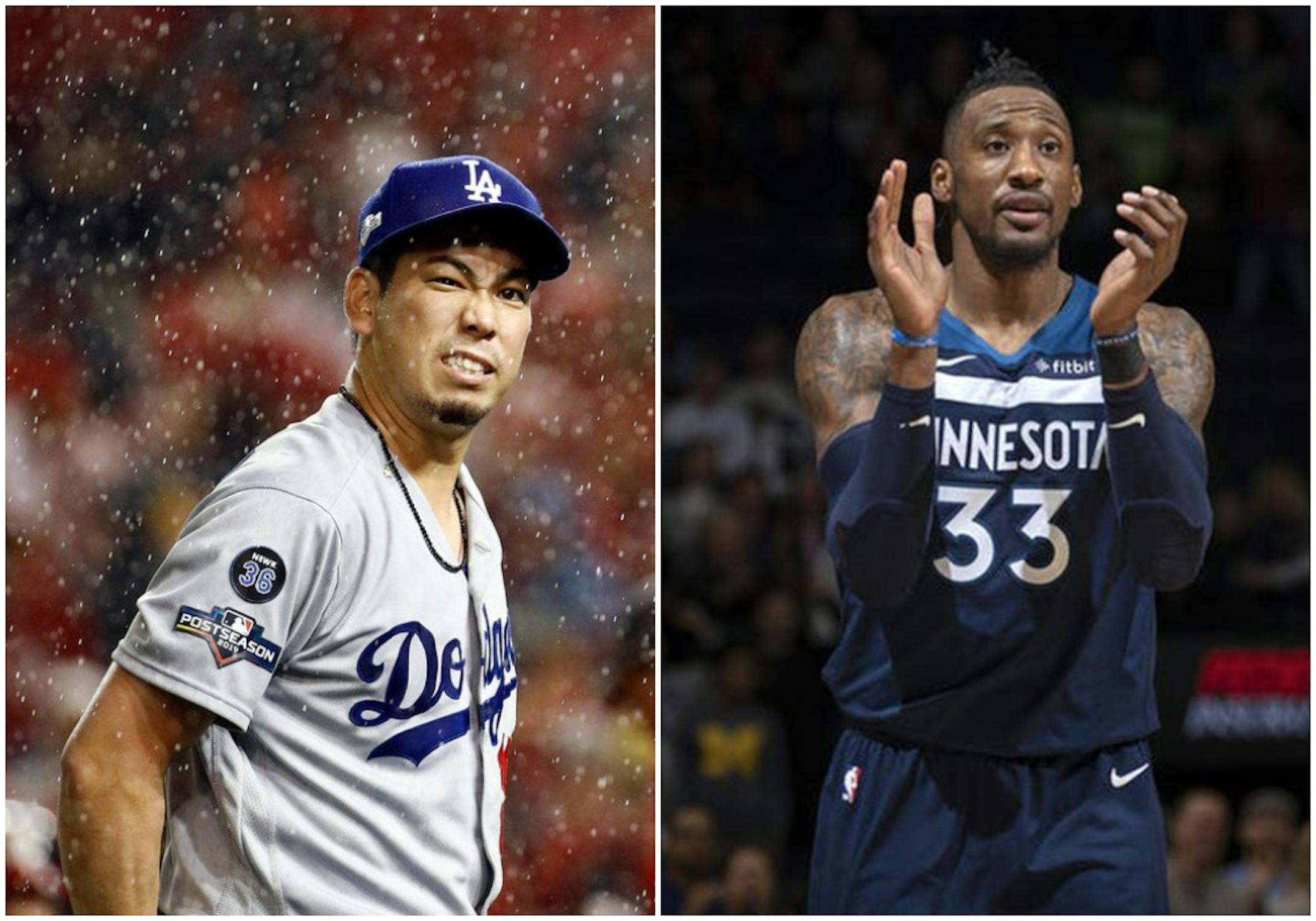
Exactly one week ago, the Timberwolves made the first of their major trade deadline deals, a four-team swap that included Robert Covington as the major outgoing piece. On that same night, the Twins' trade involving Brusdar Graterol and Kenta Maeda was reported.
It was only fitting, I suppose, that the Twins deal FINALLY became official, in its reincarnated iteration, almost a week later on Monday — just as the Wild was making a major deal involving Jason Zucker.
I've been resisting the urge to "grade" the major moves made by all three franchises in the past week — deals that include, of course, the blockbuster D'Angelo Russell/Andrew Wiggins trade that happened Thursday, during the week of on-again, off-again rumblings about the Twins trade.
Assigning a grade to a trade is rather disingenuous and increasingly difficult as most teams employ at least some combination of competent people in charge of decisions and analytics as to not be totally fleeced. Most organizations have a general idea of the value of a draft pick, leading to fewer Herschel Walker or Ricky Williams trades — or at least calculated ones when they do happen.
Heck, say what you want about David Kahn (really, go ahead. This is a safe space). But the reason he was able to pass on Stephen Curry not once but twice in the 2009 draft is that he managed to turn Mike Miller and Randy Foye into the No. 5 pick in a trade. Imagine that happening a decade later.
Teams are smart. Trades are complex, taking into account monetary value — past, present and future — as much as if not more than pure talent. That premise played out in moves made by all three teams in the last week. Let's take a look:
*Let's start with the Wolves because they made the most moves (seemingly their entire roster).
They traded away: Andrew Wiggins, Covington, Jordan Bell, Shabazz Napier, Keita Bates-Diop, Noah Vonleh and Gorgui Dieng, along with a top-three-protected 2021 first-round pick and 2021 second-round draft pick.


