

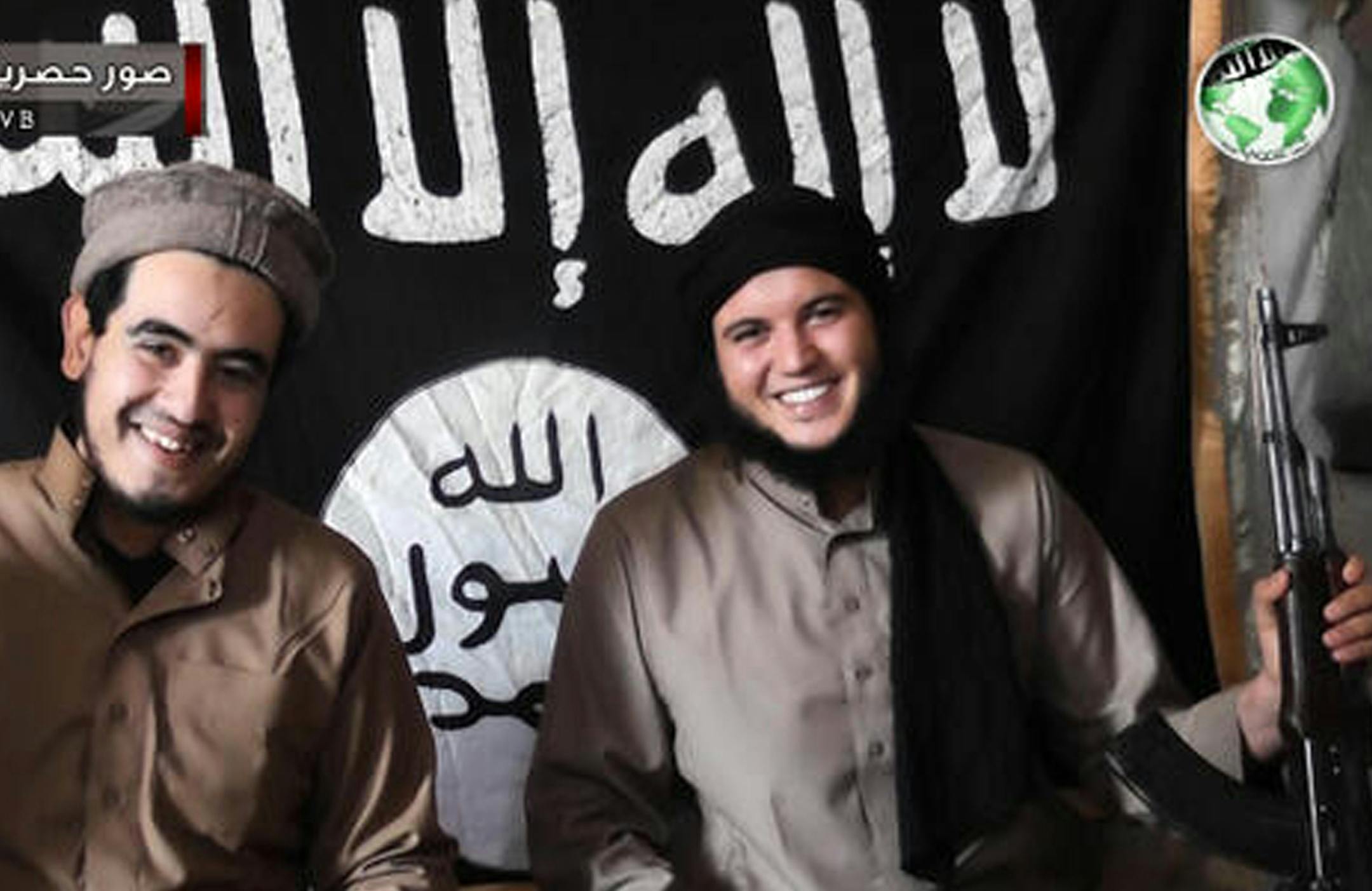
'What makes these 17-year-old kids pick up an AK-47 instead of trying to start a business?"
It's a question State Department spokeswoman Marie Harf asked Monday evening on MSNBC's "Hardball." She was giving a preview of this week's White House summit on "countering violent extremism."
And it's also a puzzle that has confounded the U.S. government since the Sept. 11 attacks. In order to make a long-term dent in the conflict that used to be known as the war on terror, one has to ask why people join these murderous organizations in the first place. Presidents George W. Bush and Barack Obama have both spoken of such root causes. Harf suggested in her remarks that the West should address economic misery and poor governance to stop young people from joining the violent jihad.
But is she correct? Some young people — particularly those born far away from the conflict in the Middle East and North Africa — are just bored. No amount of small-business loans, education scholarships or political reform can compete with the toxic temptation of being part of a movement that claims to be changing history.
Radical Islam is hardly the first movement to take advantage of bored young people. Think of all the dreamers who flocked to both sides of the Spanish Civil War or the utopians who volunteered to fight against great odds to create Israel.
Then there was the first generation of holy Muslim warriors and foreign fighters who fought against the Soviet occupation of Afghanistan in the 1980s.
Today the big historical draw for many bored young people is the promise of the caliphate. Shiraz Maher, a former member of the global radical group Hizb ut-Tahrir and now a researcher at the International Centre for the Study of Radicalisation in London, told me he joined jihad after 9/11 because he wanted to be part of history. Maher comes from a middle-class family in Britain and was not drawn to political Islam out of despair. Following race riots in northern England, he decided at age 20 to join a group that looked like it would be on the winning side.
"My feeling was that there was a sense we were going to create a new history," he told me. "We are going to be part of something new."


