

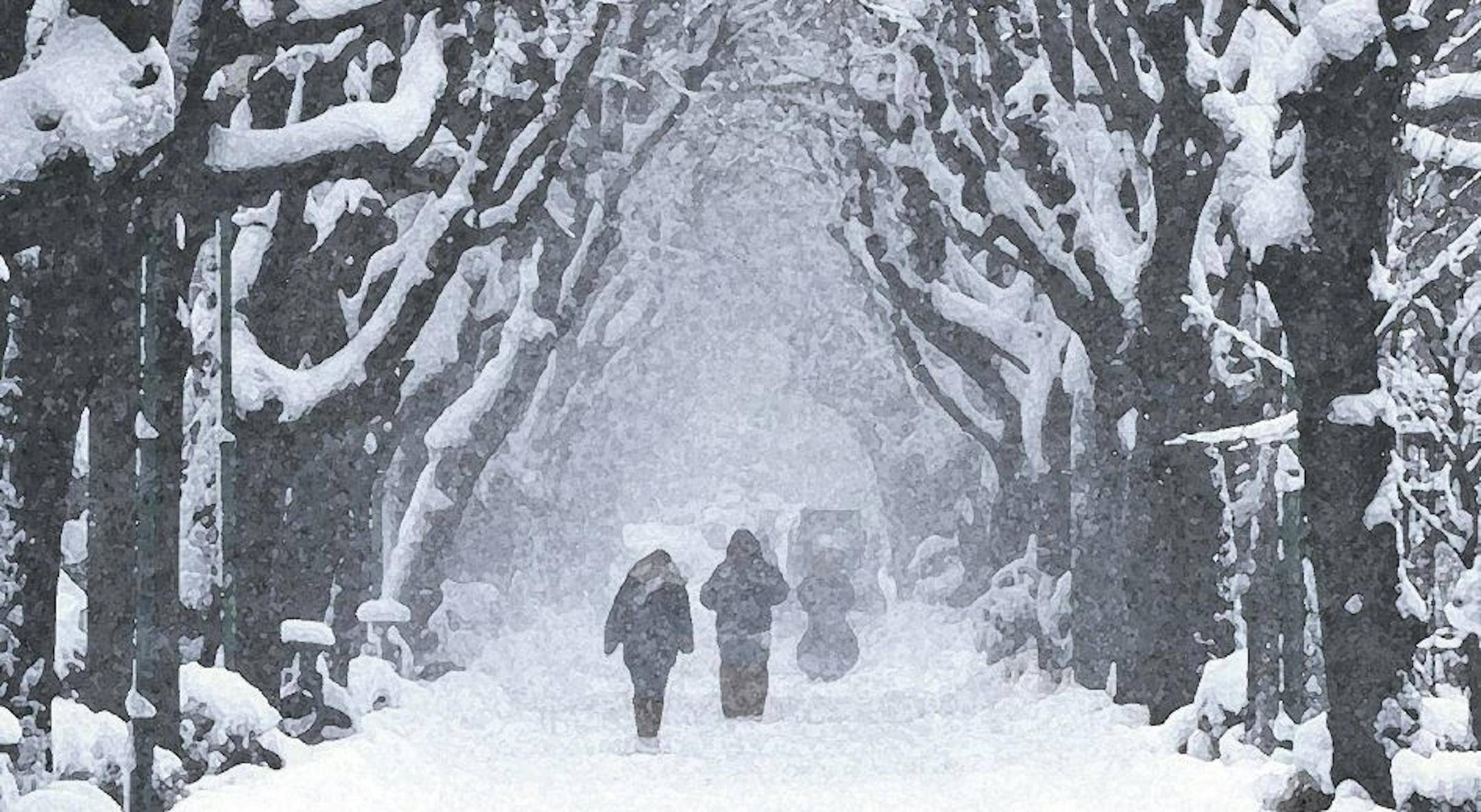
Toward the end of October, as I was scraping the dew that for the first time in five months had frozen on the windshield of my car, I muttered the same thing I've muttered at the onset of every winter: Here we go again.
Flurries and freezing temperatures had been predicted. I'd winterized the Scamp, hoisted the kayaks up into the rafters of the garage, hung up and chained up the bicycles, mulched the leaves that had fallen — my red maple stubbornly holds onto its leaves until all the other trees, and the lawn, are bare — and laid in enough firewood to fuel morning and evening fires until March.
Yet out of the habit formed during five unfrozen months, I'd left my car in the driveway. The fallen dew had frozen into an opaque white glaze on its windows and windshield, and I'd had to rummage in the trunk to find the scraper under a pair of forgotten swim fins. By the time I restored some semblance of forward visibility to the windshield, the defroster had begun to clear the side windows and to cause bits of unscraped frost to slide down the windshield.
Familiar everyday details, forgotten in the course of a summer that seemed endless; déjà vu all over again, as the immortal Yogi Berra once said.
We who live in this part of the world have to adjust to a new normal twice a year. The 45th parallel of latitude, halfway between the equator and the North Pole, runs through the Twin Cities, and so we have four months of tropical weather, four months of polar weather and four months of adjusting from one to the other, two on either side of either season. Nature seems to make this adjustment easily, as if out of long habit; human nature may rejoice in the springtime, but most of us are troubled by the onset of winter.
We humans tend to see the end of the growing season as a kind of death, the abduction of Persephone, the untimely deaths of Adonis and Osiris, the 4,000 years of darkness that preceded the birth of the Savior. And though we know that Persephone will return for a time, and that this seasonal death is followed by resurrection and new life, the time of darkness is so long and so cold that it seems it may never end; how long, O Lord?
In the spring, we look for signs of hope — crocuses pushing through the melting snow, open water at the north end of the lake — and we look forward to the great blooming and budding of May. At the onset of winter, we look for comfort: wood fires, hearty soups, after the solstice the slow movement of sunsets from the southwest toward the due west. We put on several layers and take long walks on less-windy winter days. We deck our halls and houses with lights during the holidays, some generous homeowners keeping their lights shining through the dark months.
We take breaks in Arizona and Florida and Yucatán, shocking the snowbirds and the locals with tales of ice and snow and 30 below. We remind ourselves that summers in snowbird-land are more confining than winters at home, since an Upper Midwesterner can always put on more layers and be comfortably outside in all but the coldest weather, while in 115 degree heat an Arizonan can legally peel down to only a single layer, and then must suffer outside or be imprisoned in his little bubble of conditioned air.


