

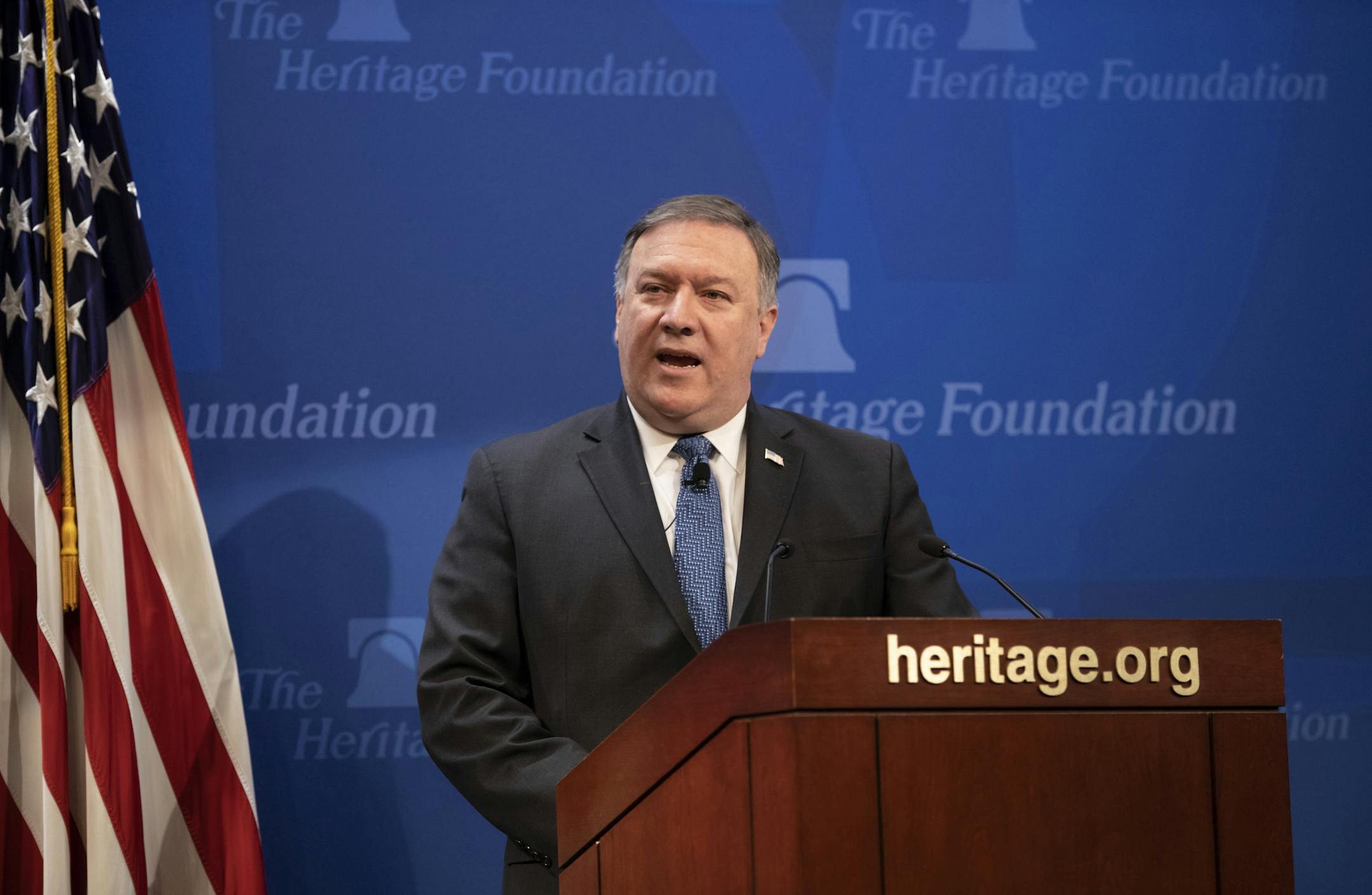
The Trump administration's withdrawal from the Iran nuclear deal and a subsequent speech by Secretary of State Mike Pompeo have engendered a range of responses: Some welcomed the new hard line, but most expressed concern and criticism. Critics have accused the administration of calling for war or regime change; others have denounced its strategy as unrealistic.
In actuality, though, the Trump administration's approach has a reasonable chance of succeeding with Iran. A key point that seems to have been overlooked is that the Trump administration has indicated a willingness to enter into negotiations, even as it escalates pressure against Iran through sanctions.
Perhaps the most intriguing message embedded in the Pompeo speech was the signaling of a desire to engage Iran in negotiation for a comprehensive agreement leading to normalization of relations. Pompeo invited Iran to "look at our diplomacy with North Korea" as evidence of the administration's willingness to engage adversaries in negotiations on very complex issues.
Trump's pressure tactics likely won't bring Iran to its knees or facilitate the overthrow of the regime in the foreseeable future — but his approach might bring the Iranians to the negotiating table.
Tehran is at present disinclined to take up the idea of direct negotiations with the U.S. It is focused on seeking an agreement with the Europeans to compensate for the losses it will suffer because of new American sanctions, and assurances against pushing for limits on Iranian missiles and its regional policies. In the months ahead, it will probably assess its own options with several factors in mind.
First, Iran is likely to be disappointed by Europe. It is true that European governments are unhappy with the U.S. withdrawal from the nuclear agreement and the imposition of sanctions on Iran. But to European firms, the U.S. market is far more important than Iran. Global European companies are withdrawing from Iran, and no realistic European policy can fundamentally change this reality. Besides, given the limited size of European economic exposure to Iran, which is less than that vis-à-vis Kazakhstan, Europe is unlikely to provide the assurances and guarantees that Iran's supreme leader, Ayatollah Ali Khamenei, has sought.
Second, a race toward nuclear weapons is fraught with risks. Iran could abandon the nuclear agreement and produce as much uranium as quickly and at as high a level of enrichment as it would like. Khamenei has already announced that he has ordered preparations to "upgrade" Iran's enrichment capacity. Iran could also decide to restart work on weapon designs and fuses and sprint to a nuclear weapons capability without declaring that it is doing so.
But any such Iranian decision, if it became known, would most probably lead the Europeans to join the U.S. in imposing sanctions. Given that Washington has stated that it will not allow Iran to acquire nuclear weapons, Tehran would also be risking an attack aimed at its nuclear infrastructure (and perhaps more). The Iranians would probably also lose the support of Russia and China — at a time when some in the Iranian leadership are pushing for stronger ties with both. It appears unlikely that they would pursue this course in the near term.


