

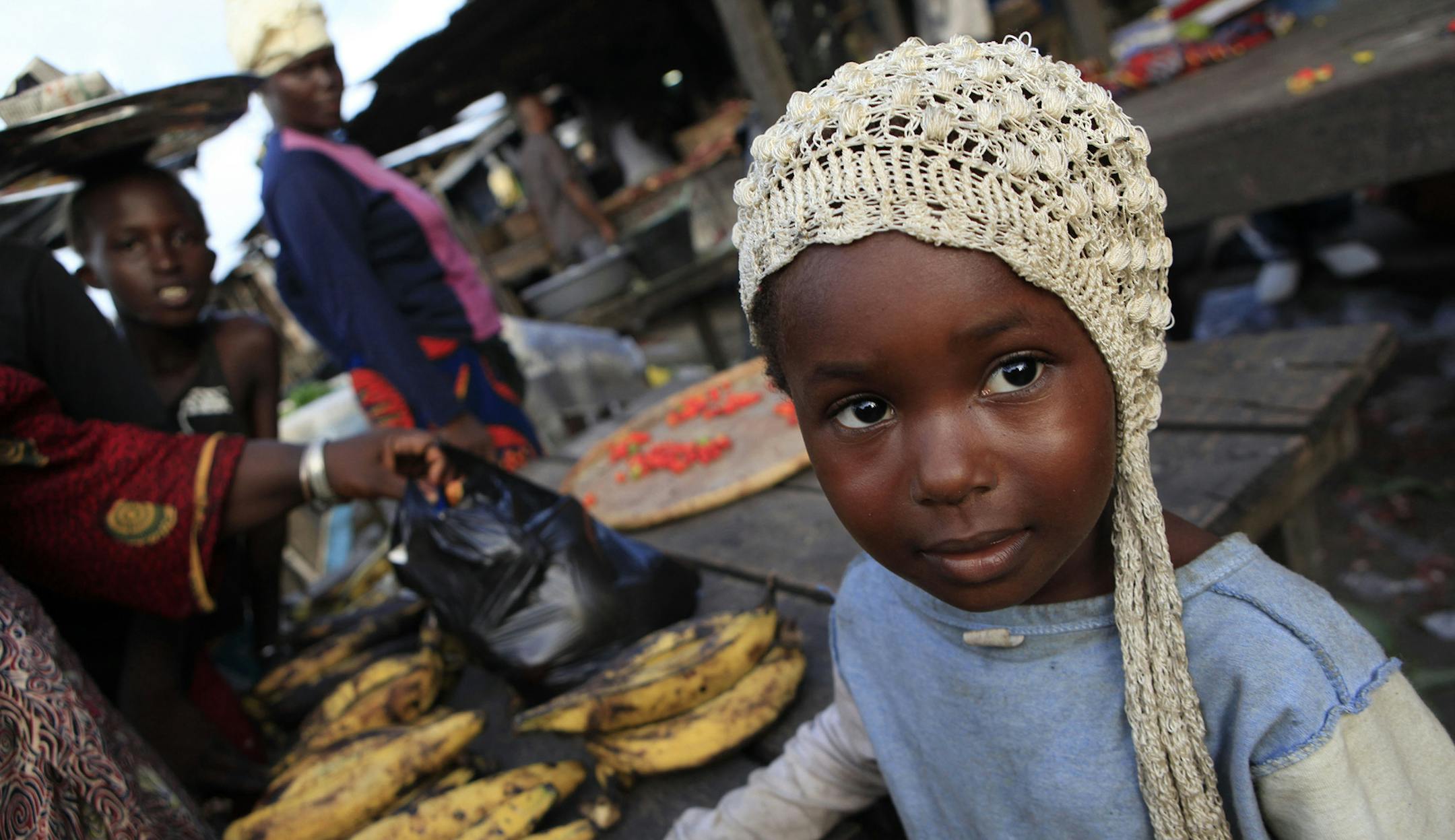
I am writing from West Africa, the place in the news as the center of the Ebola outbreak. I am not in Liberia, Guinea or Sierra Leone. I am in Abidjan in Ivory Coast. West Africa is a big place, with more than a dozen countries, and many of them have not had a reported case and are a long way from the three countries that have been devastated by the disease.
Why did I come? As an author of books for children and teens, I visit schools all over. Last week, I was at Harrison Elementary in Brainerd, Minn., and at Countryside in Edina. Months ago, I was invited to visit the International School of Dakar for Reading Week by Deanne White, a librarian who spends her summers in Wisconsin. I agreed, since I'd always wanted to go to West Africa, a place so many Americans trace their ancestry to — and, consequently, a place that seemed essential to me for understanding America.
As often happens on these trips, other schools in the area found out I was coming and got involved. So I am visiting the International Community School in Abidjan, Ivory Coast, and the Lincoln Community School in Accra, Ghana, in addition to the International School of Dakar in Senegal.
Like any school visit, once I've agreed to come, teachers and librarians start preparing students. Because of those efforts, I never cancel and am reluctant to postpone. That's true with winter driving in Minnesota, and it's true with unforeseen situations at international schools.
But even I wondered about my decision as I watched television or read the news back home about Ebola. One story was more frightening than the next and, rather than being a health concern, the disease had turned into a political issue, with politicians trying to top each other on the fear front.
I talked with physician assistant May Moua at the travel clinic, who made sure all my immunizations were current and stressed that malaria was a much bigger risk in the countries I was visiting. She gave me a prescription for that.
I talked with my pharmacist, Tom Sengupta of Schneider Drug in Minneapolis, who bemoaned the hysterical treatment in the media and pointed out how diseases that affect people in poor countries often don't receive the research and development that they deserve.
I talked it over with my wife, Fiona, who wanted to come herself, but could not because she had to be in New York for work. She said, "You're not going to get Ebola," and we talked about how all the cases in the United States had been with people who had direct contact with patients who were sick with the disease.


