

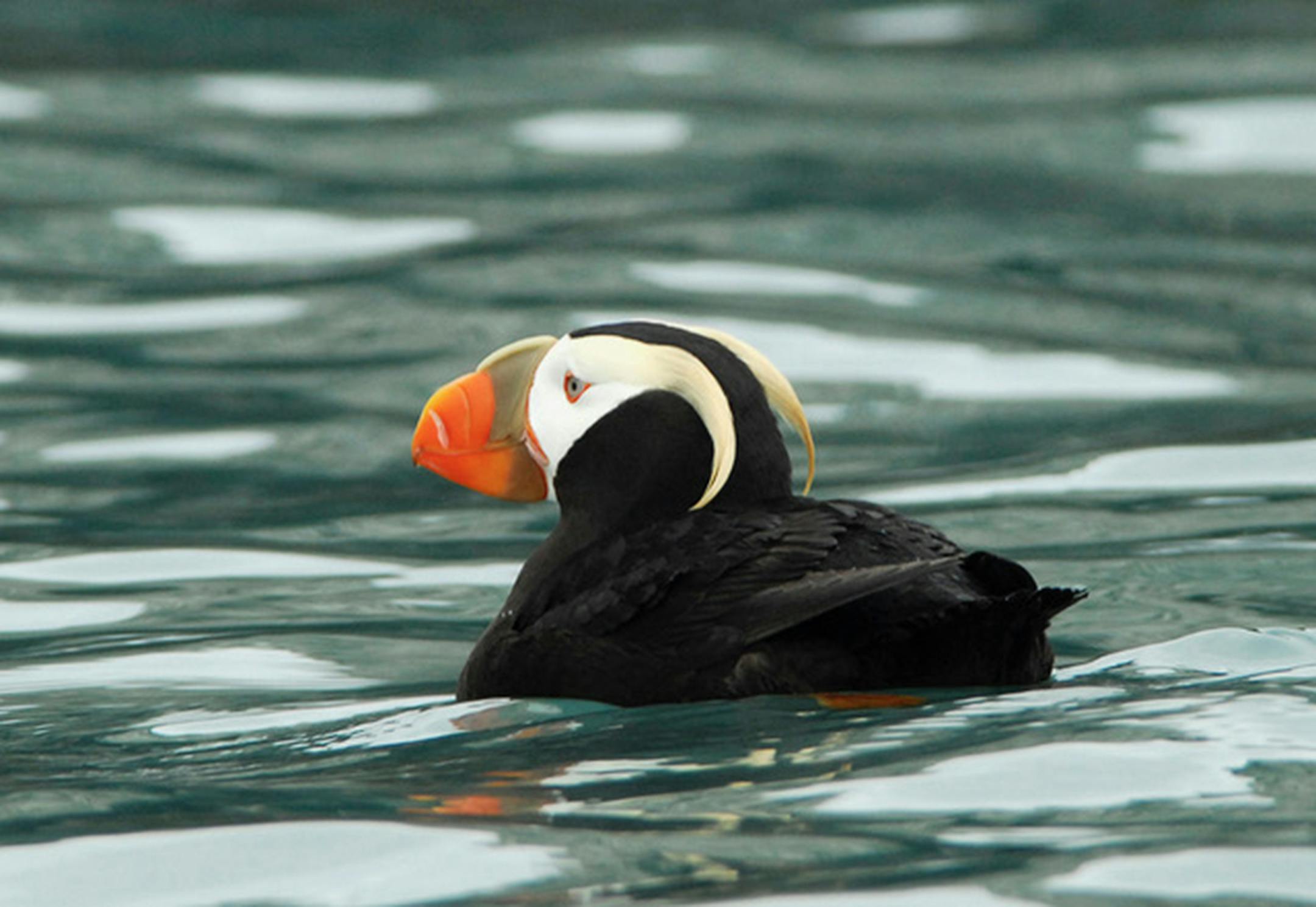
Yupik Eskimos have lived in the village of Gambell on St. Lawrence Island off the coast of Nome, Alaska, for at least 2,000 years.
They were and are subsistence hunters, living on seabirds, whale, walrus, seal and fish. The Yupiks have depended upon a world that was constant, as did the animals they hunted.
Expensive flights from Nome more recently have delivered by airplane what can't be shot or caught. But the animals are the mainstay of this community along the Bering Sea.
There is a point of land — the Point — on the northwest edge of the island where birders stand in spring to watch an unending flight of nesting species. The birds fly away from the island to find fish, return like bullets to feed young.
Gambell is a must-visit for many serious birders. On my first visit, the first of five, I stood on the Point perplexed by the calls other birders made. Yellow-billed loon! Spectacled eider! Pacific loon! Crested auklet! Where? Which one?
So many birds, species I had never seen, somewhere in that river of birds rushing past.
Those birds, nesting on the island cliffs and ponds — loons, puffins, murres, auklets, sea ducks — were there because the adjoining ocean provided the food the nesting birds needed.
It had worked forever. The ocean provided the food that fed the animals that fed the Yupik. And provided birds for guys like me to see.


