
Who will control Minn. Legislature? Look to the White House

November 21, 2015 at 11:25PM
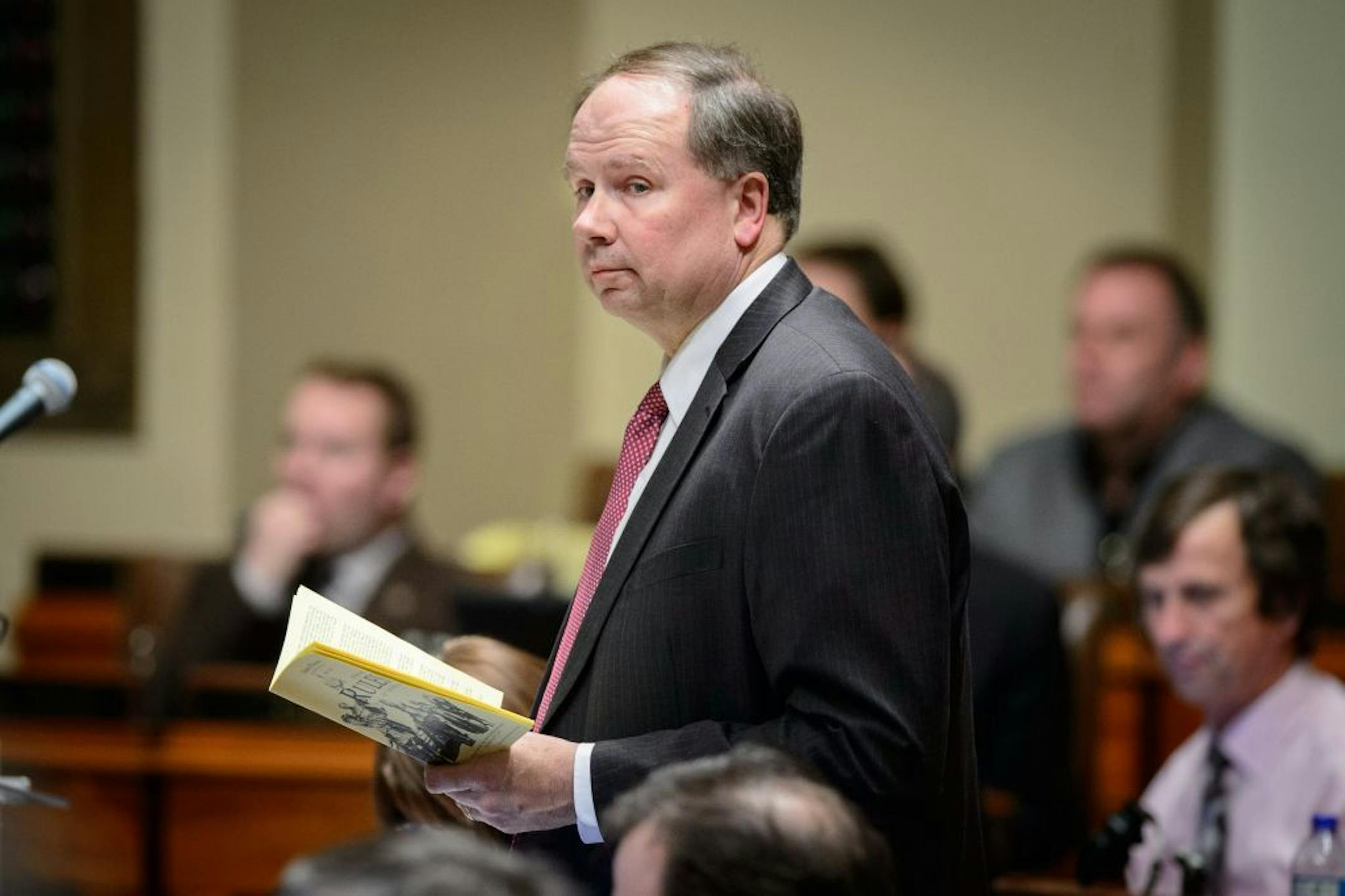
Rep Jim Knoblach, R- St. Cloud, held a copy of the House rules book as he fought off amendments to the teacher seniority bill because they would cost money and would be in violation of House Rules.
Nearly $1 million was spent in the race eventually won by Rep. Jim Knoblach, R- St. Cloud. (Star Tribune/The Minnesota Star Tribune)
The candidates, parties and their allies spent nearly $1 million last year on a state House race in St. Cloud, with Rep. Jim Knoblach winning by a razor-thin margin of 69 votes to help propel Republicans into the majority.

This year, with the DFL hungry to win back control, and Republicans equally committed to retaining the speaker's gavel, similar sums are expected to be spent in several other races that could determine control of the House.

Even more money will flow to so-called "dark money" groups that don't have to report their spending but that will dump more cash into the campaign effort.

Political veterans are starting to wonder: Does it even matter?

They are not questioning the importance of legislative control, but, rather, whether all this time, money and effort can really sway legislative races.

What matters more and more, they say, is the race for the White House.

Look at Minnesota's past four elections: Republicans swept during the off-years, and the DFL won big during the presidential years, all the way back to 2008.

Notice what was also happening during those years: Democrats had a presidential candidate and then a president who was popular with the DFL base, so they voted. And while they were in the voting booth, they supported other DFL candidates, so they won control of the Legislature.

In the off-years, without the advantage of President Obama on the ballot and his political machine working to drive his voters to the polls, the DFL coalition of younger and more diverse voters stayed home, while the Republican base came out in droves to deliver a thumping to Obama.

The legislative candidates, their money and their message were frequently overshadowed by the national political atmosphere.

"The national mood is increasingly impacting local elections," said Zach Rodvold, a DFL strategist. "And the dynamics of a presidential election with higher voter turnout disproportionately benefits DFL candidates."

In 2014, for instance, Knoblach benefited from a huge drop-off in turnout at St. Cloud State University. Unlike 2012, the students, who lean DFL, found other things to do than vote. Next year, most observers expect students to show up for a presidential race and likely the first woman nominee of a major political party, which means Knoblach's seat is in jeopardy.

It also matters which candidates the parties nominate, which is why strategists are eyeing the top of the ticket warily, teasing out the possible effects.

"Hillary Clinton's high disapproval ratings, particularly in competitive legislative districts, is just one of the reasons we are confident going into next year's election," said state Rep. Pat Garofalo, R-Farmington.

But Democrats love the idea of Clinton running against Donald Trump, Ben Carson, Sen. Ted Cruz and several other GOP contenders. They view these Republicans as ripe targets who would drive up DFL turnout and deliver the House back to Democrats. At least until the political pendulum swings back to the GOP in 2018.

about the writer

about the writer

J. Patrick Coolican

Reporter

See Moreicon

More from No Section

See More
FILE -- A rent deposit slot at an apartment complex in Tucker, Ga., on July 21, 2020. As an eviction crisis has seemed increasingly likely this summer, everyone in the housing market has made the same plea to Washington: Send money — lots of it — that would keep renters in their homes and landlords afloat. (Melissa Golden/The New York Times) ORG XMIT: XNYT58
Melissa Golden/The New York Times

It’s too soon to tell how much the immigration crackdown is to blame.