

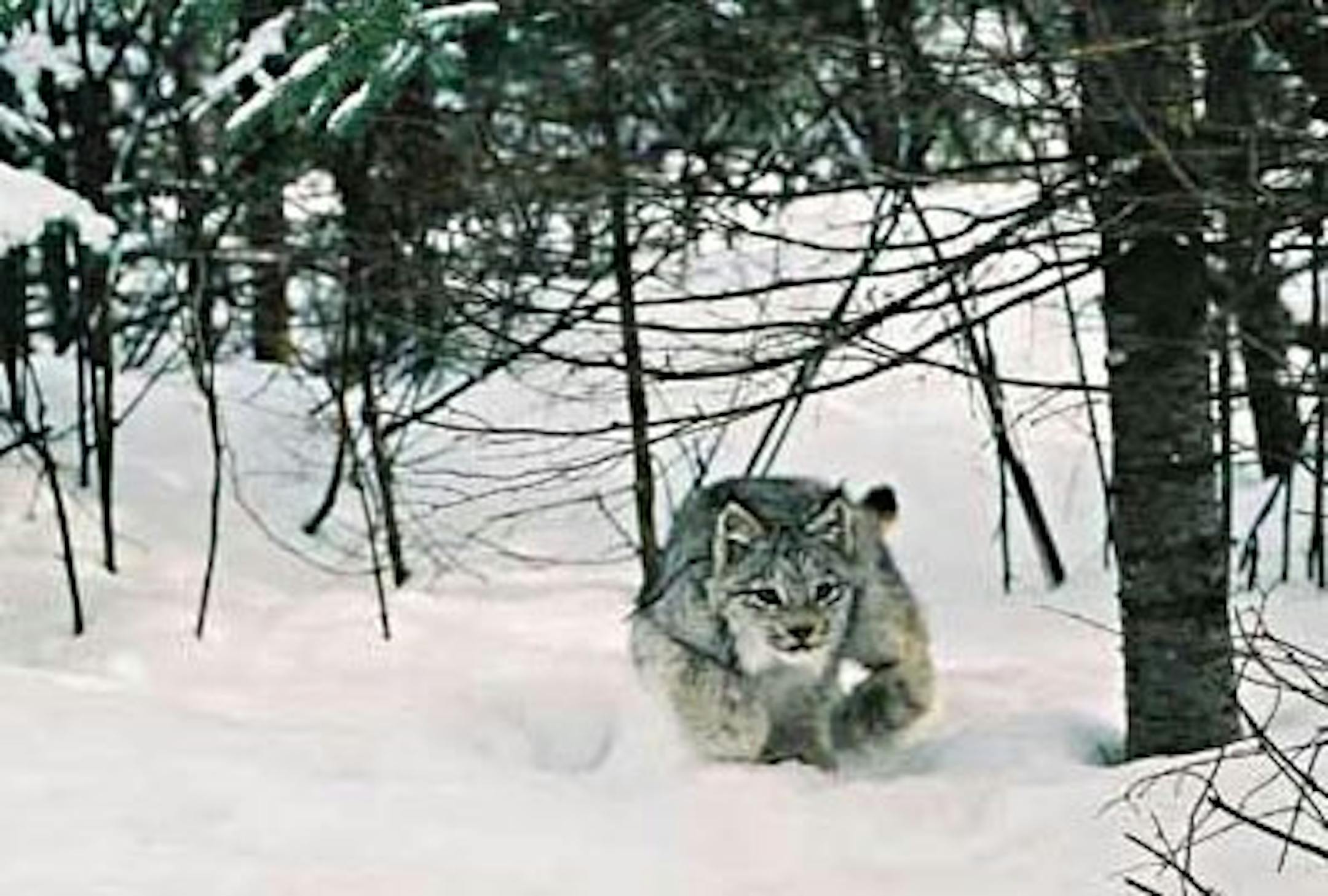
The return of wolves to northern Minnesota may be bad for the coyote, good for the endangered Canada lynx, and most likely a wash for the snowshoe hare. Because they all eat the hare.
That's how it works in the balance of nature, according to a new study published this week by researchers from Oregon State University.
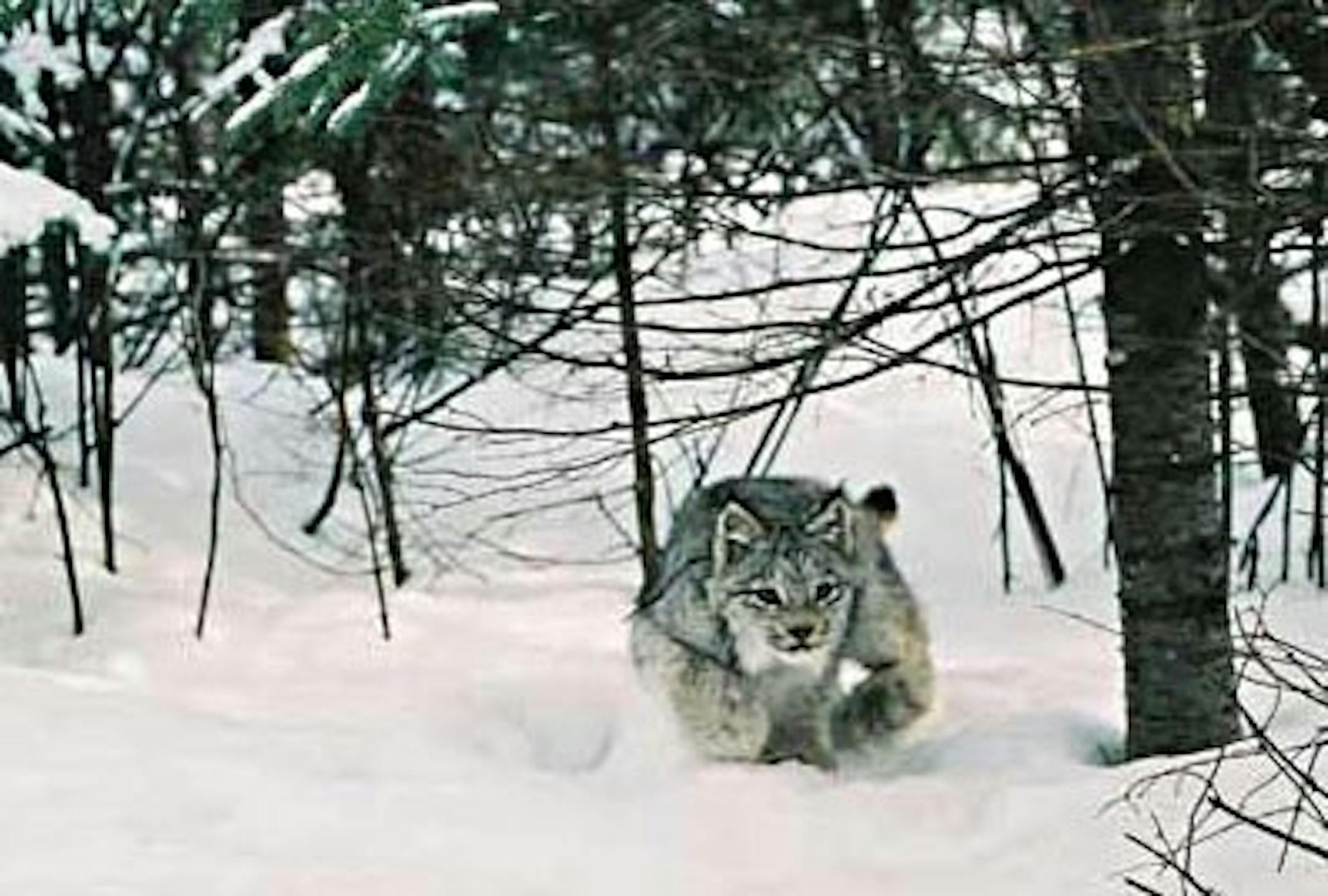
Photo by Ron Moen, courtesy of the Natural Resources Research Institute at the University of Minnesota
The decline of the Lynx has been linked to the disappearance of snowshoe hares -- the primary food for Lynx. What happened to the hares? The coyotes eat them. Why do we have so many coyotes in Edina and throughout most of the state? When wolves disappear, coyotes thrive. It's what scientists call ad "trophic cascade" that completely realigns an ecosystem. It happens all over the world, with all kinds of animals.
When the top of the food chain, in this case wolves, disappear then secondary predators called "mesopredators" take their place. In this case, coyotes.
"The increase in mesopredators such as coyotes is a serious issue," said William Ripple, a professor in the Department of Forest Ecosystems and Society at OSU, and the author of the study that appeared today in the Wildlife Society Bulletin. "Their populations are now much higher than they used to be when wolves were common in most areas of the United States," he said.
But before wolves were killed off, they used to kill coyotes. They would scare them into different behavior, the "ecology of fear," he said.
But when coyotes dominate, they prefer rabbits and hares (which of course is whey have become so common in suburban areas.) But in the forest up north and elsewhere they kill snowshoe rabbits, and, indirectly, the lynx.


