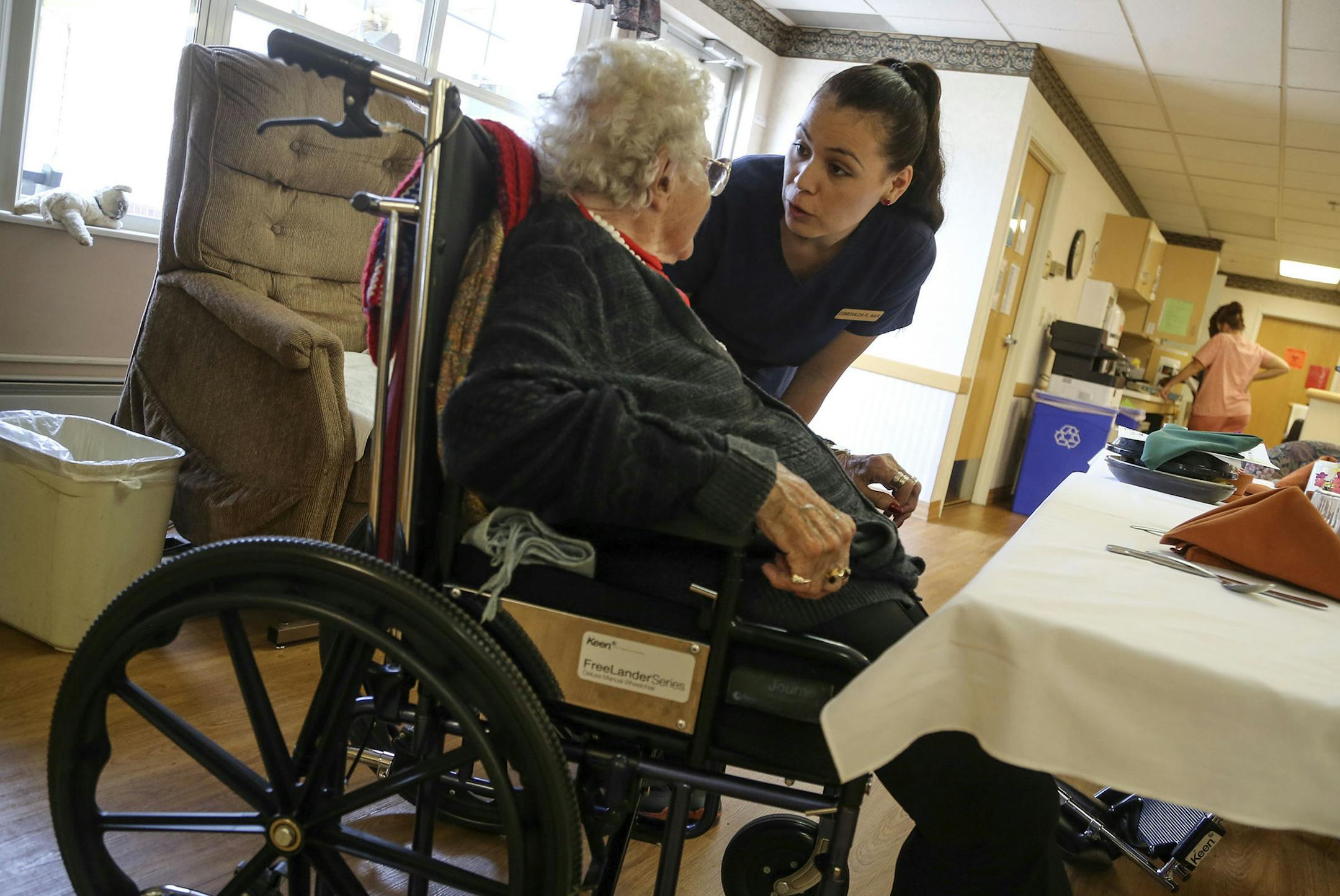
A couple of years ago, Tonesia Williams was collecting unemployment. Esmeralda Reyes was making little more than minimum wage cleaning hotel rooms. Neither woman had a high school diploma. What they had was resolve to make better lives for themselves and their kids. What they needed was an opportunity.
Minnesota's FastTRAC program, which offers education, vocational training and job placement to unemployed and underemployed adults, gave it to them.
Today, Williams and Reyes both have graduate equivalent degrees (GEDs). They both work as certified nursing assistants. They both attend college classes. And they are both on track to become licensed practical nurses.
Their progress and the progress of other FastTRAC participants recently led the White House to praise the program and another Minnesota employment initiative as national models for adult job training.
The other program, a Minneapolis-based boot camp to teach computer coding to military veterans, women and minorities, is still in the planning stages. But it is one of three pilot projects in the U.S. aimed at the Holy Grail of adult job training: 12 weeks of compressed career education that leads immediately to jobs paying $50,000 to $70,000 a year.
"We reviewed America's training programs to make sure they have one mission: to train our workers with the skills employers need, and match them to good jobs that need to be filled right now," said White House spokeswoman Kaelan Richards. "The programs highlighted in Minnesota, the FastTRAC program and innovative coding boot camps, are part of the work that's happening in cities and states across the country to help workers train for jobs of the 21st century."
Gov. Mark Dayton pushed to add $3 million to the FastTRAC program in a jobs bill he signed in 2013. Before that, the program, which started in 2010, operated on roughly $2.75 million in public funds, mostly from the federal government, and $800,000 in donations from the United Way.
Since its inception, FastTRAC officials say, the program has served 3,000 Minnesotans. Roughly nine in 10 have completed college courses or credentialing courses. Seven in 10 continue to educate themselves or are working.