

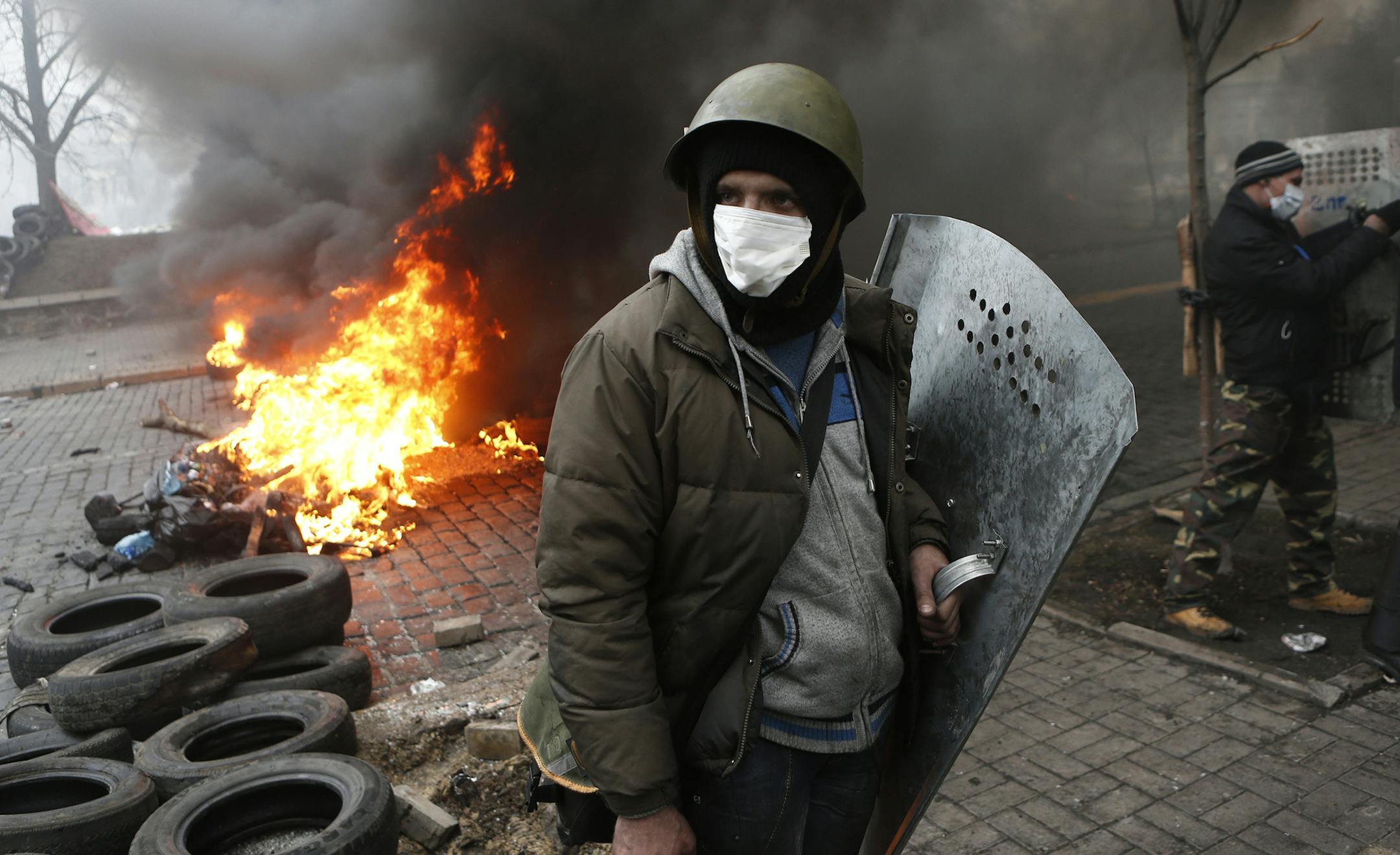
Kiev, a typically quiet city of 2.8 million, has seen this week what may be the beginning of full-blown civil war on the eastern border of the European Union.
It is easy to blame Ukrainian President Viktor Yanukovych, as Swedish Foreign Minister Carl Bildt did in a tweet: "We must be clear: Ultimate responsibility for deaths and violence is with President Yanukovych. He has blood on his hands." Because police officers died of gunshot wounds, it is equally easy to accuse radical protesters, as the Russian Foreign Ministry did in this statement: "Blood was spilled in Kiev and other Ukrainian cities … as a result of criminal activity by radical opposition forces."
These are the two sides fighting on the streets of Kiev, exhibiting animal hatred and cruelty on a scale yet unseen by the current generation of locals.
There was, however, a third guilty party: Western leaders and negotiators, who followed the conflict from its first days and missed several opportunities to curb it.
The protests started Nov. 21, when the Ukrainian government announced it would not be signing a trade and association agreement with the European Union. Yanukovych had succumbed to pressure from Russia, which wanted Ukraine to be part of its own customs union with Kazakhstan and Belarus and was offering a $15 billion aid package.
At that point, all the E.U. had to do was extend an attractive enough aid package, and the problem would have been solved. Just a month later, E.U. bureaucrats revealed it would not have been beneath them to buy Ukraine's allegiance. By the time they put a better offer on the table — a $27 billion bailout package put together with help from the International Monetary Fund — Yanukovych had already accepted Russian aid, and student demonstrators had been beaten by riot police in Kiev, leading to the escalation of protest and the construction of the first barricades.
The next missed opportunity came after the beatings, when Western leaders could have pushed harder for Yanukovych to dismiss his government and punish the responsible officials. As it turned out, then-Prime Minister Mykola Azarov's cabinet was not particularly dear to the president, who ultimately fired Azarov in January after his attempt to push through several illiberal laws resulted in another escalation and the first three deaths on the streets of Kiev. Yanukovych even offered the prime minister's post to one of the parliamentary opposition leaders, Arseni Yatsenyuk. By then it was too late: Yatsenyuk, like other opposition politicians, knew the street would see him as a cowardly collaborator if he accepted.
Yanukovych's slowness to act is in large part his own fault, but it also represents the failure of numerous international mediators who had tried to midwife a deal between him and the opposition. The scandalous recording of U.S. Assistant Secretary of State Victoria Nuland's conversation with Ambassador Geoffrey Pyatt — in which Nuland cursed the E.U. — revealed how ineffective those efforts were and how the Western diplomats could not stick to a single negotiating position.


