

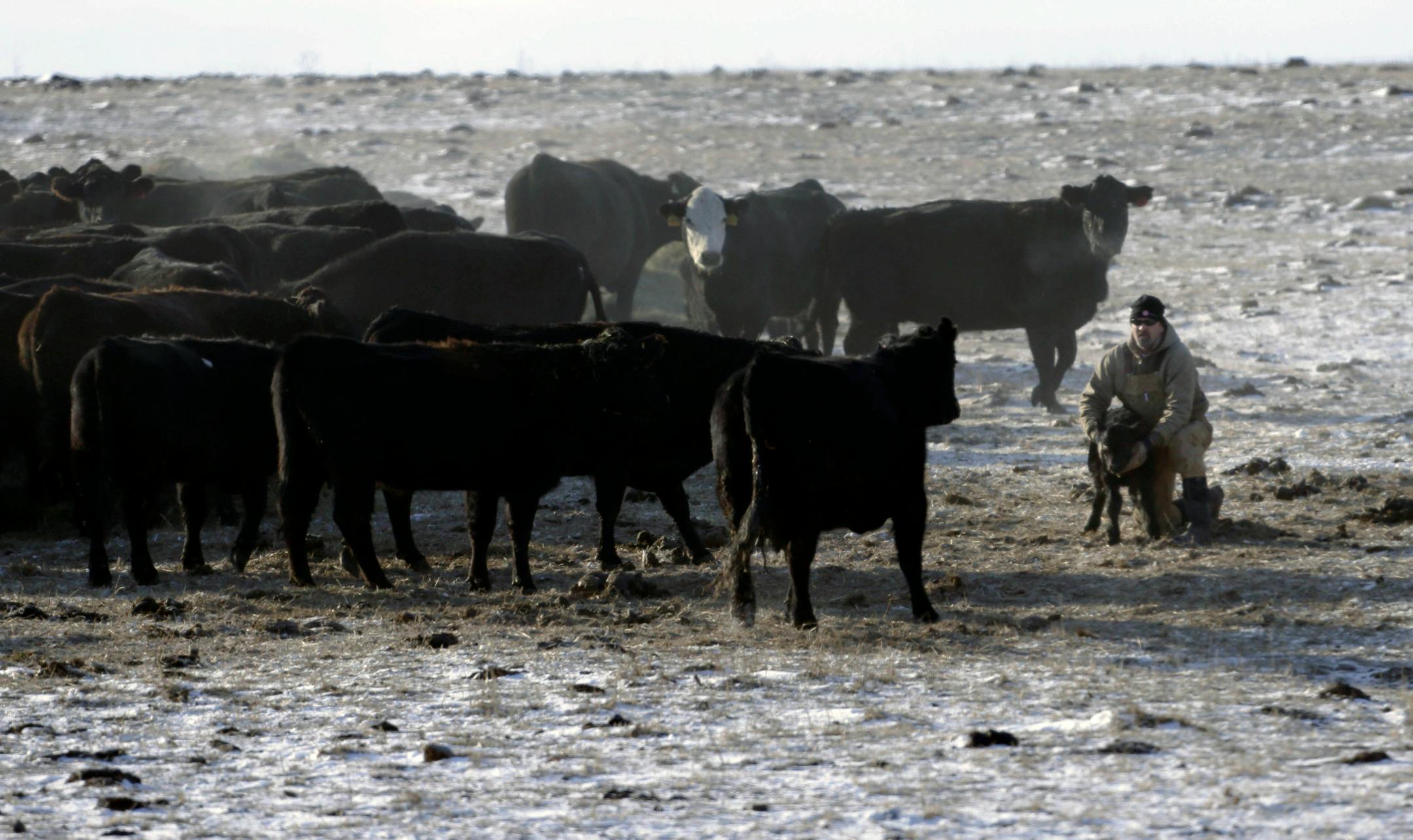
The cattle herd in the United States, the world's largest beef producer, has probably shrunk to the smallest in 61 years as drought ravages pastures from Texas to Nebraska and boosts feed costs.
Ranchers held 88.92 million head of cattle as of Jan. 1, according to the average estimate of eight analysts surveyed by Bloomberg News. That's down 2 percent from a year earlier and is the fewest for that date since 1952.
The worst U.S. drought since the 1930s cut Midwest corn harvests for a third straight year, sending prices to a record in August. Crop-insurance claims for 2012 surged as payouts reached a record $13 billion. Higher feed costs discouraged herd expansions, even as retail beef prices surged to a record. Dry weather has spread over a wider area since 2011, when parched fields led to $3.23 billion of livestock losses in Texas, the biggest cattle-producing state.
"Drought in the southern plains in 2011 expanding to the Corn Belt and other northern areas last year is instrumental in numbers being down," said Tim Petry, a livestock economist at North Dakota State University in Fargo. "With lower production, I fully expect consumers to pay higher prices for beef."
The price of all-fresh retail beef climbed to a record of $4.797 a pound in November, USDA data show. While costs eased to $4.766 in December, prices still were 4.7 percent higher than a year earlier.
Consumers may pay as much as 4 percent more for beef this year, after prices rose 6.4 percent last year, according to the USDA. That was the biggest expected increase of any food item tracked by the agency and more than double the 2.6 percent rise forecast in overall food costs. Restaurants from steakhouses to hamburger joints are projecting accelerating beef costs.
On average, profit for U.S. cow-calf operations dropped to $57 per head last year from $87 in 2011, said Ron Plain, a livestock economist at the University of Missouri in Columbia, citing the Livestock Marketing Information Center, a researcher funded by the industry and government. Producers are ready to expand "as soon as the weather cooperates," he said.
More than 57 percent of the nation was in drought as of the week ended Jan. 29, compared with 36 percent a year earlier, according to the U.S. Drought Monitor.


