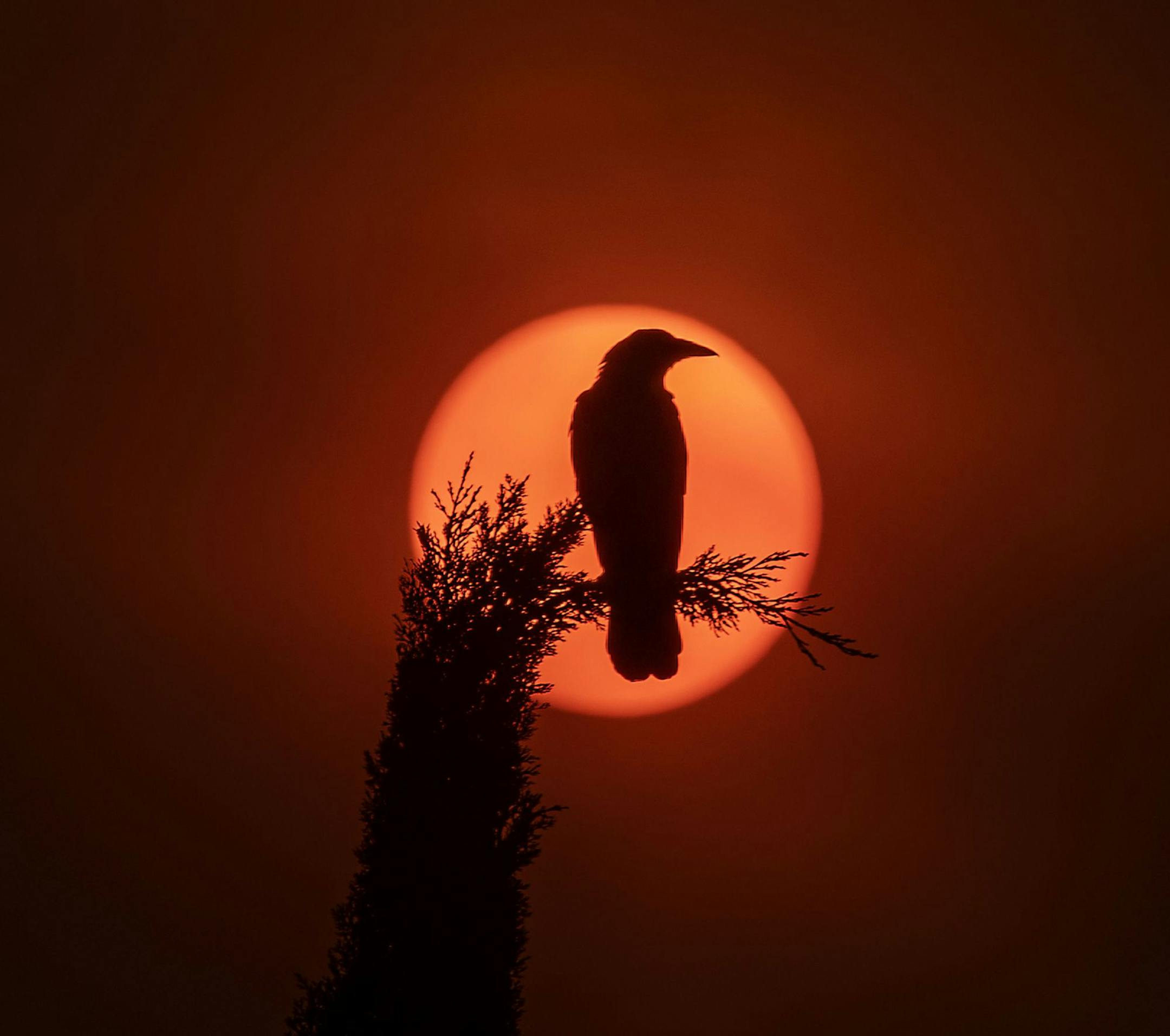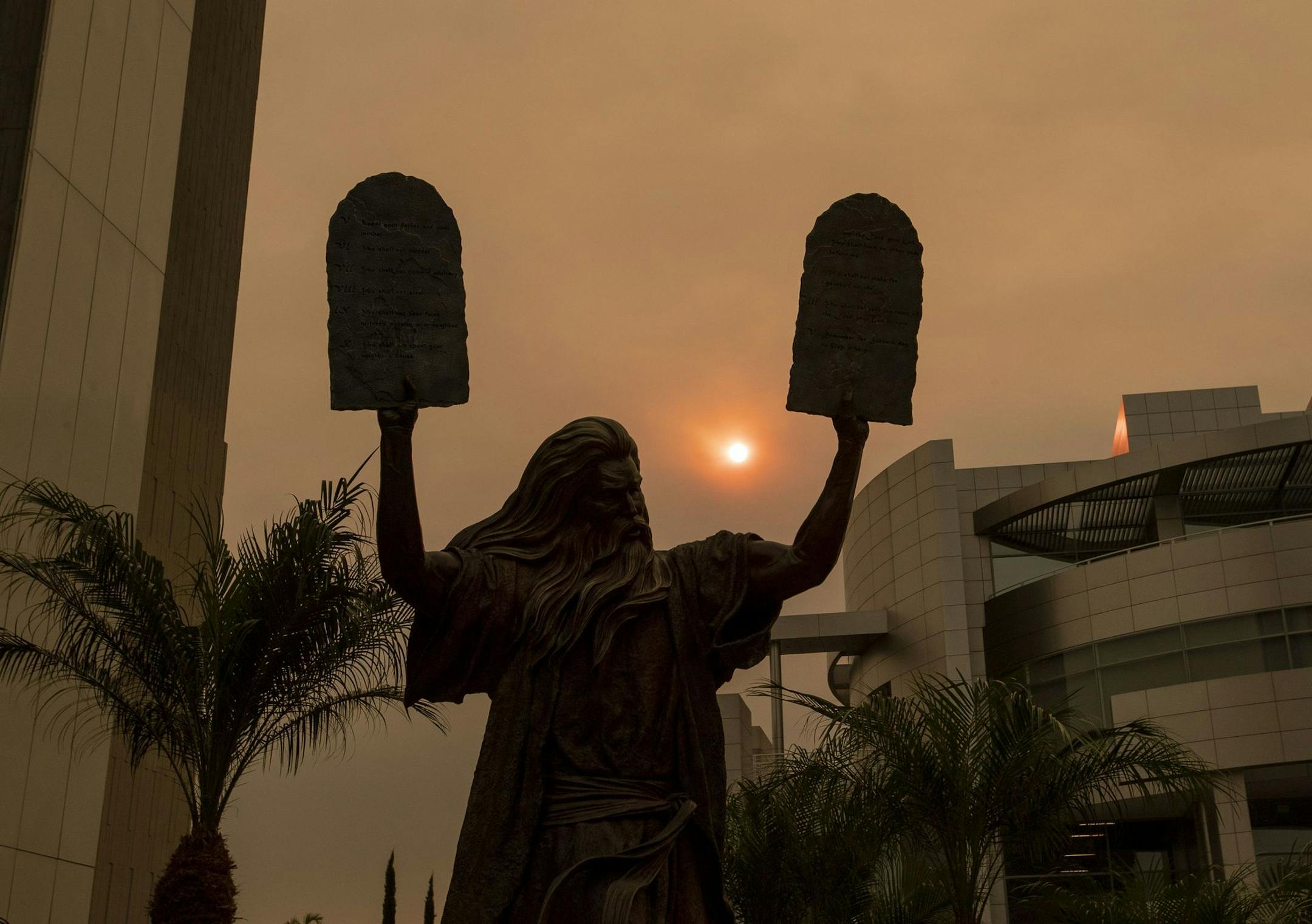
When deadly wildfires tinted Western skies a Martian hue this week, homeowners with their own rooftop solar systems were able to tell with great precision just how much useful sunlight reached them through the gloom: next to none.
Last Wednesday was "the worst generation day, ever," said Mary Holstege, a retired software engineer in Cupertino, Calif., who went solar a year ago. Her system, which puts out 40 kilowatt-hours a day in the summer, barely dribbled out 1.65 — maybe enough to dry a load of laundry.
Others fared worse. Bentham Paulos, an energy policy consultant in Berkeley, Calif., called the solar-power system he's had for 10 years "extremely predictable every single day, except this week." On Wednesday he peaked at about 12 watts, or enough to light one LED bulb, "and it went away," he said.
The solar blackouts highlight a cruel irony of life amid California's climate crisis: Over the last few years, homeowners began investing in rooftop systems and batteries to hedge against intentional power outages aimed at preventing wildfires. But now some blazes have become so large, they are effectively shutting down the solar.
A worst-case wildfire scenario could reduce annual solar-energy production from affected installations by as much as 2%, according to Dan Whitten, spokesman for the Solar Energy Industries Association. "We take any lapse in solar performance very seriously," he said, "but the longer-term and more serious implications of this environmental devastation are much more alarming and need to be addressed, in part by stronger clean-energy policies."
It's not the first time a wildfire-stricken region has seen solar power misbehave, and far from the last. During the Australian bush fires that began last year, months of intense smoke resulted in decreased and harder-to-predict generation from the country's rooftop-solar fleet, said Will Edmonds, a Sydney-based analyst at BloombergNEF. But this had little impact on customers losing power. Most can still draw needed electricity from the grid.
"In fact, several rapidly deployable solar and storage systems were used to restore power to critical infrastructure in some of the worst-affected regions," Edmonds said in an e-mail.
So far, there's no sign that smoky skies will erode interest in residential power — and in fact, the fires and recent utility blackouts may be creating more demand. SunPower Corp. on Wednesday generated more appointments with potential new customers than all but two other days in a three-year-old sales initiative.