(ii) Never use a long word where a short one will do.
(iii) If it is possible to cut a word out, always cut it out.
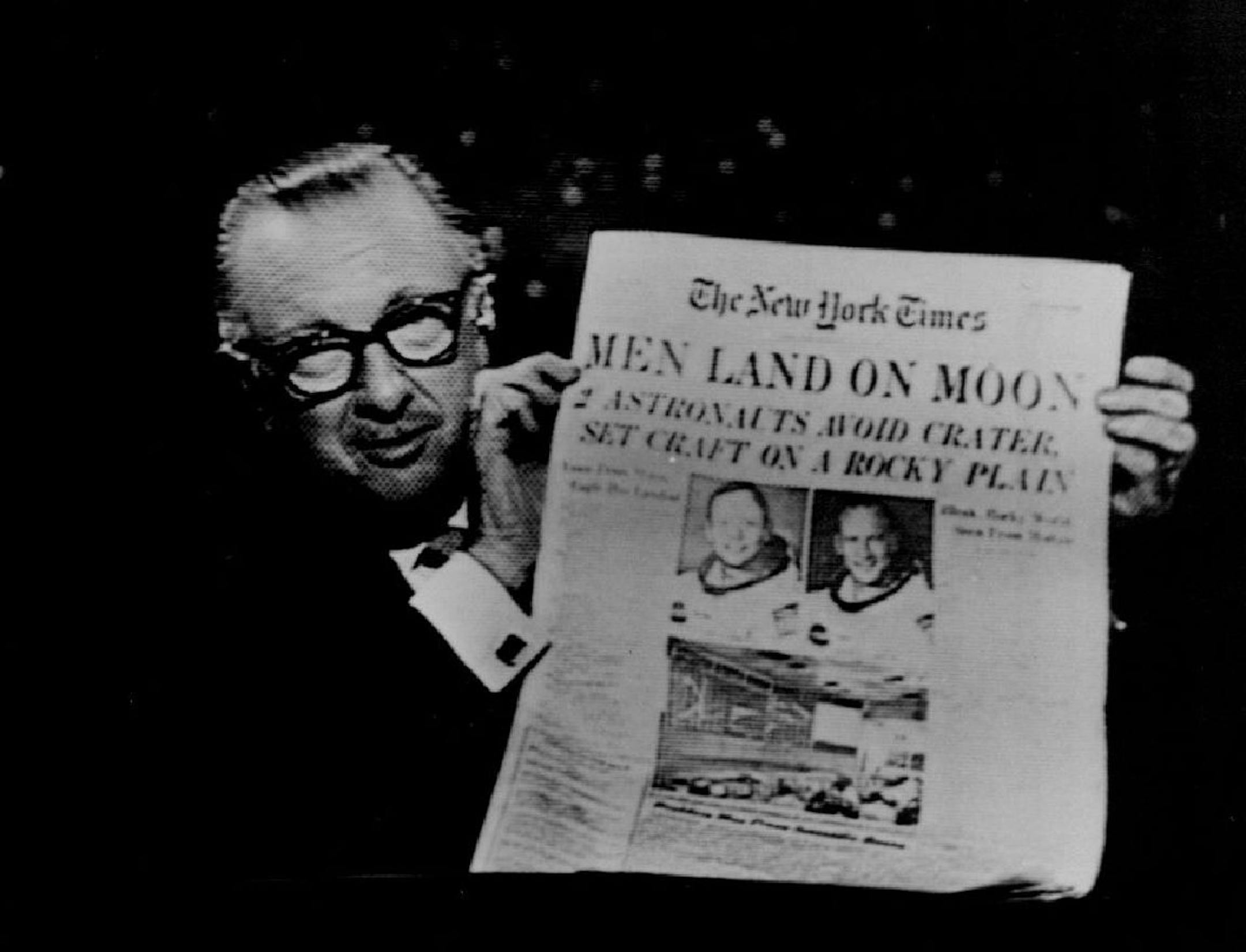
Later into that midsummer night in 1969 and right up through splashdown, the TV networks brought on sci-fi authors such as Ray Bradbury and Kurt Vonnegut and a bunch of scientists and journalists, all of whom opined about the moon and our arrival on it. Elected officials chimed in, too, of course.
Bradbury: "I'm willing to predict tonight that by the end of the century our churches will be full again. ... Because when we move out into the mystery, when we move out into the loneliness of space, when we begin to discover we really are three billion lonely people on a small world, I think it's going to draw us much closer together."
ABC's Harry Reasoner: "The moon has always had a sort of spooky or evil quality to it. Strange things were always happening by the light of the moon, and most of them were unpleasant."
Eric Severeid, Cronkite's more cynical broadcasting partner: "Of course, the moon now is something different for the whole human race. There's a price for everything. When you got the telephone you lost privacy. When we got the airplane, we lost a sense of travel. When we physically possess the moon, I suppose it will dawn on us … that spiritually we lose the moon we had for thousands of years. At least in terms of its remoteness, its wonder and mystery, the romance and poetry of it. There's a line in Shakespeare's Henry IV … that says, 'methinks 'twere an easy leap to pluck bright honor from the pale-faced moon.' And how any actor henceforth can utter that with a straight face, I don't quite see."