

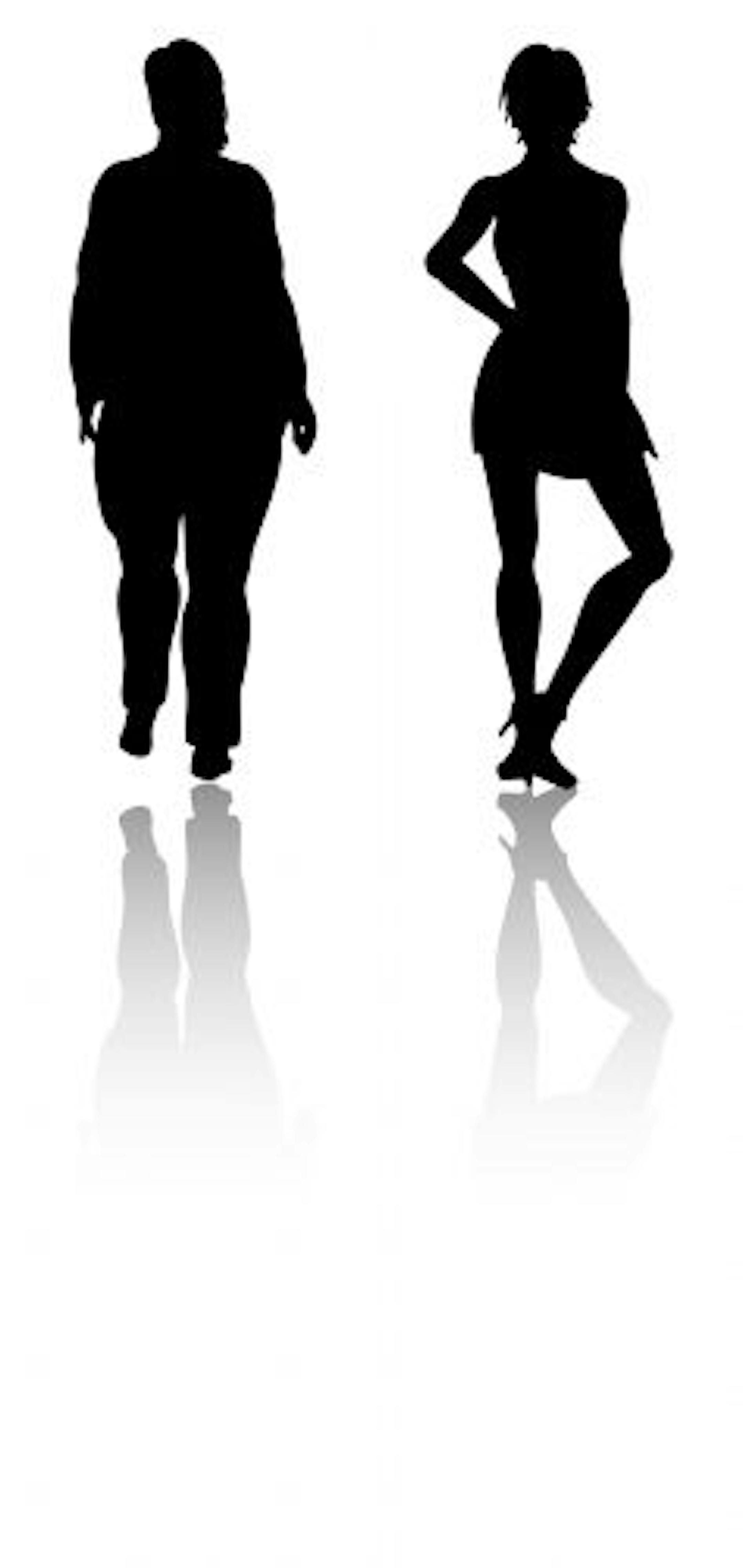
It's an endless cultural lesson that's been drilled into our heads since we were tots, watching cartoons such as the Flintstones, and playing with Barbie and Ken dolls:
If you are a woman, you should be extremely thin; if you are a man, you should be big and strong.
And while we've grown accustomed to seeing studies that such stereotypes play out in the workplace -- overweight and obese women, for example, have a harder time ascending the career staircase -- a recent study has found that a worker's girth can have an appreciable impact on the size of their paycheck.
The study found that thin women are paid significantly more than their average-sized counterparts, while heavier women make less. Skinnier-than-average men, on the other hand, cash smaller paychecks than their average-weighted peers.
Experts say it's just another sign that as a society, we've internalized the unrealistic, media-driven physical ideals that show up in the workplace -- and therefore the pocketbook.
"Employers don't purposely think of these things when they're evaluating a person," said Teresa Rothausen-Vange, a management professor at the University of St. Thomas, who was not involved in the research.
"They don't say 'OK, this woman is skinny, I'm going to give her a raise.' But research has shown that if you have two résumés, if all other qualifications make the candidates equal, the more physically attractive one -- whether it's a skinny woman or a muscly man -- will have the leg up."
In general, she said, people have distinct subconscious reactions to different body types. For instance: For a man, skinny says less-than-manly and gay, two qualities that clash with our Americanized vision of a leader: tall, strong and emotionally unmoved.


