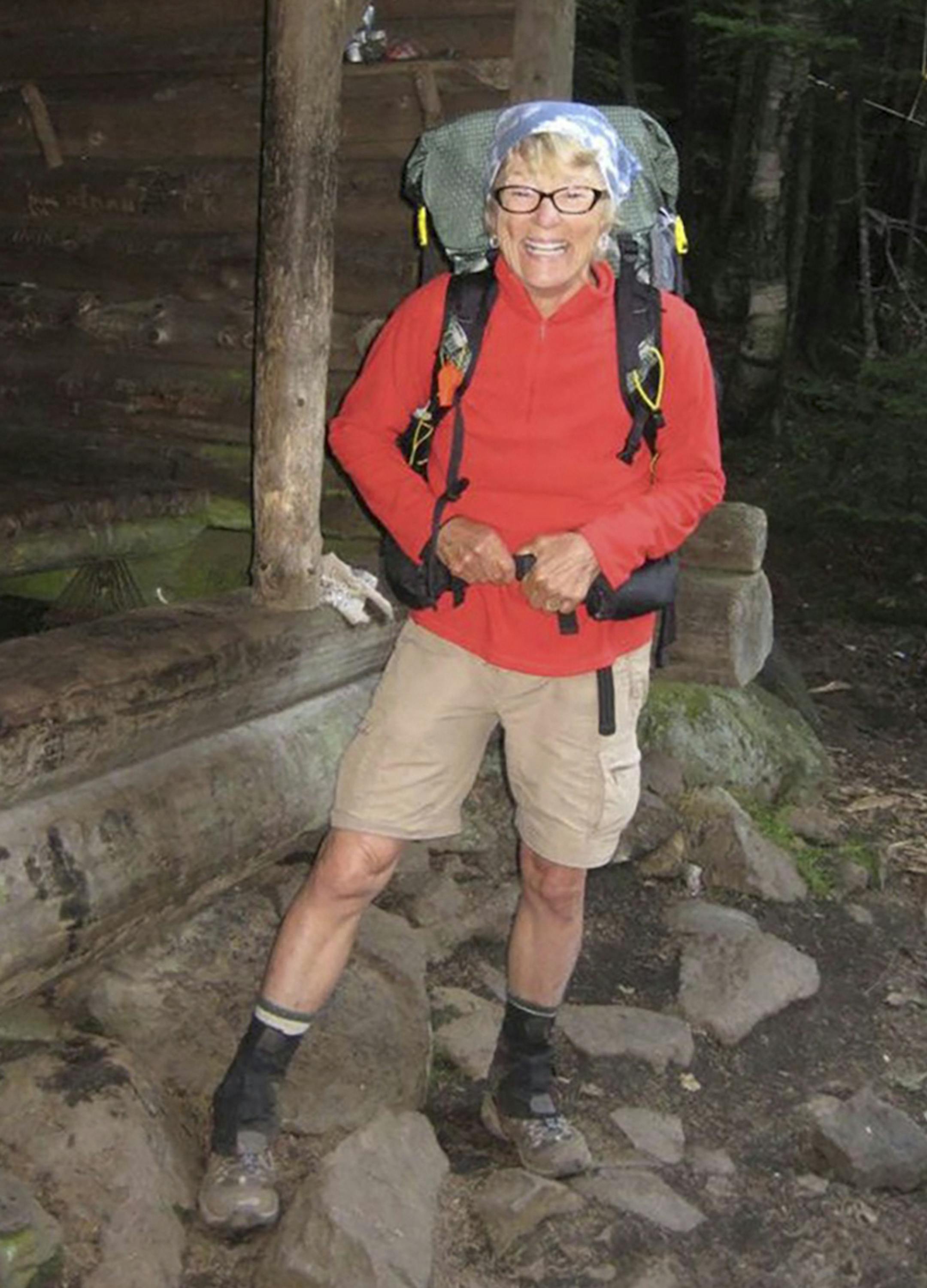
Late last week buzzed with the haunting details of a backpacker who lost her way and died on the Appalachian Trail in 2013. While acknowledging the tragedy of her ordeal, some people who walk in the woods shared another reaction:
It couldn't happen to me.
News accounts have noted that hiker Geraldine Largay, whose body lay undiscovered in her tent only two miles off the trail in Maine for more than 26 months, lacked a good sense of direction, was prone to anxiety, and may not have even known how to use a compass.
Somehow, though, before the Tennessee woman walked off the trail and was lost, she had managed to make it nearly 1,000 miles — the equivalent of three complete circuits of the Superior Hiking Trail, the closest equivalent Minnesota has to the iconic footpath that runs from Georgia to Maine.
Largay, 66, appeared to know some things about hiking, so wilderness experts said questioning her skill set doesn't do anything to improve your own. Bottom line: No one is immune from trouble in the woods.
Prepare for anything
Going into the woods presents a level of risk. When you hit the trail, the only thing worse than not being prepared for an emergency is fooling yourself into thinking you don't need to be.
The Superior Trail, like the Appalachian, has attributes that belie its inherent risks. The trail is well-marked, frequently crosses roads and carries more than 20,000 hikers a year along its 310 miles. But, at its heart, the Superior Trail travels through rugged wilderness. Besides the possibility of getting lost, injuries and medical emergencies can occur that make travel difficult if not impossible, and they can happen far from a vehicle.
So on a trail such as the Superior, how do you prepare for a possible emergency, and then react if one occurs?