

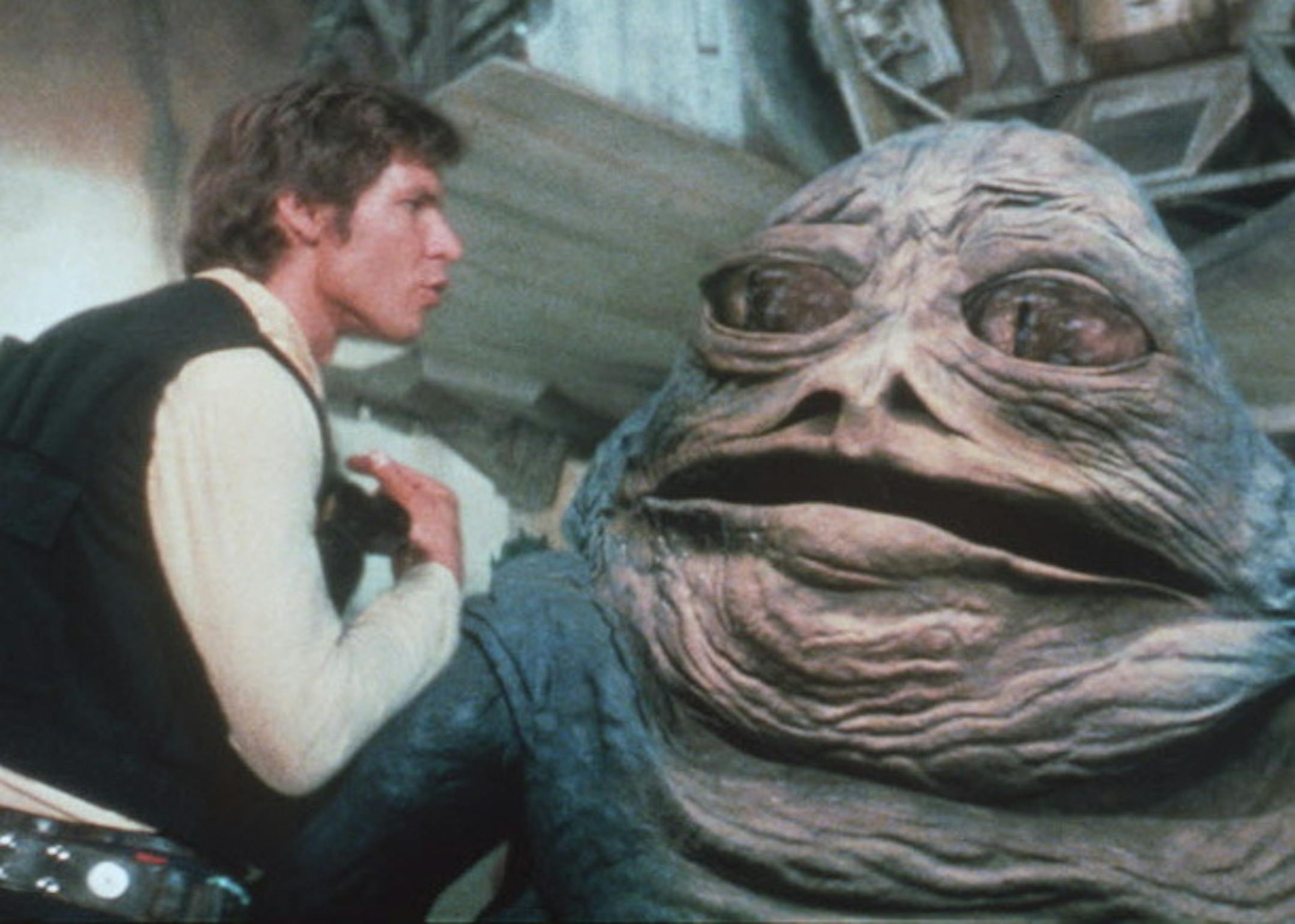
With the latest chapter in the Star Wars saga, "Star Wars: The Force Awakens," fans lined up to watch nail-biting lightsaber duels and catch up with beloved characters and meet a new generation.
Economists, who can render the most exciting of material dull, were eager to learn about the state of the galactic economy. Did the destruction of the Death Star at the end of the sixth film in the series trigger a massive financial crisis, as a recent paper by Zachary Feinstein, a professor of financial engineering at Washington University in St. Louis, speculates?
While awaiting answers to these and other questions, the Economist undertook an examination of the first six episodes of the saga, in search of broad economic lessons.
The Star Wars galaxy is both technologically advanced and economically stagnant, plagued by inequality and ossified political institutions. It is not entirely alien, in other words. Though far, far away, it offers three important lessons for residents of the Milky Way.
The first is the value of trade: the freer the better. Fans moaned in dismay when the opening blurb of the first prequel (Episode I, released in 1999) dwelt on the details of a trade dispute. Yet in the distant galaxy, as in this one, trade conflicts are a rich source of dramatic tension. Among the most important technologies in the Star Wars universe is the hyperdrive, which allows travelers to evade the constraints of relativity and travel fantastic distances in a jiffy.
Hyperdriven trade, in turn, enables a higher level of income per person than would be possible in a galaxy of planetary autarky. Some planets — those with a diversity of species and resources — would do well enough in a tradeless galaxy. But those like the desert planet Tatooine or the ice planet Hoth would be barren without the possibility of imports from other worlds.
Trade allows desolate planets to specialize in the production of valuable commodities — minerals in Tatooine's case. Others can turn their entire surface over to farming or to urbanization.
The gains from galactic trade are reduced, however, by the monopolies granted to powerful industry groups, such as the Trade Federation, which invades the peaceful planet Naboo in Episode I. Trade franchises are troubling for a number of reasons. They allow the monopolist to charge a premium, capturing benefits that would otherwise flow to producers or consumers. They encourage criminality by those seeking to circumvent the monopoly (like the smuggling of spice, a narcotic, by Han Solo, on behalf of the gangster Jabba the Hutt). And they encourage monopolists to devote valuable resources to rent-seeking. The Republic's bureaucrats, we learn from Naboo's then-senator, Sheev Palpatine, are "on the payroll of the Trade Federation."


