
What's the next step for Moscow in Ukraine?

An economic balance is struck in Moscow but not bringing a dividend for Kiev.

April 21, 2015 at 12:31AM
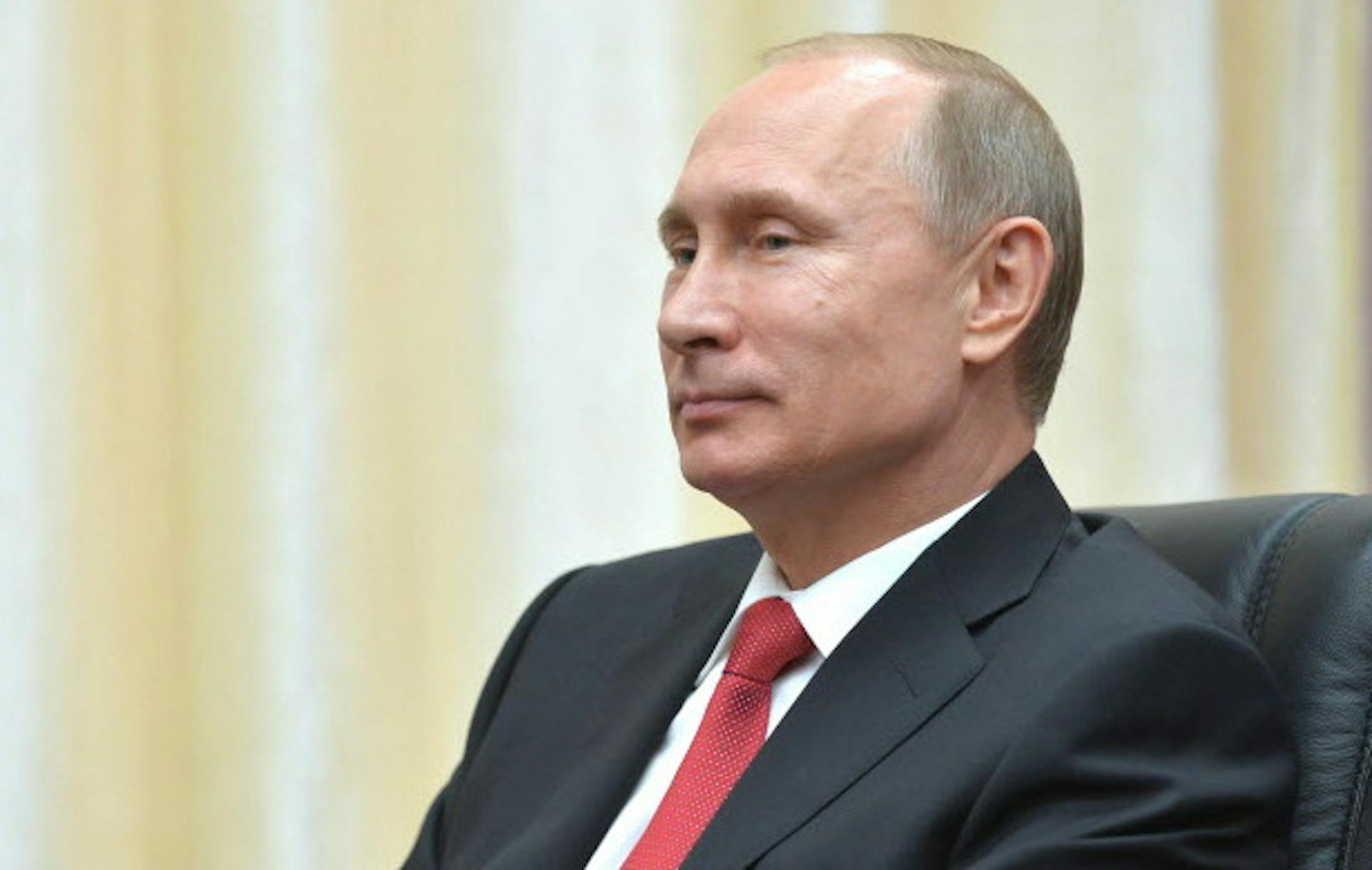
Russian President Vladimir Putin meets with FIFA President Sepp Blatter in the Russian Black Sea resort of Sochi, Russia, Monday, April 20, 2015. (Alexei Druzhinin/RIA Novosti, Kremlin Pool Photo via AP)
Russian President Vladimir Putin saw his approval ratings soar after annexing Crimea but still has real problems to address. (The Minnesota Star Tribune)

A relative hiatus in the fighting in eastern Ukraine (at least until this week) and a relative stabilization in the Russian economy are prompting two questions. Is the worst of the war over and might better economic news calm the Kremlin — or is this a lull before a new storm?

The economic situation is not as bad as many predicted four months ago. Having lost half its value, the ruble has stabilized and even started to strengthen, thanks in part to a recent rise in oil prices. Inflation is running at 17 percent but is rising more slowly than many feared. Instead of a 5 percent contraction, the economy may shrink by only 3 percent this year. "The situation is not as catastrophic as many people thought," is how a senior Russia banker sums up the mood.

Yet the fragile economic balance is not being used by Vladimir Putin as an argument for returning to peace and prosperity, but rather as evidence that he is standing strong against Russia's adversaries. The state media have trumpeted the strengthening of the ruble against the dollar and the euro as a victory in the face of American and European enemies determined to ruin Russia.

The Kremlin's narrative of war has long moved beyond Ukraine to the West in general. The claim that their country is at war may be news to Americans, but it has been drilled into the minds of many ordinary Russians. The prospect of a war with the West is now a big concern for public opinion. Some 81 percent of the population sees America as a threat, the highest proportion since the Soviet Union fell apart.

According to this narrative, Russia is under attack on all fronts — economic, ideological, Middle Eastern, European — and must respond accordingly. Last week's decision to sell the S-300 missile system to Iran is part of this response.

As for the supposed threat from the European Union, Channel One news recently instructed its viewers: "Put crudely, the E.U. started and flourished as a mechanism for redistributing the gains from the collapse of the USSR and former communist bloc. At some stage, however, the flow of resources from conquered markets started to run out and expansion to the east was the only option." This expansion, it adds, has now been stopped by Russia; so the E.U., deprived of new sources of prosperity, may soon crumble.

In this world of mirror images, America serves as Russia's reflection and alter ego. It ascribes to America its own actions: incitement of violence in Kiev, support of extreme nationalists in eastern Ukraine, military involvement in the conflict.

What are Russia's motives and goals in this confrontation, and is it now trapped in a spiral of aggression? Russian officials talk obsessively of geopolitics, but the answers depend not on what the West does but on how the Kremlin calculates its risks at home, since staying in power is its main goal.

A study commissioned by Alexei Kudrin, a former finance minister, and conducted by a group of Russian sociologists led by Mikhail Dmitriev of the New Economic Growth, a think tank, suggests that the roots of Putin's actions in Ukraine lie in the Kremlin's need to solidify its legitimacy after the growing discontent that erupted into street protests during the winter of 2011-12.

Those protests were driven mainly by Russia's middle class, frustrated by its lack of prospects. After a decade of rapid income growth that boosted living standards, priorities shifted to such aspirations as better justice, education and health care that Putin's regime of crony state capitalism could not provide. Putin was becoming a symbol of stagnation rather than stability — so his ratings began to fall. Trust in the state media also wobbled. Observers started to compare the situation to the mid-1980s, when a frustrated intelligentsia became a driving force behind Mikhail Gorbachev's perestroika.

Russia's annexation of Crimea arrested this trend. Alexei Navalny, a leader of the protests of 2011-12, says that the president is substituting imperial nationalism for building a modern state. The annexation of Crimea won over provincial Russia and legitimized his rule even in the eyes of earlier protesters, pushing Putin's approval ratings up to nearly 90 percent.

To demonstrate its strength, the Kremlin is brandishing its nuclear arms and flexing its muscles all around NATO's borders. Dmitri Trenin of the Carnegie Moscow Centre, a think tank, says the risk of nuclear war is greater than at any time since the 1962 Cuban missile crisis. But the immediate goal of such intimidation is to persuade the West to drop sanctions, which would be presented at home as a huge victory.

Against this background a resolution of the Ukrainian crisis and de-escalation of tensions with the West would push the focus back onto economic and social problems, lowering Putin's ratings, just as happened after Russia's war in Georgia in 2008.

Russia's budget cuts are a good guide to Putin's priorities. The upkeep of the Kremlin and spending on the army and security services take 40 percent of the entire budget. But spending on health care and infrastructure has been reduced twice as much as spending on defense. Among other winners in the budget are the state media, which spew out hatred and aggression.

The object of this aggression was migrants and corrupt officials two years ago. Now it is the West, "national traitors" and a "fifth column" that included Boris Nemtsov, a liberal politician assassinated in Moscow in February. In this way the Kremlin's aggression has become a narcotic that may lead to an overdose, causing it to lose control. Indeed, the mood could one day switch from an external enemy back to Putin himself, not least because the image of America constructed by the Kremlin's propaganda bears such a close resemblance to the reality of Russia.

Copyright 2013 The Economist Newspaper Limited, London. All Rights Reserved. Reprinted with permission.

about the writer

about the writer

the Economist

More from Business

See More
card image
Alex Kormann/The Minnesota Star Tribune

As first-time buyers sit on the sidelines, luxury homebuyers have been driving the market and edging up prices.

card image
card image