

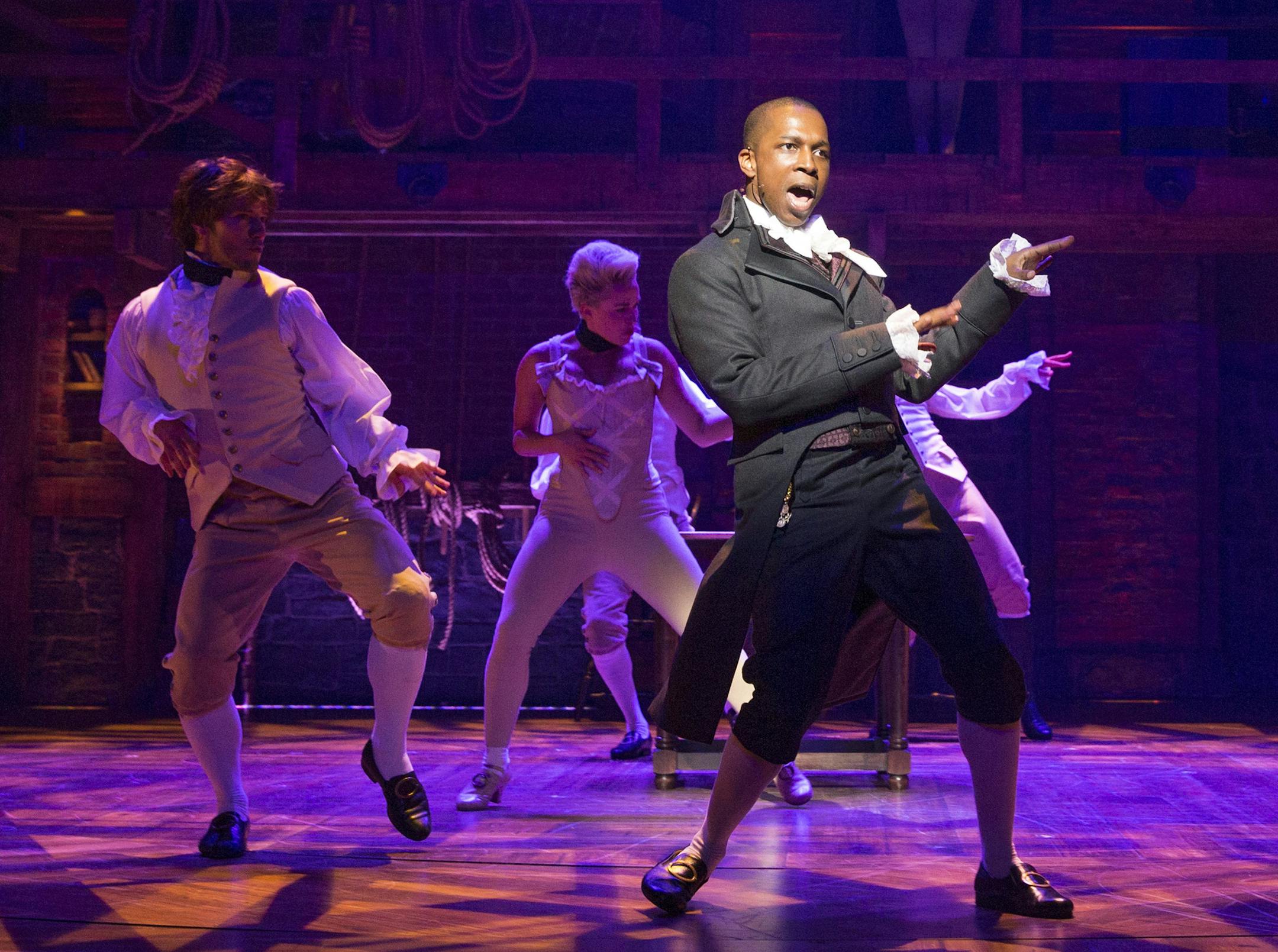
You can't stop a showstopper.
What it comes down to is an agreement between the folks on stage who do the thing and the folks in the audience who decide the thing is so spectacular that hands must be clapped and attention paid.
It is the audience that forces actors to hold an extra few seconds after iconic numbers such as the tap-dancing chorus of "Anything Goes," or "Rose's Turn," the breakdown song in "Gypsy" that Michelle Barber nailed in Theater Latté Da's 2016 production, or gangster Nicely-Nicely Johnson's "Sit Down You're Rockin' the Boat," the revival-meeting "Guys and Dolls" tune some lucky actor will tackle next summer at the Guthrie.
Each of those has the potential to give you goose bumps, to produce a halo of feeling that makes you think, "Holy cow, I'm watching something special here."
But a stellar song won't always stop the show.
"If you don't have a great Nicely-Nicely, you may not get the showstopper. But Mandy Patinkin could probably turn even a mediocre song into a showstopper," says Michael Brindisi, who has seen many a show stopped in 30 years at Chanhassen Dinner Theatres and is currently planning a showstopper, featuring tap dancing and jumping rope, for this fall's "Holiday Inn."
Sometimes, a song is built specifically to whip the audience into a frenzy: "Friend Like Me," from last year's touring "Aladdin," packs in tap dancing, a chorus line, impressions, magic tricks and special effects. "Something Rotten," which toured to the Twin Cities earlier this year, boasts a legit showstopper ("A Musical") but nothing else. That's why Brindisi thinks showstoppers can be a bad thing, with some productions and performers so focused on their big helicopter/chandelier/high C that they ignore everything else a show needs.
A musical showstopper usually hits during a pivotal scene, often includes a dance break and frequently features the chorus building to a beatific crescendo — all of which are true of "Rockin' the Boat," as well as "Brotherhood of Man" in "How to Succeed in Business Without Really Trying" and "The Room Where It Happens" in "Hamilton." But "Room" also has a kinship with showstopping solos such as "Epiphany" in "Sweeney Todd" or "Rose's Turn," songs that strip the main character bare. In fact, "Room" could almost be redubbed "Burr's Turn" since it marks the crucial moment when the audience catches the lie in the story that Aaron Burr tells about himself.


