

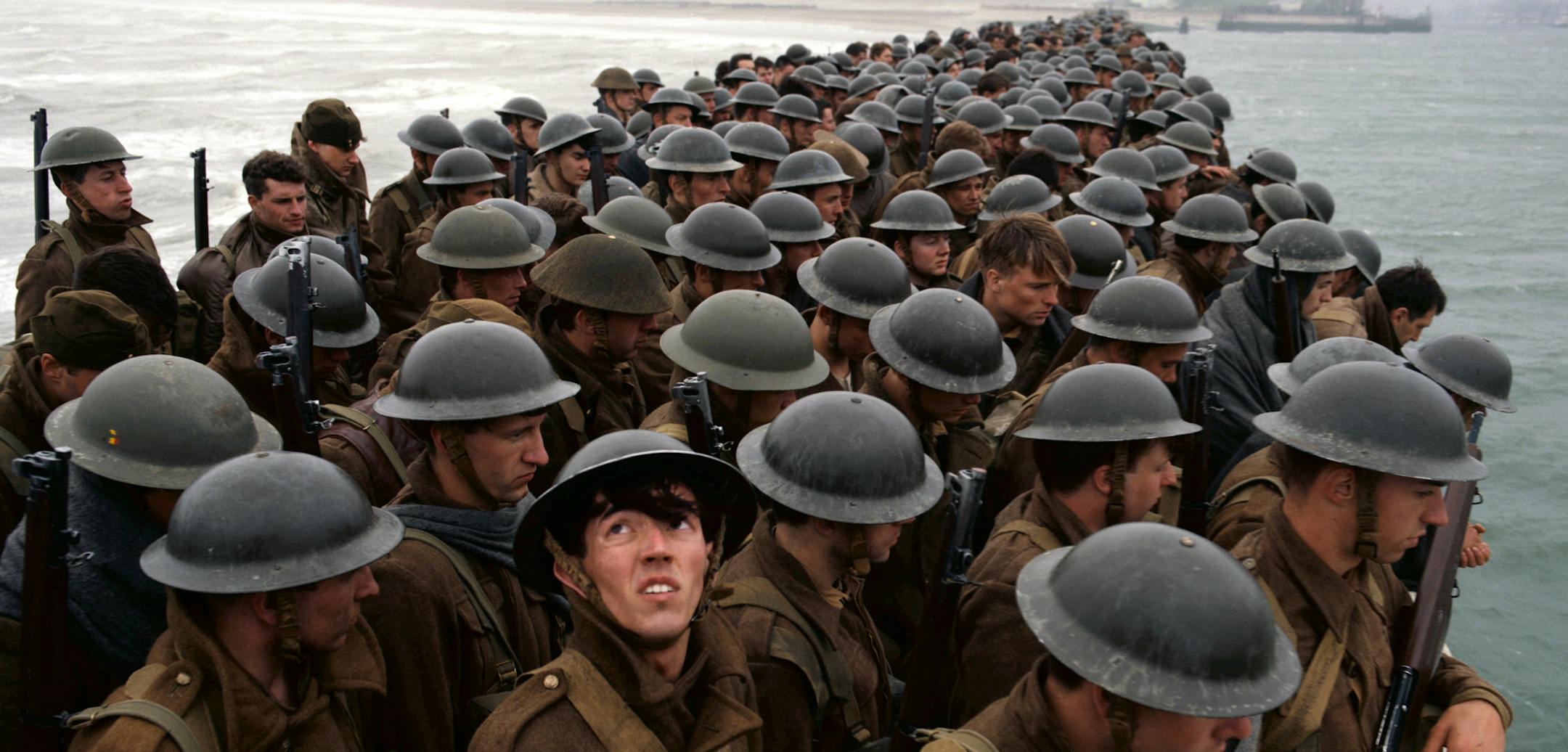
Superheroes will be the big box-office draw again this weekend. Yet this time they won't be wearing capes, but military uniforms and, most notably, civilian clothes, as heroic, humble British citizens rescue trapped Allied soldiers in "Dunkirk."
This riveting film tells the true story of the remarkable rescues in 1940 of more than 338,000 troops from Dunkirk, France, many by everyday Brits in fishing boats and other small craft that could traverse English Channel waters too shallow for large naval vessels.
While "Dunkirk" is told in individual, harrowing narratives — a besieged British soldier, an intrepid Spitfire pilot, a steady, stoic rescuer — the geopolitical context and consequences were enormous.
"There is the immediate consequence [that] the British Army can survive, and therefore Britain can survive," said William T. Johnsen, who holds the Henry L. Stimson Chair of Military Studies at the U.S. Army War College. "In the longer-term consequence, Britain is largely a disarmed nation, and where do those [new] arms come from? And that brings a larger involvement of the United States."
"The United States is faced with a decision," Johnsen continued. "'Do we provide additional arms and materiel to the British, or do we safeguard for our own use in the event we have to mobilize?'"
Based partly on the Dunkirk rescue, Johnsen said, "We're stripping our armament cupboards bare to help support Britain, so it's the [British Expeditionary Force] coming off the beaches at Dunkirk that allows the Brits politically to continue the war, which then consequently draws us in a little more solidly on the British side."
Britain, to be sure, was in a total mobilization that's rarely seen in Western societies despite decades of warfare since.
"The Brits understood that they were at war as a nation and that survival probably hinged on whether or not you could bring the BEF off," Johnsen said. "When you know you're going to be engaged in sort of a life-and-death existential struggle for the survival of your nation, you know popular support is going to be required."


