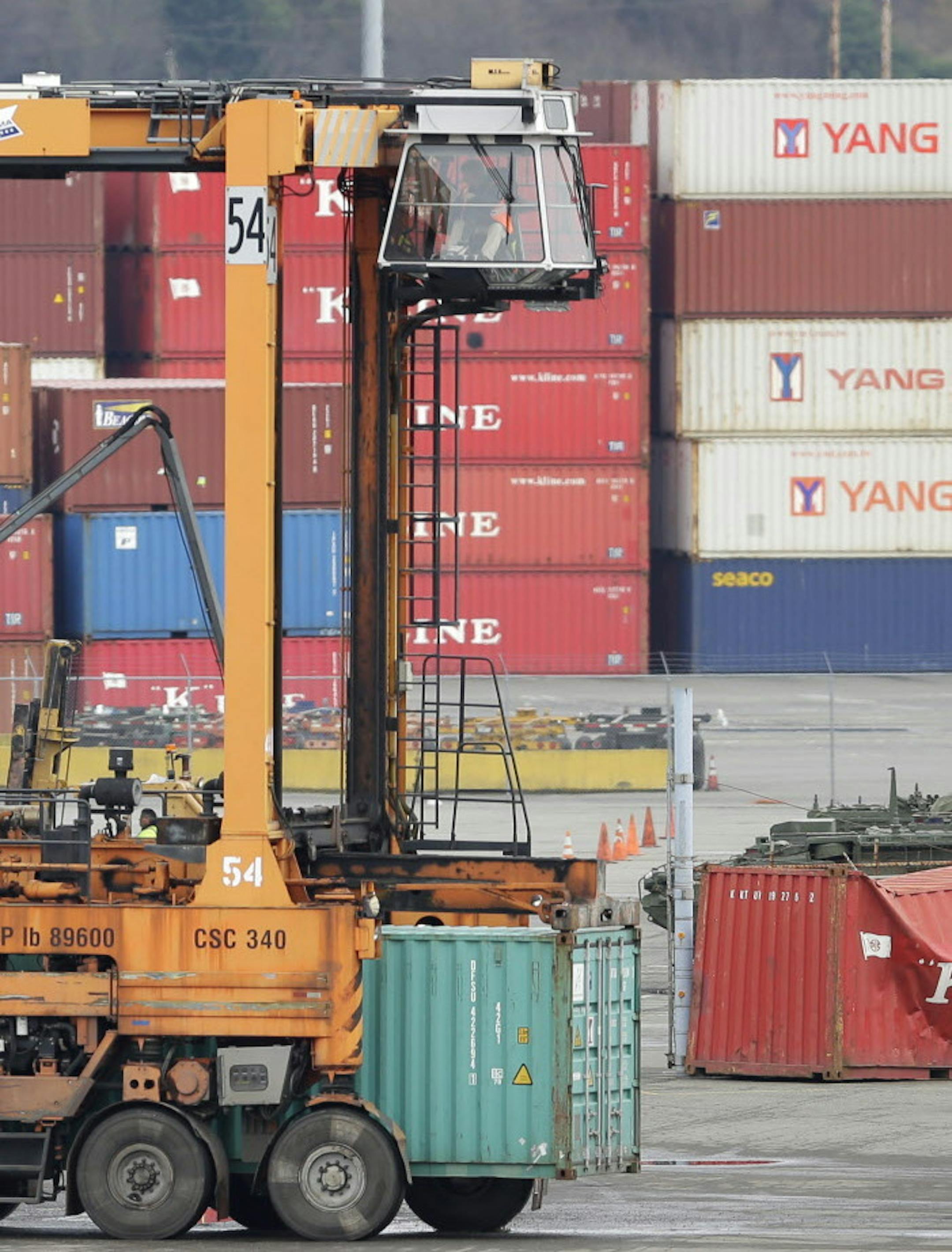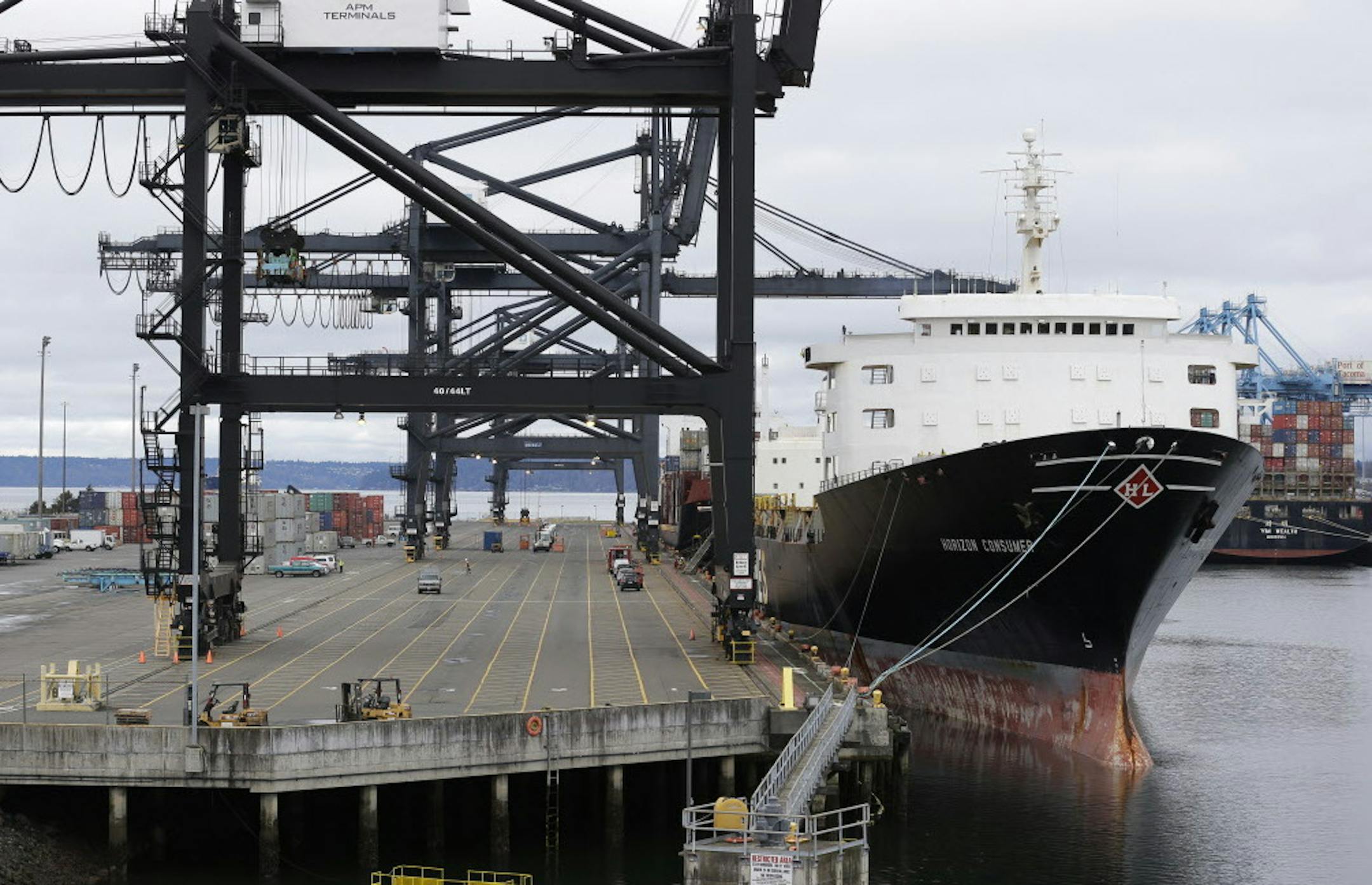
LOS ANGELES – Negotiators reached a tentative contract covering West Coast dockworkers on Friday evening, likely ending a protracted labor dispute that snarled international trade at seaports handling about $1 trillion worth of cargo annually.
The breakthrough came after nine months of negotiations that turned contentious in the fall, when dockworkers and their employers began blaming each other for problems getting imports to consumers and exports overseas.
The five-year deal still must be approved by the 13,000-member International Longshore and Warehouse Union's rank-and-file. They work 29 ports from San Diego to Seattle that handle about one-quarter of all U.S. international trade, much of it with Asia.
Negotiators for the union and the Pacific Maritime Association, which represents oceangoing shipping lines and the companies that load and unload cargo at port terminals, began talking formally in May. Their prior six-year contract expired July 1.
U.S. Secretary of Labor Thomas Perez said that both the dockworkers' union and their employers agreed to resume work Saturday evening. In recent weeks, employers cut most weekend work, saying they would not pay extra wages.
"We are pleased to have reached an agreement that is good for workers and for the industry," said maritime association President James McKenna and union President Bob McEllrath said in a joint written statement. "We are also pleased that our ports can now resume full operations."
After initial signs of progress, in the fall employers publicly charged dockworkers with creating a congestion crisis to gain bargaining leverage by slowing their work rate and withholding the most skilled workers. The union responded that its members were working safely and blamed the jam on broader dysfunction at West Coast ports that predated contract talks, notably a lack of truck beds to tow containers from dockside yards to distribution warehouses.
By January, the maritime association's members stopped ordering night work crews to load and unload ships. Union members called it an attempt to hurt workers in their pocketbooks; their negotiators soon agreed to the involvement of a federal mediator.