

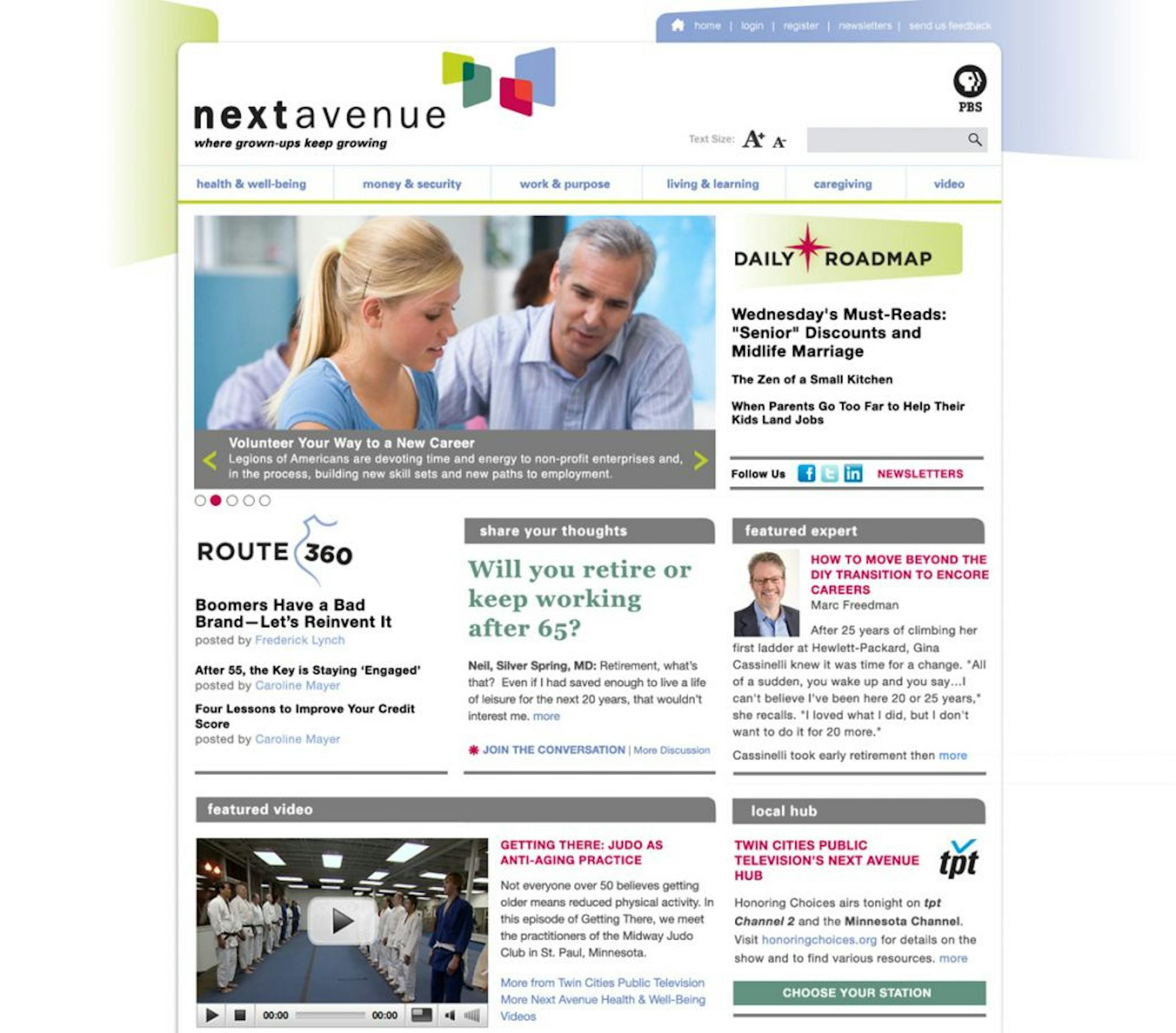
As if baby boomers weren't already a dominant enough slice of the demographic pie, a PBS website being launched Tuesday posits that boomers have gone and created a whole new life stage. Next Avenue, PBS' first venture to begin on the Internet rather than broadcast TV, was conceived and developed at Twin Cities Public Television (TPT) in St. Paul.
They may be on to something. Average U.S. life expectancy is now 75 years for men and 80 for women. Just as the concepts of teens and tweens were "created" by increased longevity and changing social mores -- it used to be there were kids and adults, period -- Americans age 50-plus today represent something in between midlife crisis and ready for a walker. Too seasoned to be called spring chickens but too vibrant to feel elderly, these senior in-betweeners are demanding their own new chapter in the book of life.
The content is modeled after a proven success on the other end of the age spectrum, PBS Kids and "Sesame Street," said the site's co-founders, TPT President Jim Pagliarini and former PBS executive Judy Diaz.
"We want to be as powerful a source for this generation as we have been for kids," Pagliarini said. "It's also a chance to build online community, which you can't do with TV because it's passive."
Diaz, who left her job as managing director of audience and brand strategy at PBS to run Next Avenue, said the approach is holistic, focusing on the whole lives of a demographic, not just part of them. It's a Sesame Workshop for older people.
Billed as a site "where grown-ups keep growing," Next Avenue is split into several channels -- health and well-being, caregiving, money and security, work and purpose, living and learning, and video. The wide range of launch-day topics includes why the U.S. economy will need older workers, how baby boomers still use marijuana more than any other generation but it's prescription drugs that are killing them, and practical advice on job hunting and gadgets. On the fun side: a review of the senior-star-studded film "The Best Exotic Marigold Hotel" and a slide show of hip reading glasses.
The editorial staff and contributors are mostly seasoned journalists, many of whom have worked for national magazines and newspapers. Some content will be original, the rest aggregated. Each of more than 70 public-TV station affiliates, including TPT, will add localized content.
Asked whether the website duplicates resources already offered by the AARP, Diaz said, "they're a membership and advocacy organization. We're media, and media is where people turn when they're going through massive transition."


