

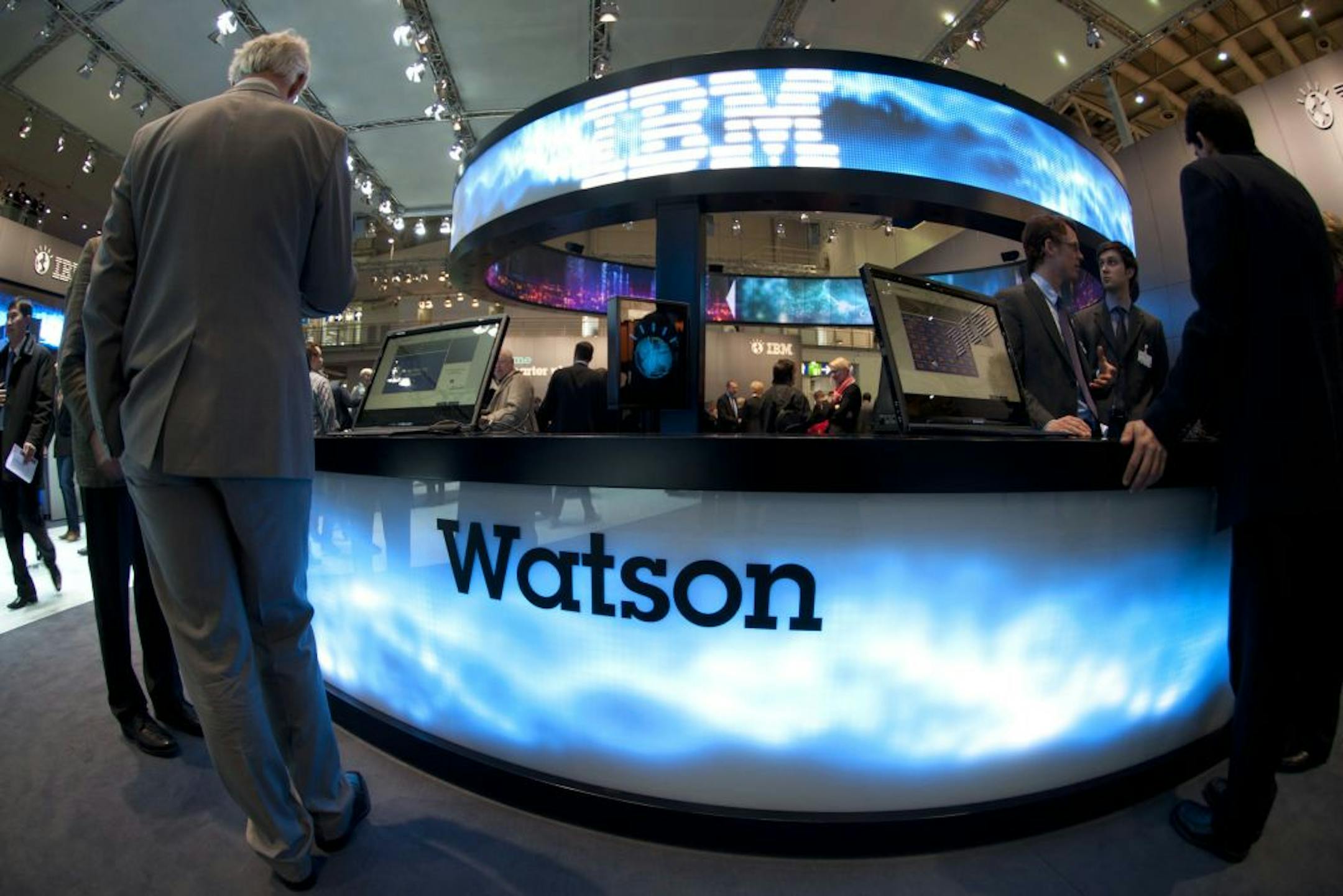
IBM's Watson computer marched into pop-culture history last year by outscoring two former "Jeopardy!" champions on national television.
Now, the Minnesota-made computer system is moving into real-world business applications, and the state's health care industry is looking for ways to tap in.
Named after Thomas J. Watson Sr., the influential early leader of IBM, Watson is an artificial intelligence computer system whose brainpower comes from multiple computers that are engineered and manufactured at the IBM facility in Rochester.
With a souped-up processing system that can ingest reams of data, analyze it and spit out results in the blink of an eye, IBM officials believe that turning Watson's brainpower onto the medical system can reduce errors and improve the quality of care.
Watson is much more than a search engine with access to encyclopedic amounts information. It can understand the spoken word, and it can learn. With 16 terabytes of memory, twice the Library of Congress, Watson can store huge amounts of data ranging from patient health records to cutting-edge treatments. While a doctor may spend 10 hours a week reading the latest advances in medical journals; Watson can read 200 million pages of text in three seconds.
"This changes the world," said Dr. Gary Oftedahl, of the Institute for Clinical Systems Improvement in Bloomington. "Watson can shift the ability to access information in a way that's never been done before."
If a patient says, "I'm dizzy," Watson could assess whether that's a symptom worth exploring or ignoring, given the patient's medical history. It could compare symptoms with others in a vast database, draw in the latest scientific research from around the globe and weigh the value of a range of treatments that might include doing nothing, prescribing a certain medication or ordering more lab tests.
"Unlike 'Jeopardy!,' the answer is not one, single, appropriate decision," said Dr. Martin Kohn, chief medical scientist of IBM Research in Hawthorne, N.Y., during a recent visit to the Twin Cities. "Watson can offer next steps," said Kohn, a former emergency physician who hears from skeptics as well as believers in the medical community. "It won't make the decision for you. It is a resource. It gives you information."


