

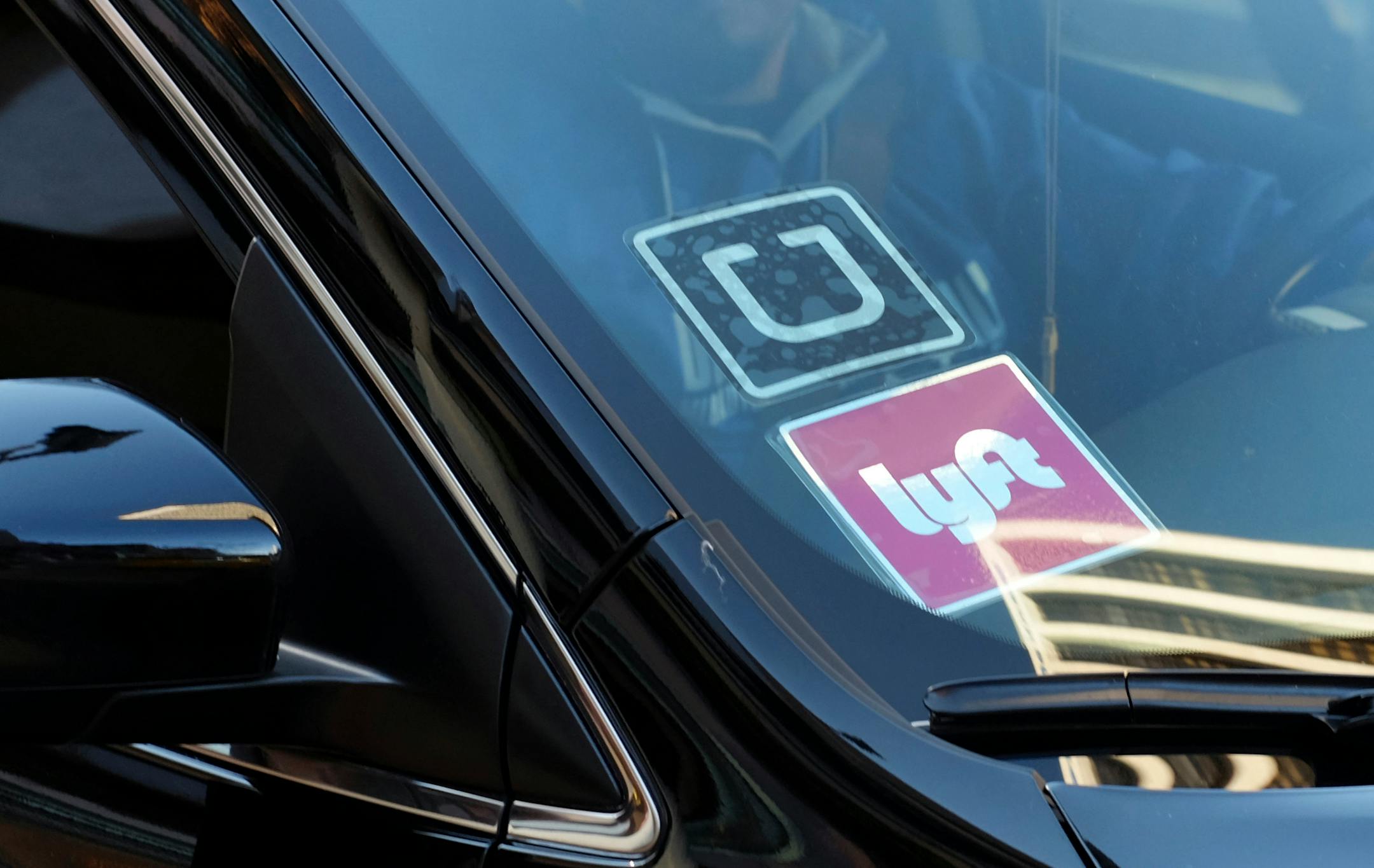
People planning to use Uber or Lyft to get around on Wednesday may encounter longer waits if enough drivers carry through on a threat to keep their cars idle.
Some Twin Cities drivers plan to join their peers in at least seven other U.S. cities in a one-day strike in an effort to get better pay.
Lauren Parrott of Hopkins drives for both companies and said she won't turn on her apps in an effort to send a message to the California-based companies.
"Stop ripping us off. Be honest in what you are taking," said Parrott, who has been driving for over a year. "I'm working harder to make the same amount of money. I'd like them to pay us more."
Two months ago, New York City implemented new rules that require companies such as Uber and Lyft to pay drivers of for-hire vehicles a minimum wage of $28 an hour before accounting for taxes and expenses, which works out to actual pay of a bit over $17 an hour.
On a good day, Parrott said she could bring in $25 per hour, but "it's really the luck of the draw," she said. Most of the time she earns $8 to $12 per hour. That is in line with minimum wage in Minneapolis, which is $10.25 for small employers and $11.25 for large employers. Parrott said Uber and Lyft constantly change their pay structure, making it too hard to qualify for bonuses, which keeps her wages depressed.
A recent study from the Massachusetts Institute of Technology showed that nationwide Uber and Lyft drivers' median wage was $8.55 per hour, which is slightly above the federal minimum wage of $7.25 an hour. The ride-hailing app Gridwise, which helps Lyft and Uber drivers find the best times and places to drive, found drivers earn an average hourly rate of $18.65 per hour before taxes and expenses.
Drivers in Los Angeles, Boston, Chicago, San Francisco, San Diego, Philadelphia and Washington, D.C., plan to join the one-day strike. Will it be successful? Joyce Beebe, a research fellow in public finance at Rice University's Baker Institute for Public Policy in Houston, said probably not.


