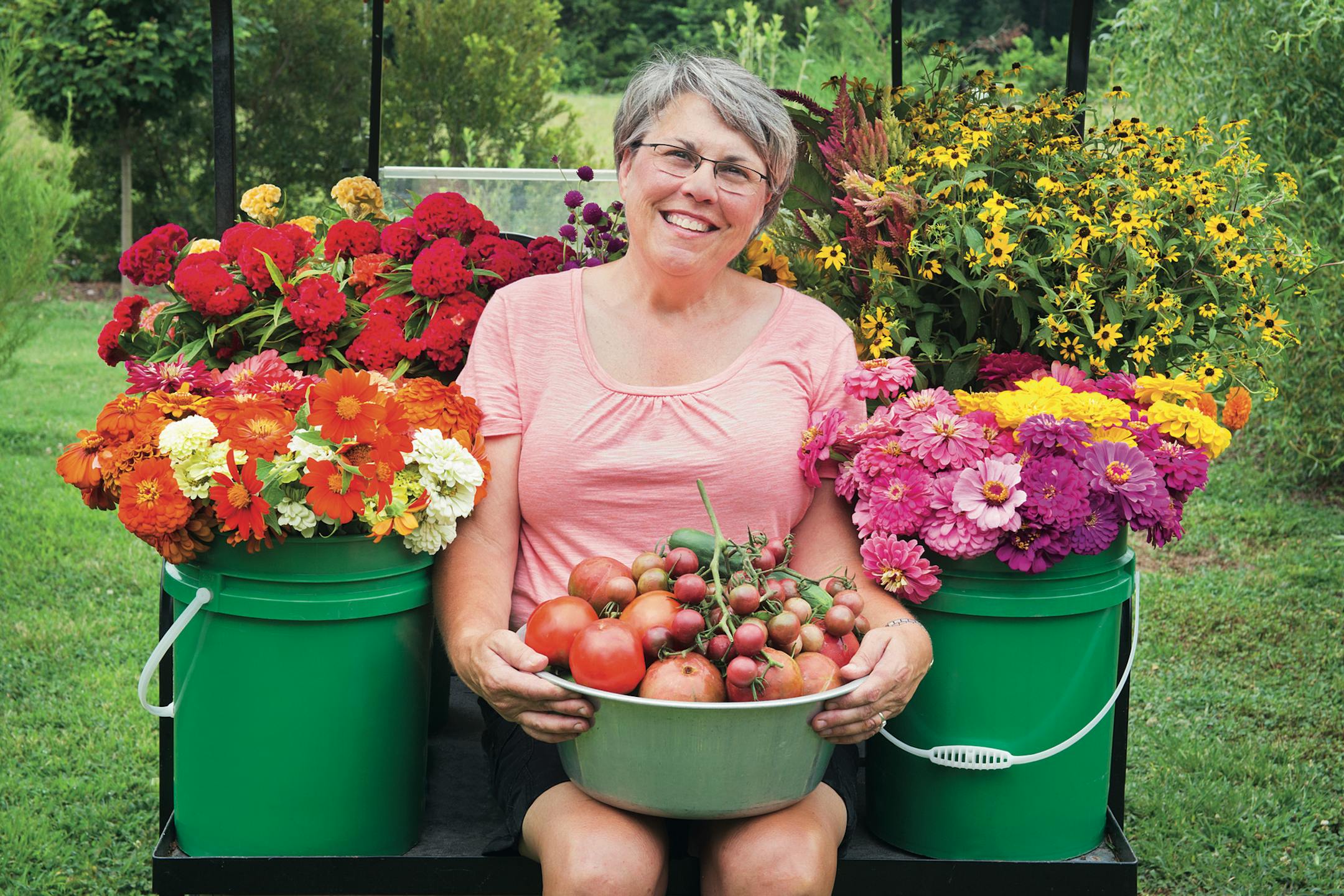
When Lisa Mason Ziegler married into a family that had long grown vegetables to eat fresh and keep for winter, she faced a steep learning curve on managing big gardens without using pesticides.
Learn she did. Ziegler, who had been a shade gardener, now runs an all-natural cut-flower farm in Virginia, and a website, TheGardenersWorkshop.com. In her new book, "Vegetables Love Flowers: Companion Planting for Beauty and Bounty" (Cool Springs Press, $21.99), Ziegler details how she learned to use nature to create healthy and productive gardens by interplanting flowers amid plots of vegetables. We caught up with Ziegler to talk about the best flowers to plant with veggies, which ones are "trap plants" for insects, and why wasps can be a tomato grower's best friend.
Q: What motivated you to write this book?
A: I wanted to raise awareness that flowers are more than just another pretty face; they can more than pull their weight in the garden. Many gardeners struggle to go all natural but just can't make it work. Flowers, with all their benefits, are often the missing piece of the puzzle for going organic.
Q: You've been gardening for a long time, but you didn't start out relying on natural methods. What made you change?
A: When I threw in the towel on pest treatments years ago, I saw nature jump into action on my farm. I watched as beneficial insects ate the pest bugs, and saw birds feed thousands of insects from my gardens to their babies. I was hooked. My research revealed that nature can help a garden from top to bottom. Plants sink their roots into the community of pollinators and predator insects and wildlife. All courtesy of nature.
Q: So much garden advice is about repelling bad bugs. Your book emphasizes attracting good ones. To new gardeners, this might seem counterintuitive.
A: I used to be one of those gardeners — all bugs must be bad, right? Wrong. After witnessing some predators in action in my garden, I was intrigued and learned that most insects are beneficial or benign in the garden. We need not fear them.