

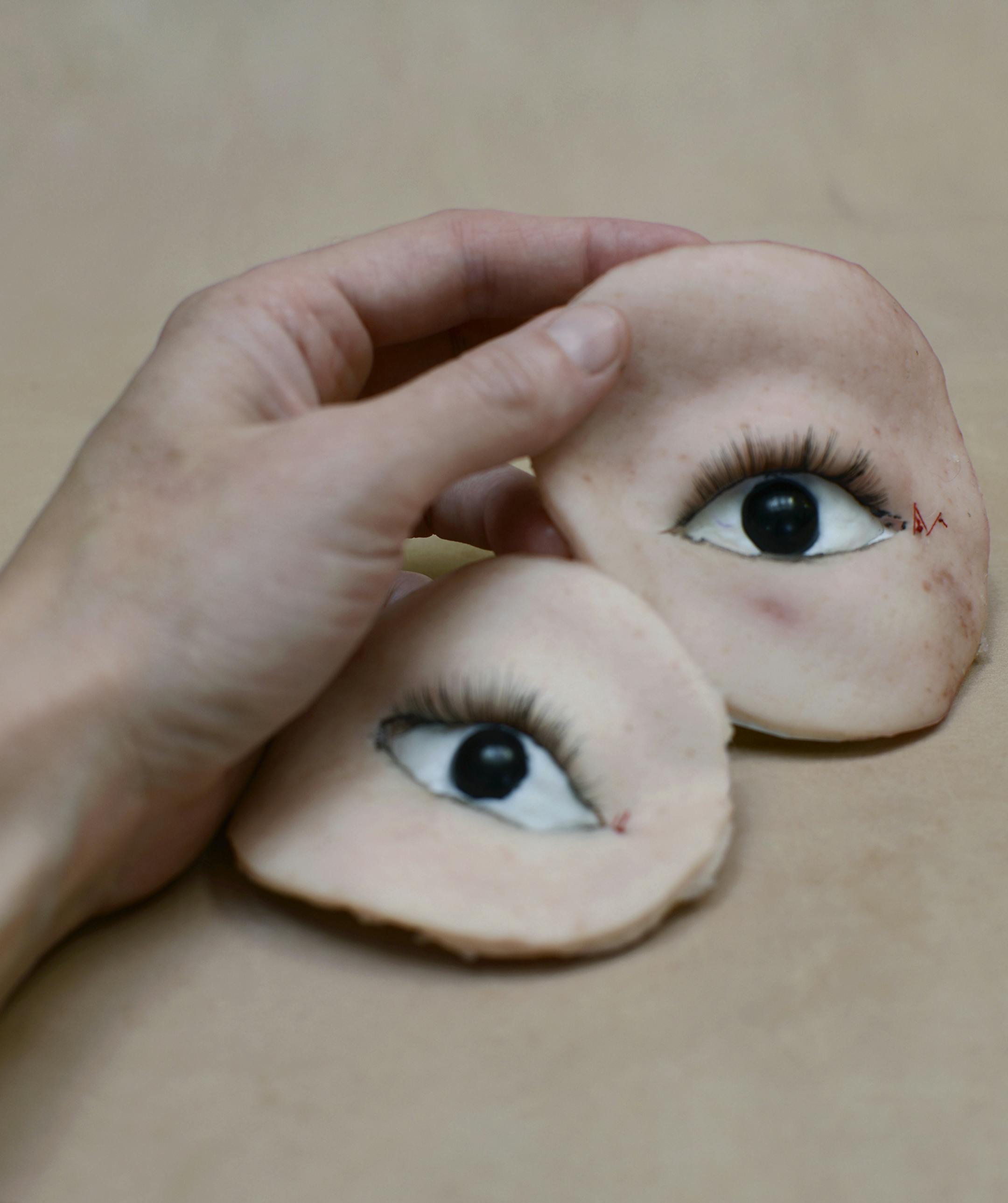
No selfies were harmed in the making of this exhibition.
In "The Body Electric," opening Saturday at Walker Art Center, nearly 50 artists or collectives consider the body's relationship to technology. But it shouldn't prompt the "those kids are addicted to their phones" complaints typically triggered by shows like this. In fact, it's not very selfie-able. There's nothing shiny or reflective to be found.
That's just the way Walker curator Pavel Pyś planned it.
While a lot of such art focuses on selfies, Pyś found himself frustrated by seeing younger artists singled out, isolated from any historical trajectory about art and technology. This show is boldly intergenerational, with the youngest artist aged 26 and the oldest 83.
Strobe effects, video, holograms, talking avatars, 3-D glasses, a fog machine, and even a workout bike make this exhibition interactive, cacophonous and not for the sensory-sensitive.
To help keep viewers from being overwhelmed, the show is organized into four clear-cut themes. Gender and race play a significant role in the artists presented here, which is 75 percent women and somewhat racially diverse, with a handful of trans-identifying artists.
The first piece visitors will see is by the only Minneapolis artist in the show. James Byrne's "Scale Drawing," originally created in 1975 and re-created for this exhibition, is the black outline of a man drawn on a wall with a felt-tip pen, with the figure's left hand shown on an old television screen. This early investigation into the mediated body and television, which Pyś found in the Walker's permanent collection, acts as an anchor for the show.
"It was kind of an icon for the show, this meditation on da Vinci's Vitruvian Man, "said Pyś. "It summarizes so much."


