I happened to arrive in Nicaragua's oldest city on Sept. 14, a day before the anniversary of Central American independence.
Upon checking into my hotel, La Gran Francia, a two-story building dating back nearly 500 years, the receptionist warned me that the next morning might get a bit festive. If I heard celebrating, he said, don't be alarmed. It's just the holiday in action, he said.
It seemed an odd warning — until morning arrived.
With curtains drawn tight and just a glint of golden light seeping through, I awoke to the sharp crack of drums. And then the roar of a crowd. And the bleating of horns and heaving of tubas. Had I slept strangely late and missed all the fun?
I fumbled for a clock and found that, nope, it was 7 a.m. — prime time, apparently, for celebrating Central American independence in colonial Nicaragua. I wiped the sleep from my eyes, found some coffee and walked down the block to join the gathering in Granada's historic square.
The whole town seemed to be there: boys in polo shirts, men already selling shaved ice from metal carts, teenage girls in matching green-and-white cheerleading outfits and women wearing long dresses and holding umbrellas to shield themselves from the sun.
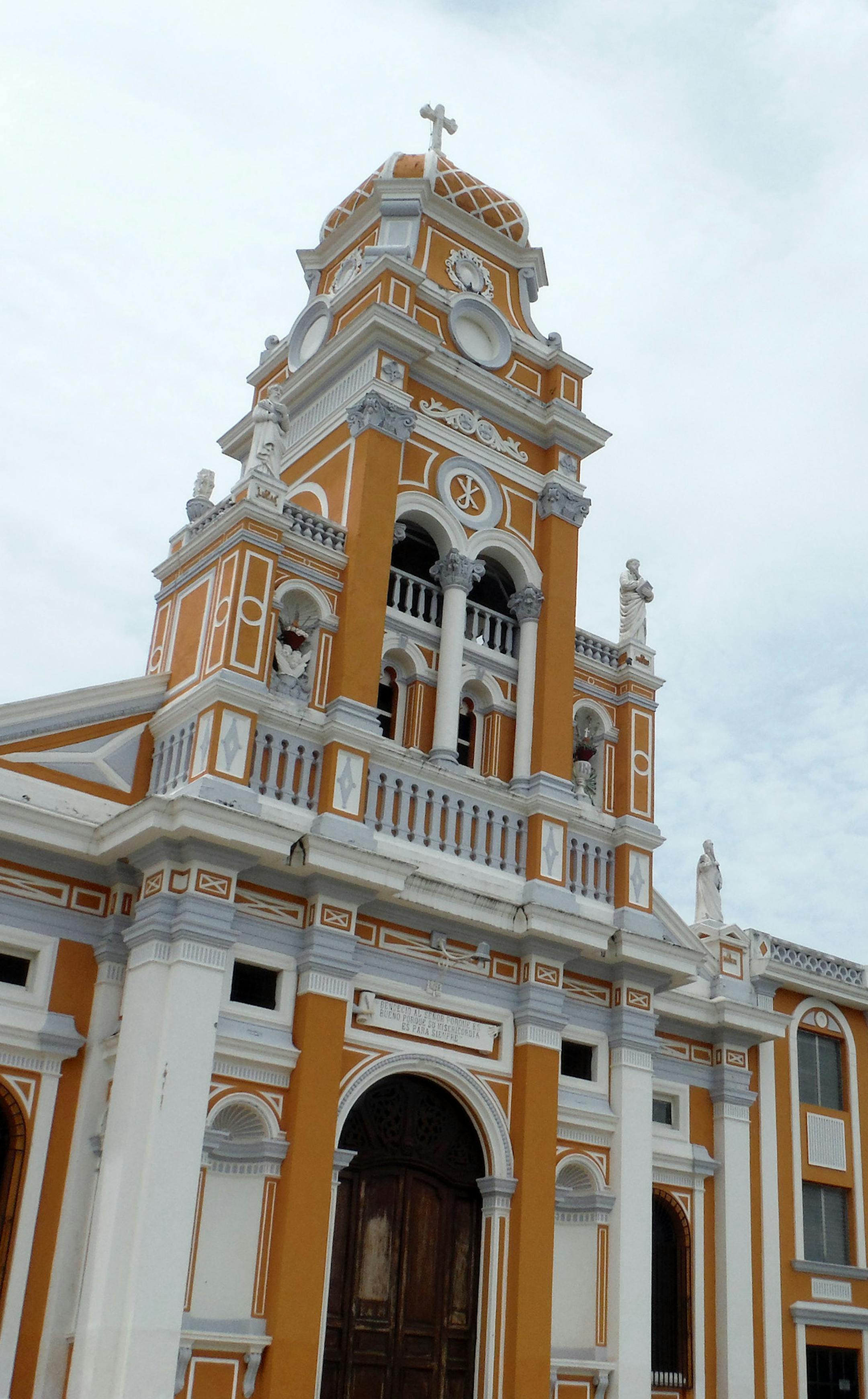
The boys with the drums that had awakened me sat dressed in red-and-white uniforms at the edge of the town's handsome, historic cathedral, painted mustard yellow and receiving a steady flow of visitors.
By noon, the party was finished. But Granada's historic charms didn't end with the celebration; they endured around the clock.