

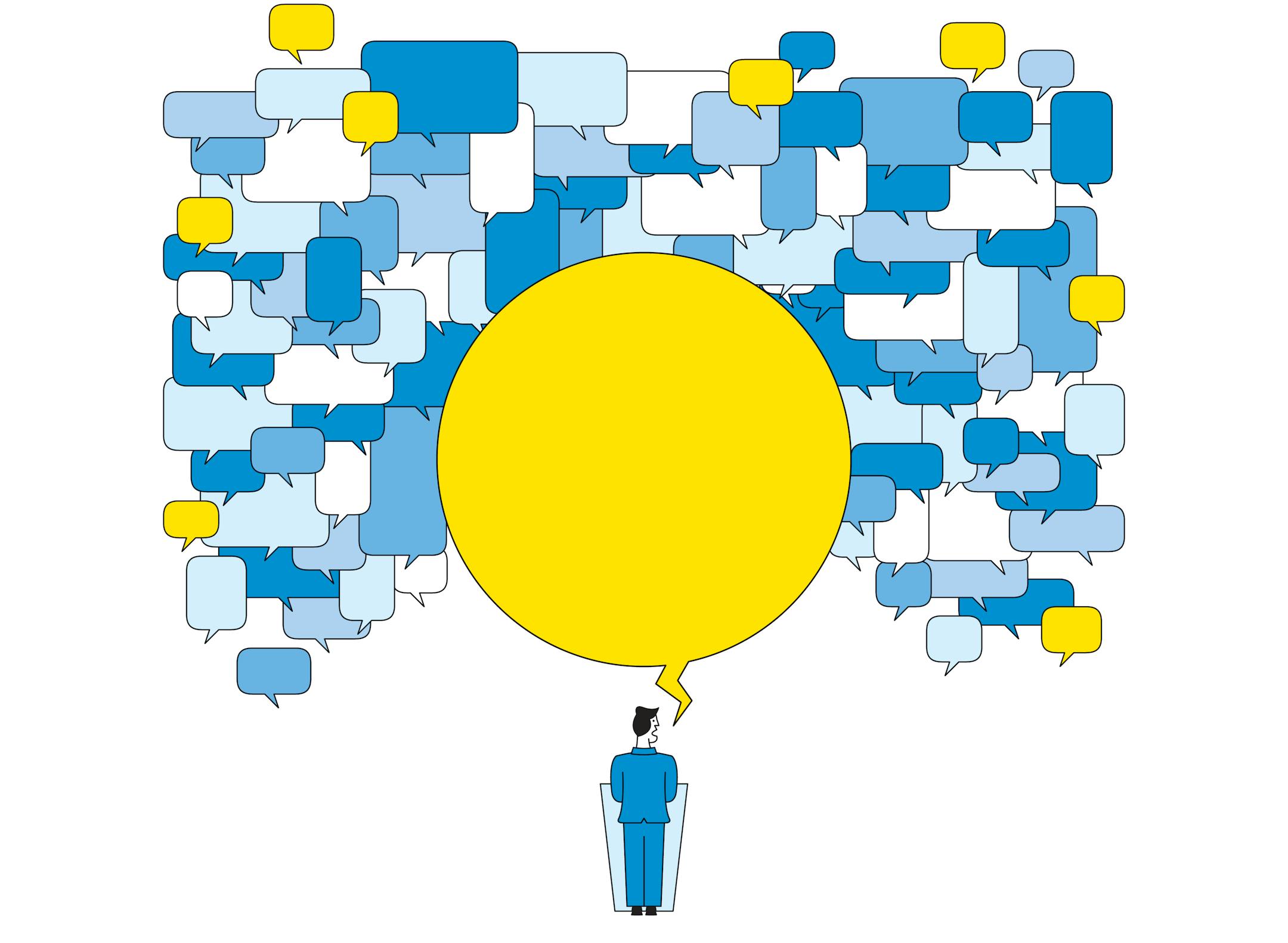
Most people would agree that democracies exist to govern according to the views and desires of those who live within them. Although that sounds like a simple objective, implementing it is less straightforward.
In school we were told that early American colonists gathered occasionally in town centers to discuss issues and make decisions. But as governments encompass expanded geographic areas and populations, direct democracy becomes too unwieldy a process and officials are typically elected to make decisions that affect their constituents. Hence, the term "representative democracy."
Both governments and other organizations that elect representatives differ in how much input leaders seek from those who elected them, and in the ways in which such input is obtained. Among state, county and city governments, park boards and school boards — among governing bodies in nonprofit organizations, business corporations, unions, condominium associations, etc. — some go out of their way to obtain constituent input, while others seem to believe, even if they don't state, "We know what our people want."
Such leaders espouse the view that, once elected, it's up to them to make the decisions they believe best meet true needs — with little reference to the conscious wishes of their constituency.
In the mid-1970s, the cities of Minneapolis and St. Paul commissioned resident surveys of their neighborhoods (Cedar-Riverside, Marcy-Holmes, etc., in Minneapolis; Payne-Phalen, Dayton's Bluff, etc., in St. Paul). City policymakers used that feedback to plan for those neighborhoods — actually acknowledging that not all neighborhoods had the same needs and desires.
These results were given to each city's planning organization, which in turn presented them to the city councils, park boards, etc., of the two cities as the "voice of residents."
More recently, though, it seems "citizen input" (when it exists at all) has consisted largely of comments at public hearings (such as ones Minneapolis apparently held about banning new retail drive-throughs, and which it plans to hold regarding changing its charter so budgeting can be done only once every two years rather than annually).
Of course, what happens at public hearings is that the loudest voices often get their way, with no assurance that the most forcefully expressed views are representative of those who live in the area. What's more, such meetings do not collect any input from those who cannot attend for various reasons (conflicting demands on their time, physical disabilities, discomfort voicing one's issues in a public forum, etc.).


