

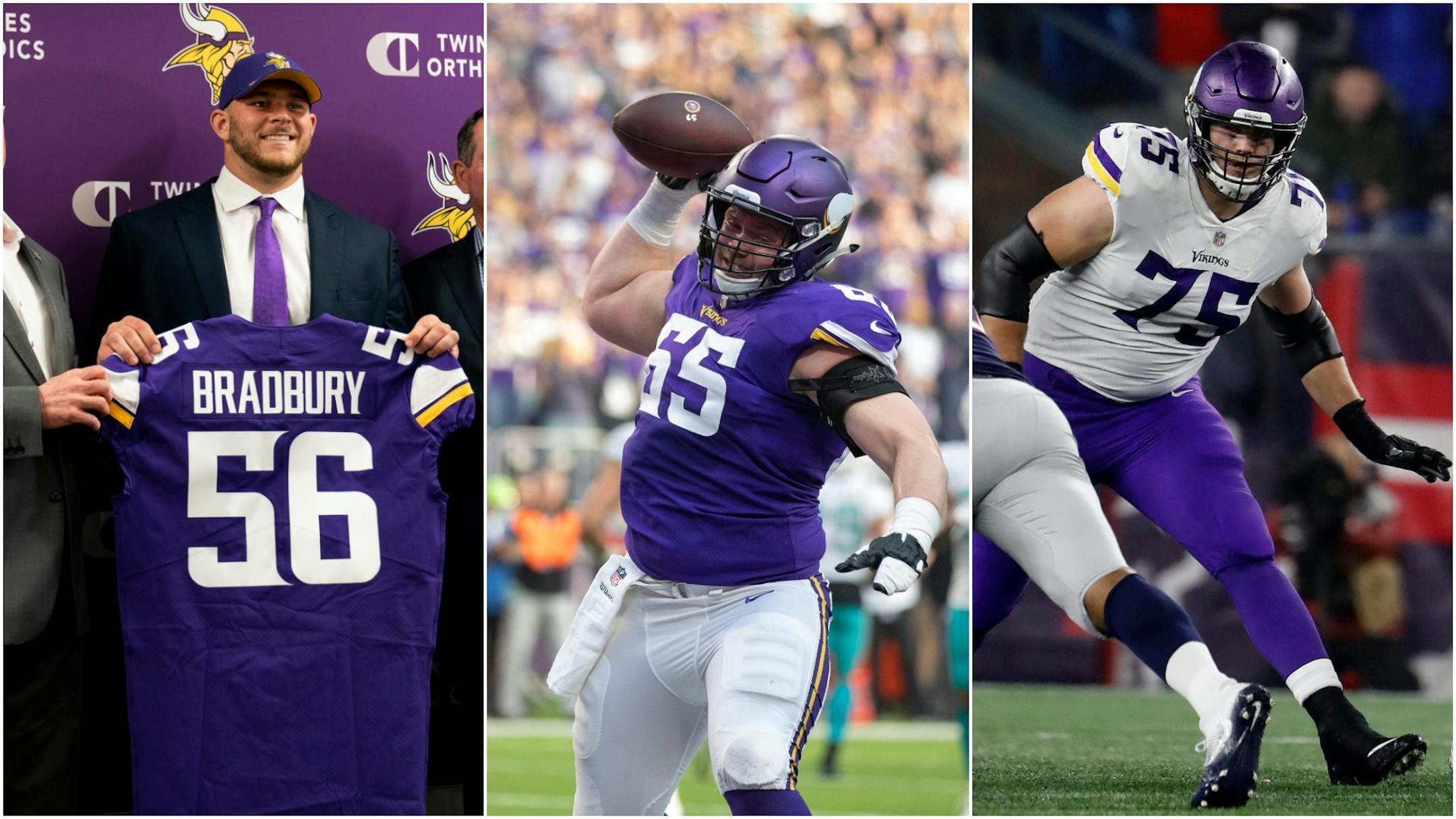
The narrative about Vikings General Manager Rick Spielman and offensive linemen changed with this past weekend's draft.
The main point of discussion officially is no longer about Spielman not spending enough draft capital on the line. That's as easy as 1-2-3 — rounds the Vikings have chosen Garrett Bradbury (first round this year), Brian O'Neill (second round in 2018) and Pat Elflein (third round in 2017) in the past three seasons.
The judgment point now — one that very well could make or break his tenure — is the quality of those three selections.
All three of those recent picks could be opening day starters in September, with Bradbury and Elflein occupying two spots on the interior and O'Neill helming a tackle spot. Elflein had a promising rookie season and a disappointing second year that was influenced by injuries. O'Neill had a better-than-expected rookie season. Bradbury has a strong pedigree, but he has never played an NFL snap.
Tasking three young players — and we can include second-round tight end Irv Smith Jr. in this mix, too — to protect the Vikings' $84 million investment in Kirk Cousins is a lot to ask. But at least Spielman and the Vikings are trying to address the question with the right types of answers.
The justified criticism earlier in Spielman's tenure — either with full or partial control over the draft — was his reluctance to choose linemen high in the draft.
The trendy stat, some of which predated Spielman, is that from 2003 to '18 the Vikings used only one first-round pick on an offensive lineman. Just as important: From 2010 to '16, the Vikings spent just one pick in the top three rounds — that first-rounder, Matt Kalil in 2012 — on the O-line.
Instead during that span they used 10 picks among rounds 4-7 on the offensive line, with very limited success. That strategy, which became neglect as it continued to not work, derailed the 2016 season and influenced the 2018 season.


